Soups
Polygonatum, Black Bean and Silkie Chicken Soup
traditionally associated with nourishing yin, moistening autumn dryness, supporting blood and qi, and promoting healthy skin
In short: Polygonatum, Black Bean and Silkie Chicken Soup is a soup that traditionally associated with nourishing yin, moistening autumn dryness, supporting blood and qi, and promoting healthy skin. It is most often made for cooling & summer heat, skin & natural beauty, heart & circulation. Total time about 110 min. Key ingredients: green-kernel black soybeans, red dates, ginger, silkie chicken (black chicken).
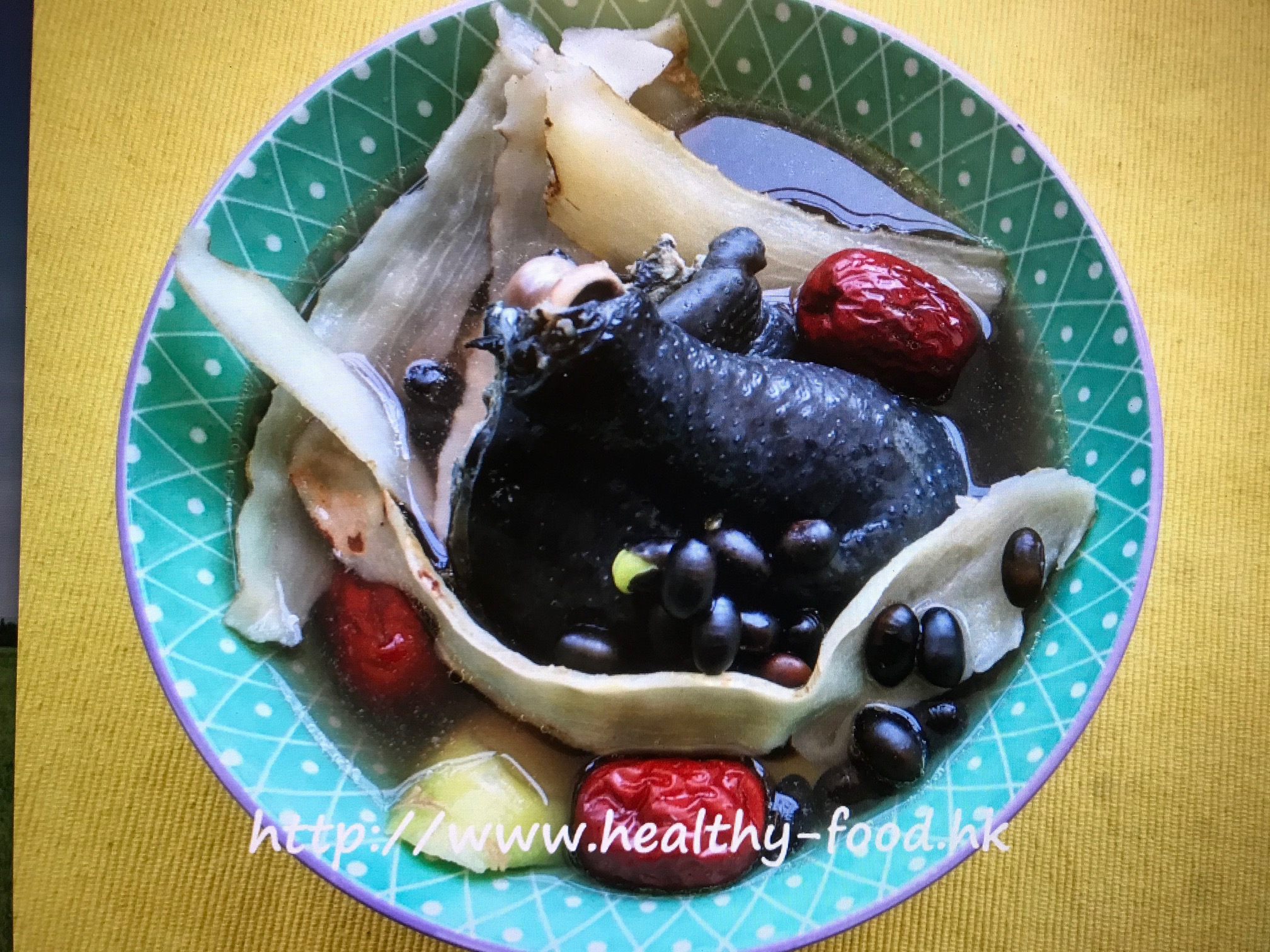
Why people make this soup
As summer fades and autumn brings drier air, many people notice their throat feeling parched, their skin losing moisture, and their energy dipping with the shorter days. In Chinese food-therapy thinking, autumn is the season when the lungs and skin most need gentle moistening, and nourishing the yin is a priority. This soup has a naturally sweet, clean flavour and is specifically designed for that transition — the combination of polygonatum, black soybeans, and silkie chicken supports hydration at a body-constitution level without being heavy or overly rich. Nourilo notes it has additional relevance for those managing diabetes, high blood pressure, or heart conditions, provided their constitution tends toward depletion rather than excess.
Method
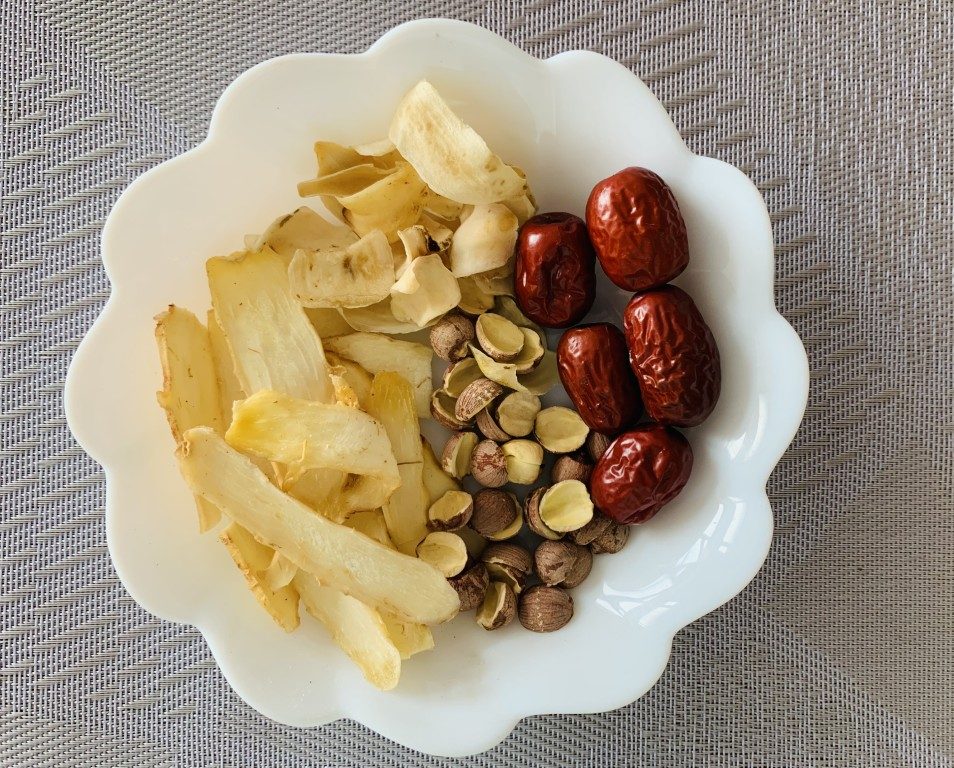
- Soak and rinse the polygonatum rhizome and black soybeans.
- Pit the red dates.
- Clean the silkie chicken; chop into large pieces. Blanch in boiling water for a minute or two, then rinse under cold water to remove surface impurities.
- Place all ingredients in a pot with 2.4–2.7 L of cold water. Bring to a boil, then reduce to a gentle simmer. Cook for about 1.5 hours until the liquid reduces to roughly 1.5 L.
- Serve as a soup; eat the chicken, beans, and dates alongside the broth for maximum benefit.
Nourilo’s Tips
Silkie chickens are naturally a smaller breed, so if you find very large ones in the shop, Nourilo advises caution — oversized silkie birds may have been raised with growth hormones, which defeats the purpose of choosing a quality ingredient. Stick to a smaller bird. Sea polygonatum (hai yu zhu) is an equally good alternative if the standard variety is hard to find. This soup is nourishing and appropriate for the whole family during the drier months.
What studies say about the key ingredients
Traditional use is not the same as clinical proof. Here is the strongest human research we found for each ingredient, limitations included.
- Black soybeans
Systolic blood pressure fell more in the black soy peptide group (-9.69 mm Hg) than in the placebo group (-2.91 mm Hg) after baseline adjustment. Plasma malondialdehyde decreased and superoxide dismutase activity increased compared with placebo.Limitation: Used an isolated peptide supplement rather than whole black soybeans, and followed participants for only 8 weeks, so the results may not apply to food intake.PubMed 23924691 - Red dates
Jujube was associated with significantly lower BMI and triglycerides, and lower fasting blood sugar in people with type 2 diabetes. LDL and total cholesterol fell only in some subgroups. HDL, AST and ALT did not change significantly.Limitation: The authors state the overall quality of the evidence is limited, and results varied significantly by dose, treatment duration and disease type.PubMed 40399274 · 3 more red dates studies - Ginger
Overall, acute and delayed nausea and vomiting did not differ significantly between ginger and control groups. A subgroup taking 1 g/day or less for over four days had less acute vomiting (OR 0.30).Limitation: Clinical heterogeneity between trials required subgroup analyses, and the authors state that sufficiently large, high-quality RCTs are still needed.PubMed 36501010 · 3 more ginger studies
From the Nourilo Research Library. Findings come from specific doses, extracts and populations and may not apply to a home-cooked recipe.
Safety first — read before you cook
This is a traditional food, not a treatment. Please check with your doctor or pharmacist before making it a regular part of your diet if you:
- are pregnant or breastfeeding, or are cooking for a young child;
- take regular medicines — especially blood thinners, blood-pressure, diabetes or immune-suppressing drugs;
- have a kidney, liver or heart condition, or a known food allergy.
Stop eating it and seek advice if you notice an allergic reaction or feel unwell. Safety notes reviewed 8 October 2026 · How we write safety notes
Comments
Join the conversation — sign in or create a free account to comment.
Continue with GoogleBy continuing with Google or email you confirm you are 16 or older and agree to our Terms of Use and Privacy Policy.
Loading comments…