Soups
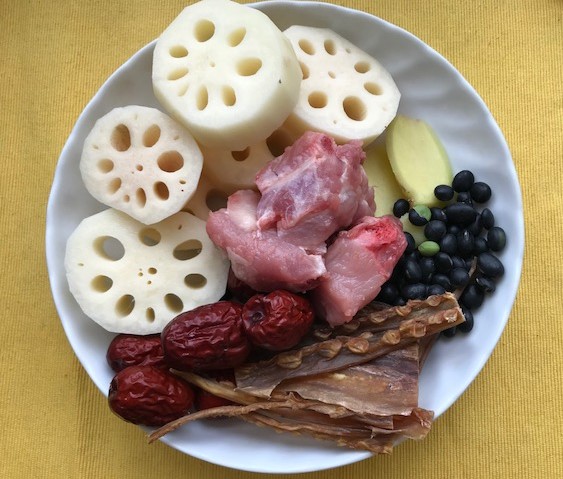
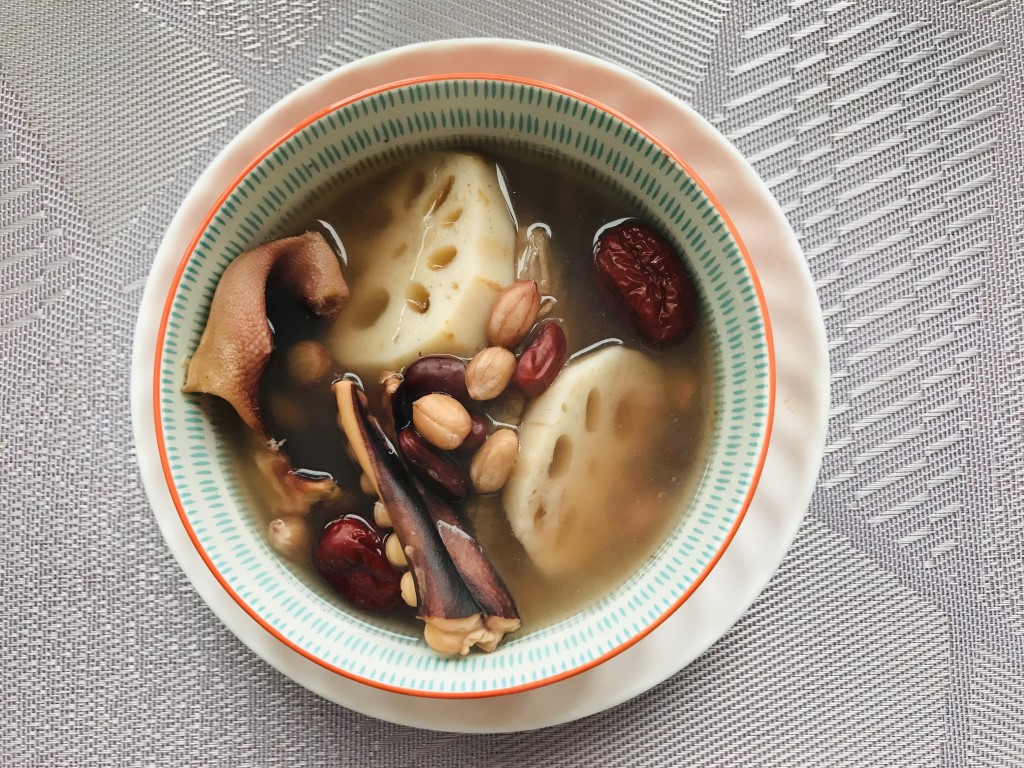
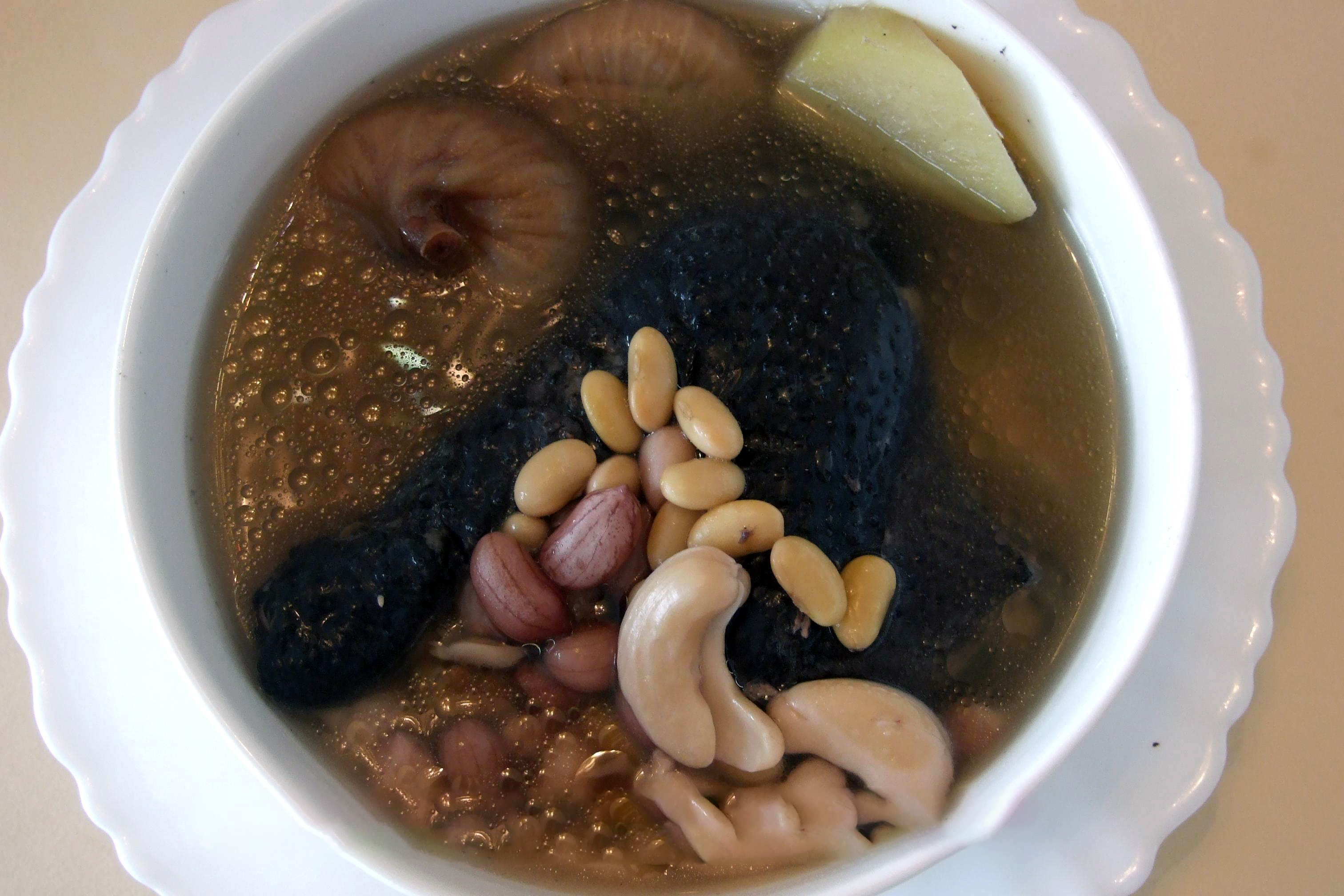
Lotus Root, Black Bean and Dried Octopus Pork Rib Soup
traditionally associated with nourishing the liver and blood, supporting hair health after childbirth
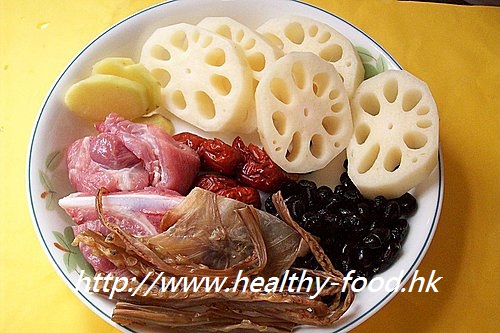
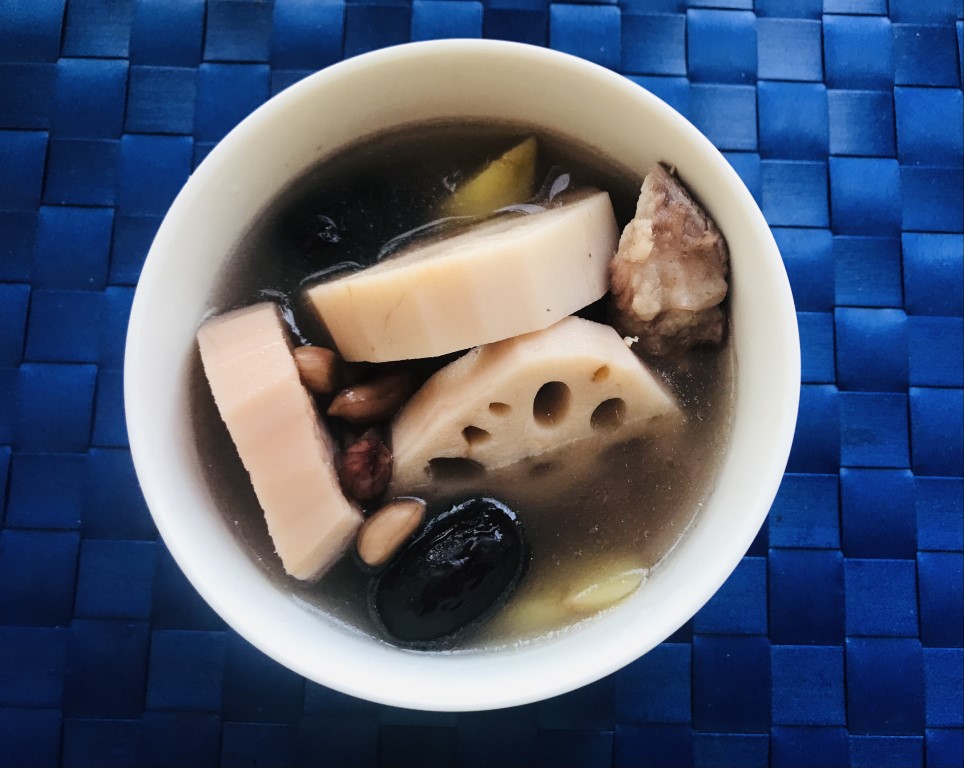
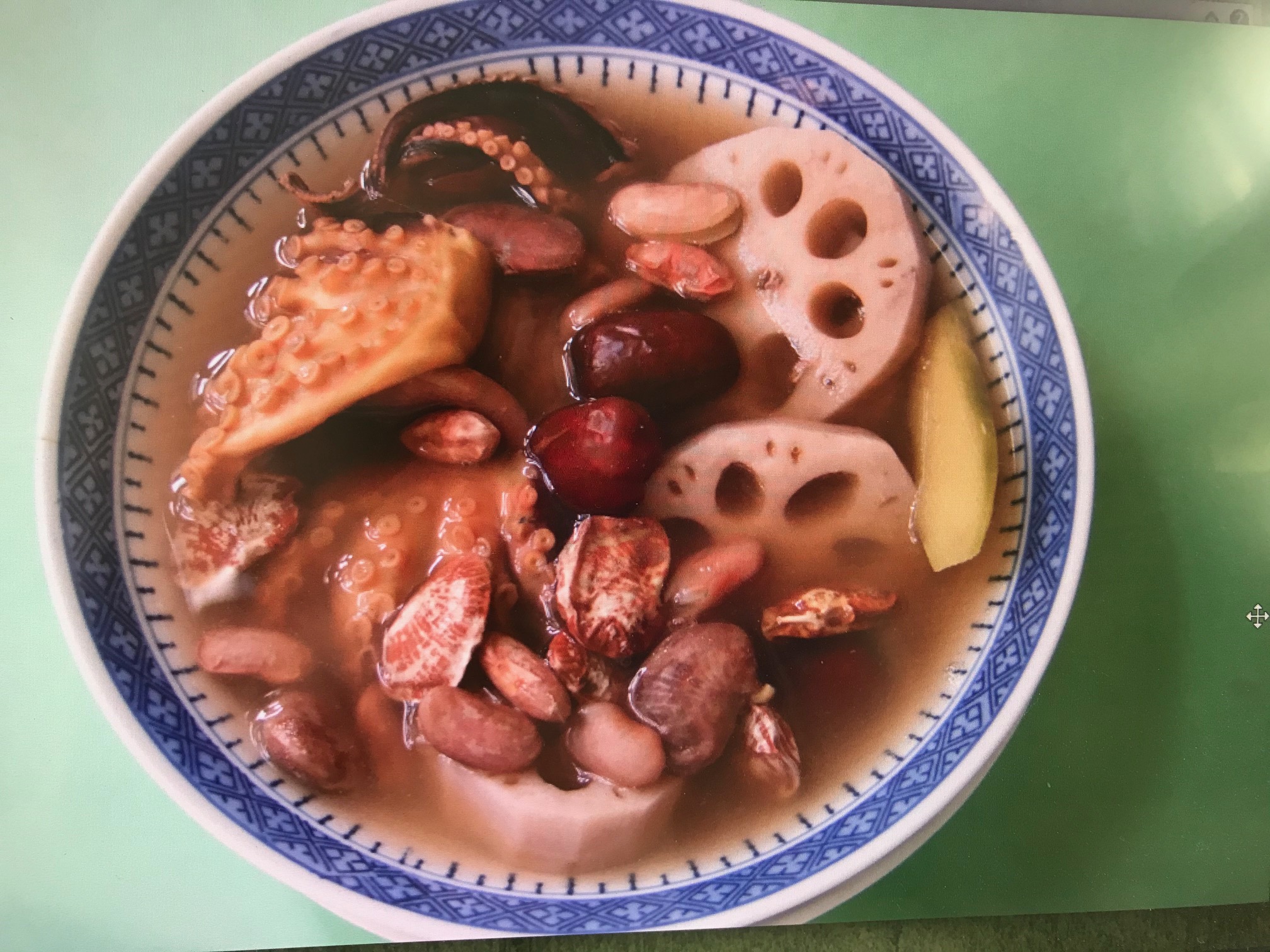
In short: Lotus Root, Black Bean and Dried Octopus Pork Rib Soup is a soup that traditionally associated with nourishing the liver and blood, supporting hair health after childbirth. It is most often made for women's wellness, children's wellness, skin & natural beauty. Total time about 110 min. Key ingredients: lotus root, green-kernel black beans, octopus, ginger.
Why people make this soup
It is very common for new mothers to notice more hair than usual on the pillow or in the shower drain in the weeks after giving birth. According to Cantonese food therapy, childbirth draws heavily on the body’s reserves of blood and essence (jing), and disrupted sleep from night feeds makes the situation worse — the body simply does not have enough nourishment left over to sustain a full head of hair. This soup pairs lotus root (cooling and blood-building) with green-kernel black beans (traditionally kidney-tonifying and hair-darkening) and dried octopus (rich in protein and associated with nourishing liver blood) to create a pot that is both delicious and genuinely sustaining. The combination is valued not only by postpartum mothers but by younger and middle-aged people who notice premature greying.
Method
- Peel the lotus root, cut into chunks, and rinse well.
- Soak and rinse the black beans.
- Remove the pits from the red dates.
- Blanch the pork ribs and dried octopus briefly in boiling water; drain and discard the water.
- Place all ingredients in a pot with 2.4–2.7 L of water.
- Bring to a boil, then reduce to a steady simmer for 1.5 hours, until the liquid reduces to about 1.2 L.
- Serve the soup with the solid ingredients.
Nourilo’s Tips
- This soup also has a traditional reputation for supporting milk production in breastfeeding mothers. Add 4–5 dried figs (wu hua guo) to further enhance this effect.
- It is equally beneficial for younger and middle-aged people with hair loss or premature greying — not just new mothers.
- If eczema is a concern, replace the octopus with 2–3 dried scallops.
- To avoid making the soup too warming, pair lotus root with mung beans and honey dates.
What studies say about the key ingredients
Traditional use is not the same as clinical proof. Here is the strongest human research we found for each ingredient, limitations included.
- Black soybeans
Systolic blood pressure fell more in the black soy peptide group (-9.69 mm Hg) than in the placebo group (-2.91 mm Hg) after baseline adjustment. Plasma malondialdehyde decreased and superoxide dismutase activity increased compared with placebo.Limitation: Used an isolated peptide supplement rather than whole black soybeans, and followed participants for only 8 weeks, so the results may not apply to food intake.PubMed 23924691 - Ginger
Overall, acute and delayed nausea and vomiting did not differ significantly between ginger and control groups. A subgroup taking 1 g/day or less for over four days had less acute vomiting (OR 0.30).Limitation: Clinical heterogeneity between trials required subgroup analyses, and the authors state that sufficiently large, high-quality RCTs are still needed.PubMed 36501010 · 3 more ginger studies - Red dates
Jujube was associated with significantly lower BMI and triglycerides, and lower fasting blood sugar in people with type 2 diabetes. LDL and total cholesterol fell only in some subgroups. HDL, AST and ALT did not change significantly.Limitation: The authors state the overall quality of the evidence is limited, and results varied significantly by dose, treatment duration and disease type.PubMed 40399274 · 3 more red dates studies
From the Nourilo Research Library. Findings come from specific doses, extracts and populations and may not apply to a home-cooked recipe.
Safety first — read before you cook
This is a traditional food, not a treatment. Please check with your doctor or pharmacist before making it a regular part of your diet if you:
- are pregnant or breastfeeding, or are cooking for a young child;
- take regular medicines — especially blood thinners, blood-pressure, diabetes or immune-suppressing drugs;
- have a kidney, liver or heart condition, or a known food allergy.
Stop eating it and seek advice if you notice an allergic reaction or feel unwell. Safety notes reviewed 8 October 2026 · How we write safety notes
Comments
Join the conversation — sign in or create a free account to comment.
Continue with GoogleBy continuing with Google or email you confirm you are 16 or older and agree to our Terms of Use and Privacy Policy.
Loading comments…