Soups
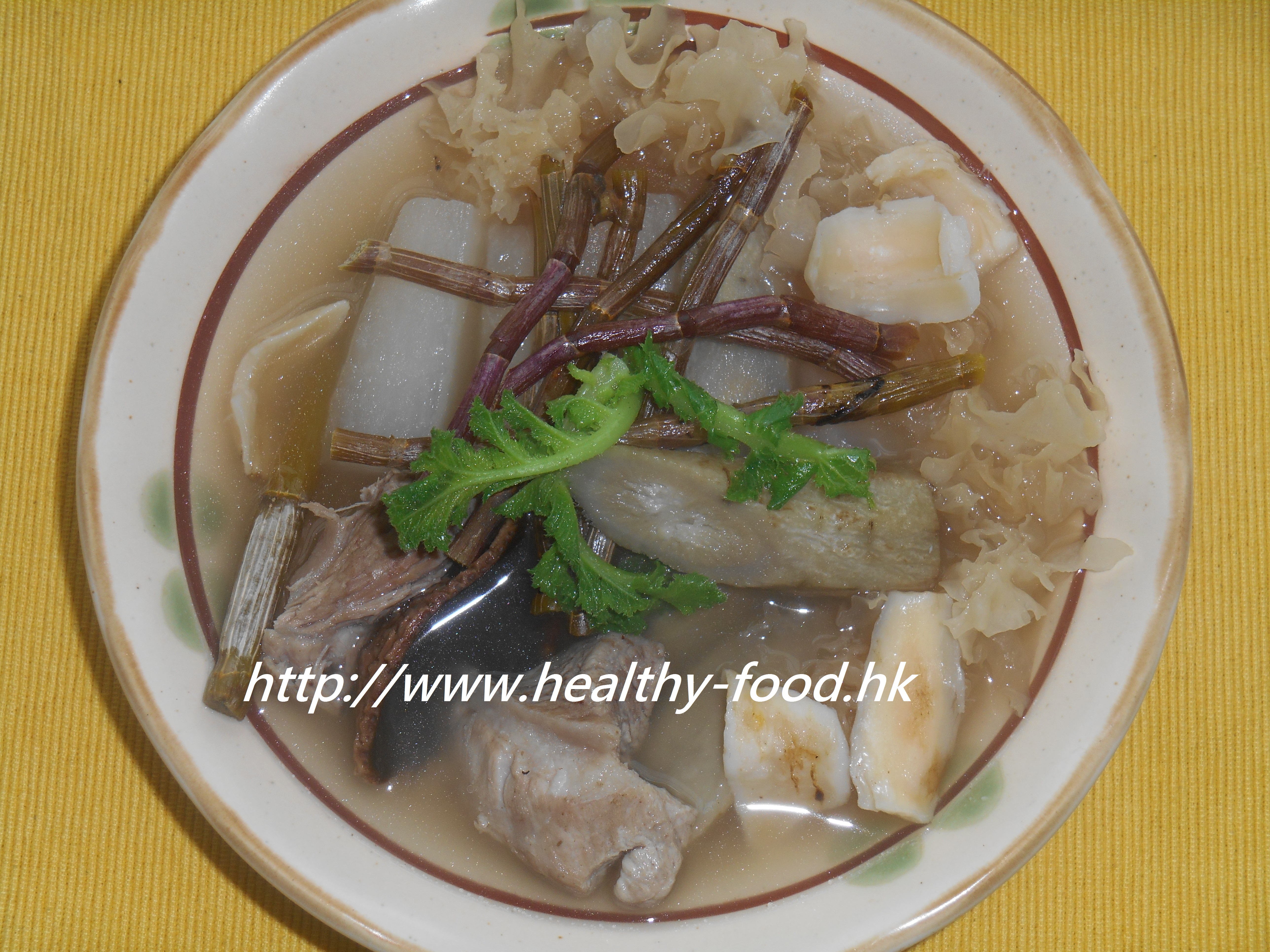
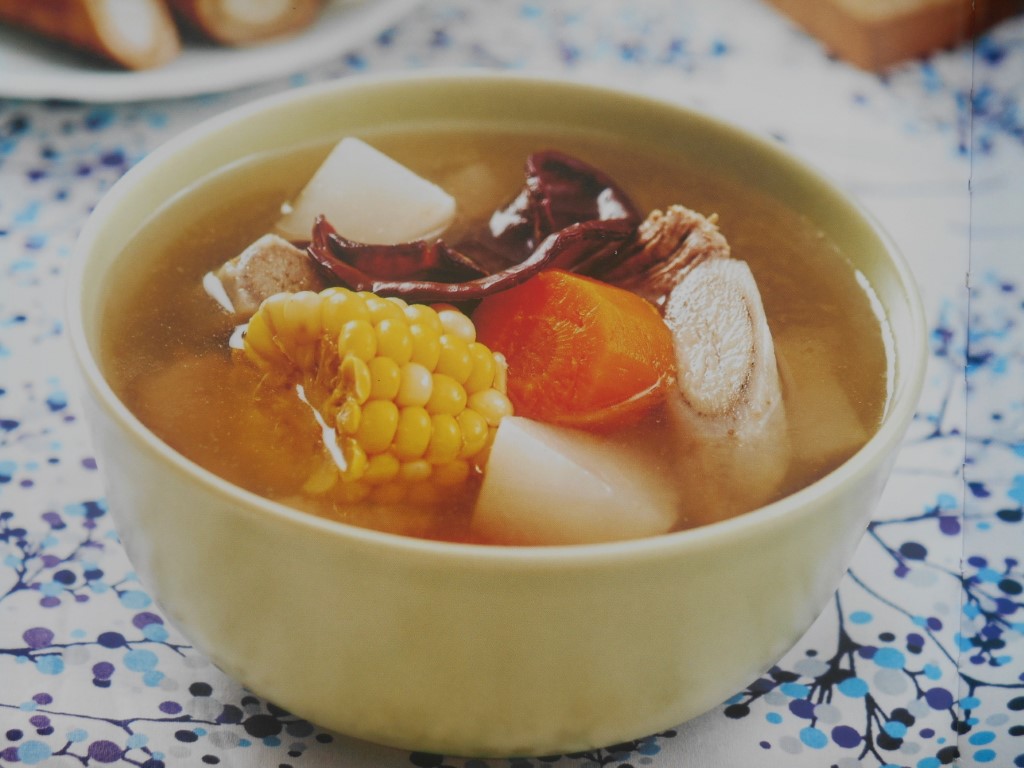
Fresh Dendrobium, Burdock, White Radish and Snow Fungus Soup
traditionally associated with nourishing yin, clearing heat, supporting immunity, and helping prevent the accumulation of toxins
In short: Fresh Dendrobium, Burdock, White Radish and Snow Fungus Soup is a soup that traditionally associated with nourishing yin, clearing heat, supporting immunity, and helping prevent the accumulation of toxins. It is most often made for immune support, everyday balance. Total time about 140 min. Key ingredients: burdock root, snow fungus, pork spare ribs.
Why people make this soup
Traditional Chinese medicine has long connected the formation of lumps, skin blemishes, and deeper tumours to an accumulation of “toxin-fire” in the body — the kind that builds up over years of excess: too much fried and processed food, too many late nights, chronic stress. Prevention, in this framework, means regular habits that gently clear rather than accumulate.
This soup is one of Nourilo’s favourite everyday broths. Fresh dendrobium (shi hu) has been studied in modern research for its polysaccharides and alkaloids, which show anti-tumour activity against certain cell lines in laboratory settings — including lung cancer, ovarian cancer, and early-stage leukaemia cells. Burdock brings its own tradition as a disperser of heat and swelling. White radish, snow fungus, and lily bulb add moistening, nourishing depth. Together, this soup is clear-tasting and naturally sweet — something you would make on a Sunday and feel genuinely good about.
Method
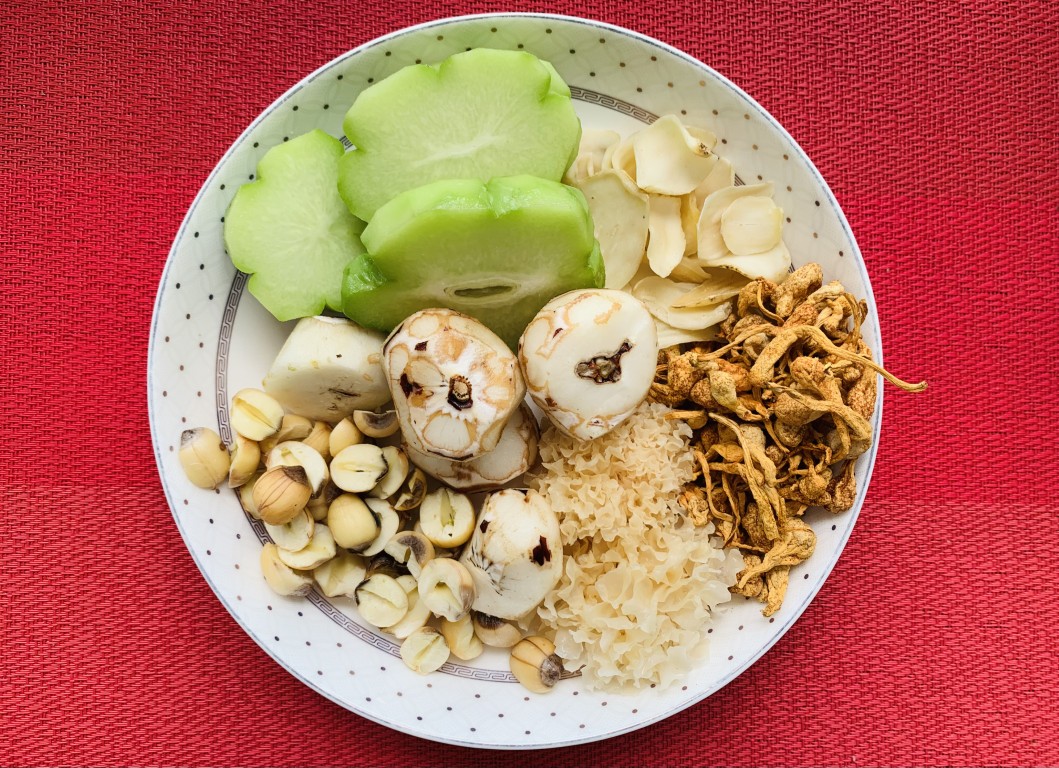
- Blanch the pork ribs briefly in boiling water; drain and rinse.
- Rinse the fresh dendrobium stems and cut into sections.
- Scrub the burdock root clean (no need to peel — the skin is nutritious); cut into sections.
- Peel and cube the white radish; wash any tender young leaves and set aside.
- Soak the snow fungus for 30 minutes; trim the tough base and tear into smaller pieces. Rinse the lily bulb.
- Place all ingredients in a pot with 2.4 L of water. Bring to a boil, then reduce to a steady simmer.
- Cook for 2 hours until reduced to about 1.2 L.
- Serve immediately; eat the soup and the solid ingredients together.
Nourilo’s Tips
This soup has a naturally sweet, clear flavour and is suitable for the whole family. It is associated with lowering blood sugar and blood pressure, and can help support circulation and prevent the “three highs” (high blood sugar, blood pressure, and cholesterol). Spare ribs can be swapped for chicken, duck (skinned), or for a vegetarian version, use cashew nuts and chestnuts for richness. Dry dendrobium (11 g) can substitute for fresh if fresh is not available.
What studies say about the key ingredients
Traditional use is not the same as clinical proof. Here is the strongest human research we found for each ingredient, limitations included.
- Dendrobium
Salivary flow rate and oral mucosal scores improved more in the Dendrobium group than in the control group using vitamin B12 rinse alone (P < .05). Serum IL-10 rose from baseline, and oral bacterial composition differed.Limitation: Small single-hospital sample; the Dendrobium group also used the B12 rinse, and the abstract does not say whether the control group received a placebo drink.PubMed 39811879 · 2 more dendrobium studies - Burdock root
Compared with placebo, root powder was associated with higher superoxide dismutase and catalase, lower malondialdehyde and C-reactive protein, and smaller ovarian volumes. Hirsutism and menstrual frequency results are not reported in the abstract.Limitation: Small single-centre trial of 60 women, recruited by convenience sampling. The 460 mg/day dose is much smaller than typical food intake.PubMed 41757842 · 2 more burdock root studies - Snow fungus
The Tremella fuciformis groups showed greater improvements than placebo in subjective memory complaint scores, short-term memory and executive function tests. Adverse event frequency was similar across high-dose, low-dose and placebo groups.Limitation: Small sample with only 15 people in the placebo group and a short 8-week duration; the brain imaging findings were exploratory.PubMed 29319408
From the Nourilo Research Library. Findings come from specific doses, extracts and populations and may not apply to a home-cooked recipe.
Safety first — read before you cook
This is a traditional food, not a treatment. Please check with your doctor or pharmacist before making it a regular part of your diet if you:
- are pregnant or breastfeeding, or are cooking for a young child;
- take regular medicines — especially blood thinners, blood-pressure, diabetes or immune-suppressing drugs;
- have a kidney, liver or heart condition, or a known food allergy.
Stop eating it and seek advice if you notice an allergic reaction or feel unwell. Safety notes reviewed 8 October 2026 · How we write safety notes
Comments
Join the conversation — sign in or create a free account to comment.
Continue with GoogleBy continuing with Google or email you confirm you are 16 or older and agree to our Terms of Use and Privacy Policy.
Loading comments…