Congee & Porridge
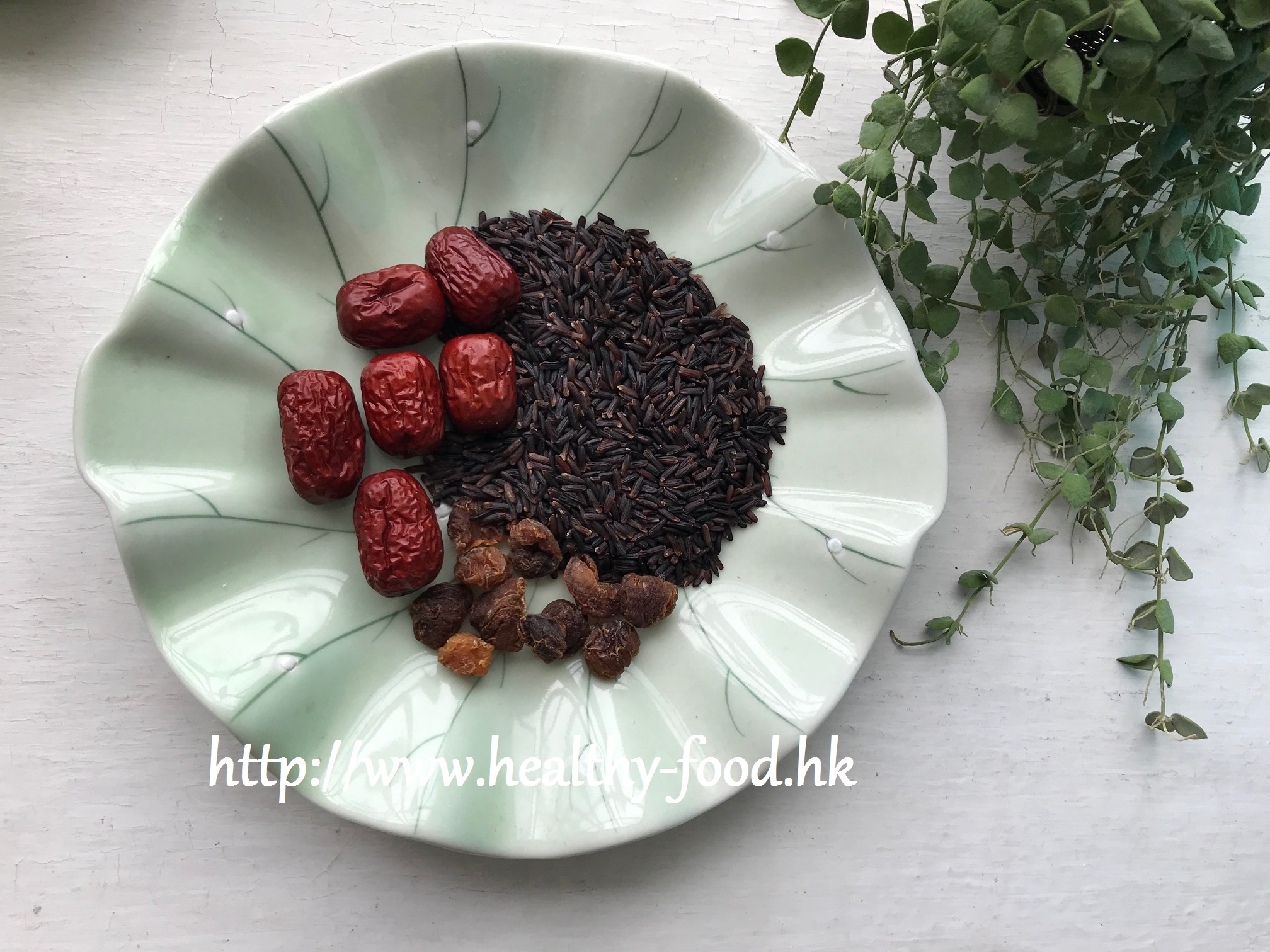
Longan, Red Date & Black Rice Congee
traditionally used to nourish blood, support kidney health, and aid recovery from anemia or post-menstrual fatigue
In short: Longan, Red Date & Black Rice Congee is a congee & porridge that traditionally used to nourish blood, support kidney health, and aid recovery from anemia or post-menstrual fatigue. It is most often made for women's wellness, children's wellness, kidney & urinary wellness. Total time about 70 min. Key ingredients: longan flesh, red dates.
Why people make this congee
Nourilo discovered this congee while preparing a photo shoot for his book on healthy ageing. He had bought black rice — an ingredient he does not use all that often — and was pleasantly surprised by how beautifully it cooks up into a rich, slightly nutty, naturally coloured porridge.
Black rice is not just visually striking. It is rich in anthocyanins (the same purple pigments found in blueberries) and flavonoids, both of which have well-established antioxidant properties. These compounds are associated with reducing inflammation, supporting healthy blood pressure, and protecting blood vessel integrity. Combined with longan flesh and red dates — two of the most popular blood-nourishing foods in Chinese culinary tradition — this congee becomes a powerful restorative for anyone dealing with fatigue, pallor, or blood deficiency.
Method
- Rinse the black rice and soak in cold water for at least 4 hours (or overnight). Do NOT discard the soaking water — it contains the anthocyanins and should be used for cooking.
- Pit and slice the red dates. Rinse the longan flesh.
- Place all ingredients (including the black rice soaking water) into a rice cooker or pot.
- Add enough additional water to achieve your preferred congee consistency — start with enough to cover all ingredients by about 3–4 cm.
- Cook until the rice is completely soft and the congee is thick and creamy. In a rice cooker, use the porridge setting; on the stovetop, simmer gently for about 1 hour, stirring occasionally.
- Serve warm; eat as a meal or substantial snack.
Nourilo’s Tips
The key to good black rice congee is patience with the soaking. Because black rice has a tougher outer bran layer, it takes much longer to soften than white rice. Soaking for 4 hours (or overnight) shortens the cooking time considerably and ensures a smooth, creamy texture. Always keep the soaking water — the beautiful dark purple colour is the anthocyanin, and you want every bit of that in your bowl. The congee keeps well in the fridge for 1–2 days and can be gently reheated.
What studies say about the key ingredients
Traditional use is not the same as clinical proof. Here is the strongest human research we found for each ingredient, limitations included.
- Red dates
Jujube was associated with significantly lower BMI and triglycerides, and lower fasting blood sugar in people with type 2 diabetes. LDL and total cholesterol fell only in some subgroups. HDL, AST and ALT did not change significantly.Limitation: The authors state the overall quality of the evidence is limited, and results varied significantly by dose, treatment duration and disease type.PubMed 40399274 · 3 more red dates studies
From the Nourilo Research Library. Findings come from specific doses, extracts and populations and may not apply to a home-cooked recipe.
Safety first — read before you cook
This is a traditional food, not a treatment. Please check with your doctor or pharmacist before making it a regular part of your diet if you:
- are pregnant or breastfeeding, or are cooking for a young child;
- take regular medicines — especially blood thinners, blood-pressure, diabetes or immune-suppressing drugs;
- have a kidney, liver or heart condition, or a known food allergy.
Stop eating it and seek advice if you notice an allergic reaction or feel unwell. Safety notes reviewed 8 October 2026 · How we write safety notes


Comments
Join the conversation — sign in or create a free account to comment.
Continue with GoogleBy continuing with Google or email you confirm you are 16 or older and agree to our Terms of Use and Privacy Policy.
Loading comments…