Congee & Porridge
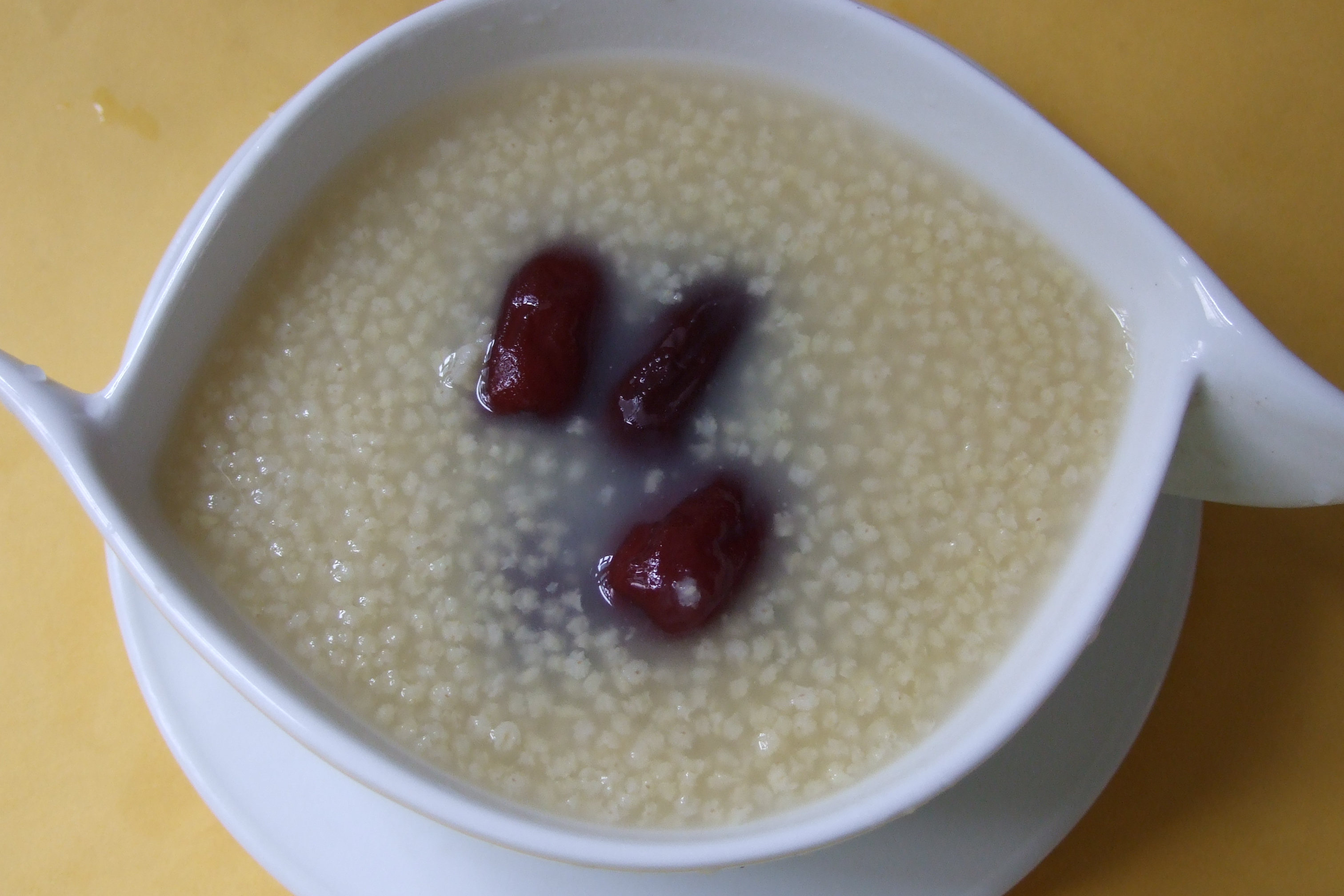
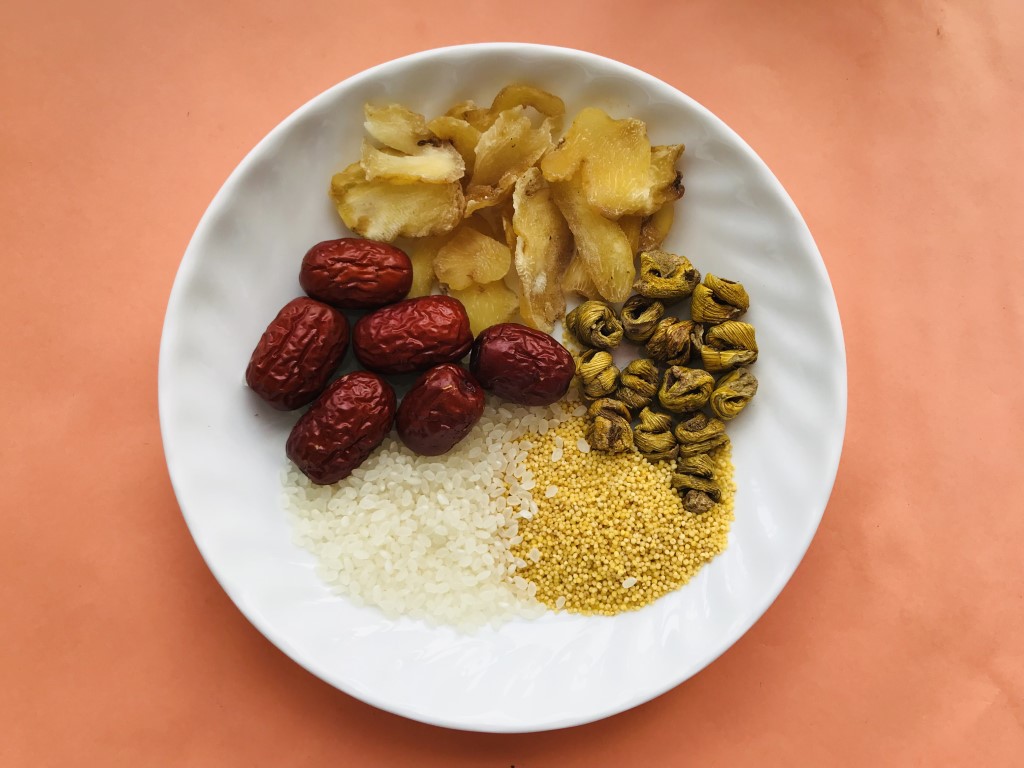
Red Date and Millet Congee
traditionally used to nourish and gradually restore the spleen and stomach after fasting or illness
In short: Red Date and Millet Congee is a congee & porridge that traditionally used to nourish and gradually restore the spleen and stomach after fasting or illness. It is most often made for digestive wellness, children's wellness, liver wellness. Total time about 1 hr 5 min. Key ingredients: red dates, millet.
Why people make this congee
Nourilo once read a story about a Shaolin monastery abbot during a severe drought in northern China. When starving refugees came to the temple, the abbot had monks pour thin rice porridge onto stone tables and let people lap it up slowly — drop by drop — rather than handing out bowls of food. People at the time thought it was heartless, but the abbot understood something important: a stomach that has gone without food for a long time becomes as fragile as an infant’s. Eating too much too quickly could actually be fatal. Reintroduction to food must be gradual.
This insight holds true whenever we break a fast — whether planned or due to illness. The first meal back should be very thin congee. No oil, no dairy, no bread. Only after a day of thin porridge water can one begin adding soft, simple foods. Red date and millet congee is Nourilo’s top pick for this transitional stage: it is one of the warmest, most restorative combinations in Cantonese food therapy, traditionally associated with nourishing the spleen and stomach, calming the mind, and gently replenishing qi and blood.
Method
- Remove the pits from the red dates. Rinse the millet under cold water.
- Place both the millet and red dates into a pot with 1.8–2.1 L of water.
- Bring to a boil over medium-high heat, stirring to prevent the millet from sticking to the bottom.
- Reduce to the lowest possible simmer. Cook gently for about 1 hour, stirring occasionally, until the congee is thick, creamy, and soft.
- Serve warm.
Nourilo’s Tips
- On the very first day of breaking a fast, drink only the thin liquid (the congee water), without eating the dates or solids. Let the stomach adapt gently.
- From the second day onwards, you can begin eating the red dates along with the congee. Lightly steamed or boiled meat and vegetables can be gradually introduced.
- All food during the recovery period should be oil-free or near oil-free — even milk and bread are too heavy at first.
- For weak digestion or dampness (spleen qi deficiency with damp), add 15 g (about 12 g) of poria mushroom (fu ling) and one piece of tangerine peel (chen pi) and simmer together.
- For a young child (around 18 months) who has vomited and has no appetite, add 3 slices of ginger and 6 red dates to the millet congee. If the child also sleeps restlessly, add 6 bundles of juncus pith (deng xin cao) and remove before serving.
- This congee also works well for cough and phlegm when you add lily bulb (bai he) and apricot kernels (xing ren) to the pot.
What studies say about the key ingredients
Traditional use is not the same as clinical proof. Here is the strongest human research we found for each ingredient, limitations included.
- Red dates
Jujube was associated with significantly lower BMI and triglycerides, and lower fasting blood sugar in people with type 2 diabetes. LDL and total cholesterol fell only in some subgroups. HDL, AST and ALT did not change significantly.Limitation: The authors state the overall quality of the evidence is limited, and results varied significantly by dose, treatment duration and disease type.PubMed 40399274 · 3 more red dates studies
From the Nourilo Research Library. Findings come from specific doses, extracts and populations and may not apply to a home-cooked recipe.
Safety first — read before you cook
This is a traditional food, not a treatment. Please check with your doctor or pharmacist before making it a regular part of your diet if you:
- are pregnant or breastfeeding, or are cooking for a young child;
- take regular medicines — especially blood thinners, blood-pressure, diabetes or immune-suppressing drugs;
- have a kidney, liver or heart condition, or a known food allergy.
Stop eating it and seek advice if you notice an allergic reaction or feel unwell. Safety notes reviewed 8 October 2026 · How we write safety notes

Comments
Join the conversation — sign in or create a free account to comment.
Continue with GoogleBy continuing with Google or email you confirm you are 16 or older and agree to our Terms of Use and Privacy Policy.
Loading comments…