Herbal & Flower Teas
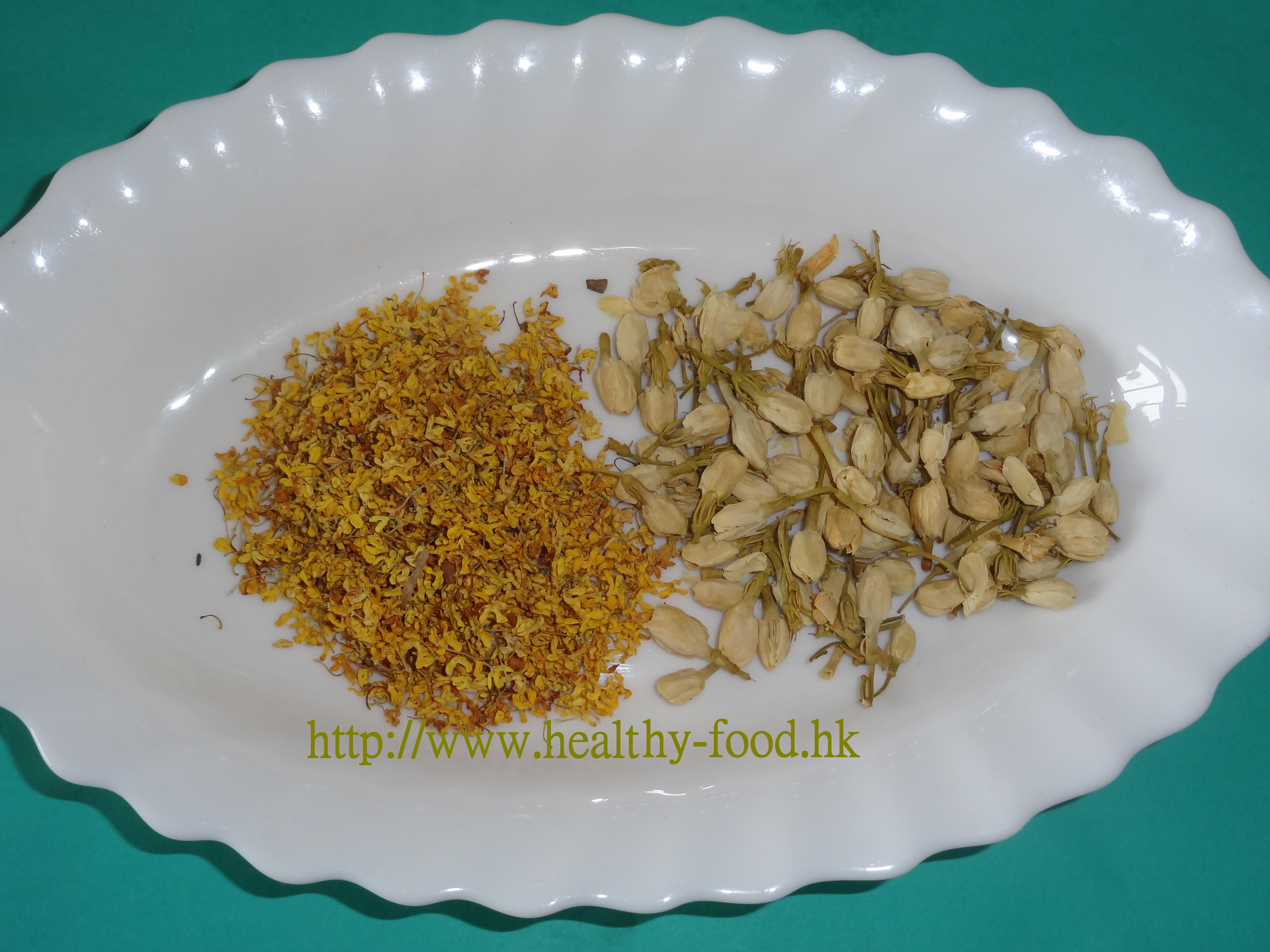
Osmanthus and Jasmine Flower Tea
traditionally associated with supporting qi circulation and blood pressure balance in yang-deficient individuals
In short: Osmanthus and Jasmine Flower Tea is a herbal & flower tea that traditionally associated with supporting qi circulation and blood pressure balance in yang-deficient individuals. It is most often made for heart & circulation, energy & vitality, everyday balance. Total time about 5 min. Key ingredients: osmanthus flowers, jasmine flowers.
Why people make this tea
Nourilo raises an important nuance that many Western readers may not have considered: not all cases of high blood pressure look the same. Some elderly people, after being told they have hypertension, become so restrictive in their diet — low calorie, very little fat, almost no meat — that they swing into nutritional deficiency and a “yang-deficient” pattern. Their blood pressure may remain elevated, but now they also experience dizziness, achy lower back, cold limbs, loose stools and clear, frequent urination. For this profile — yang-deficient hypertension — a warming, qi-moving tea like this gentle osmanthus-jasmine blend is traditionally considered more helpful than the cooling teas typically recommended for hypertension.
Osmanthus has a light, sweet fragrance and is associated in traditional terms with strengthening the spleen, resolving phlegm, dispersing stagnation and calming the liver. Jasmine is slightly warm, sweet and pungent — associated with regulating qi, opening emotional stagnation and harmonising the digestive system. Together they make one of the most pleasant-smelling herbal teas possible.
Safety first — read before you cook
This is a traditional food, not a treatment. Please check with your doctor or pharmacist before making it a regular part of your diet if you:
- are pregnant or breastfeeding, or are cooking for a young child;
- take regular medicines — especially blood thinners, blood-pressure, diabetes or immune-suppressing drugs;
- have a kidney, liver or heart condition, or a known food allergy.
Stop eating it and seek advice if you notice an allergic reaction or feel unwell. Safety notes reviewed 8 October 2026 · How we write safety notes
Members only
Unlock the full method & Nourilo's tips
One payment, lifetime access to every one of our 2,344 recipes — step-by-step methods, preparation tips and serving notes.
- Full step-by-step method for this and all 2,344 recipes
- Nourilo's Tips — sourcing, substitutions and serving notes
- One-time payment · card, Apple Pay or Google Pay · no subscription, no renewals
Checking your access…
$59.99 one-time · all recipes
Sign in or create a free account, then pay once by card, Apple Pay or Google Pay.
Continue with GoogleBy continuing with Google or email you confirm you are 16 or older and agree to our Terms of Use and Privacy Policy.
$59.99 one-time · all recipes
Signed in as ·
Secure checkout by Stripe. One-time payment, no renewals. Access is linked to your Nourilo account and never expires. By paying you agree to our Terms of Use; you can get a full refund within 14 days (refund policy).
Comments
Join the conversation — sign in or create a free account to comment.
Continue with GoogleBy continuing with Google or email you confirm you are 16 or older and agree to our Terms of Use and Privacy Policy.
Loading comments…