Home-Style Dishes
Mulberry Paste (Sang Shen Gao)
Traditionally associated with nourishing yin, enriching blood, and supporting hair vitality
In short: Mulberry Paste (Sang Shen Gao) is a home-style dishe that Traditionally associated with nourishing yin, enriching blood, and supporting hair vitality. It is most often made for children's wellness, skin & natural beauty, kidney & urinary wellness. Total time about 1 hr 20 min. Key ingredients: mulberries, goji berries, red dates.
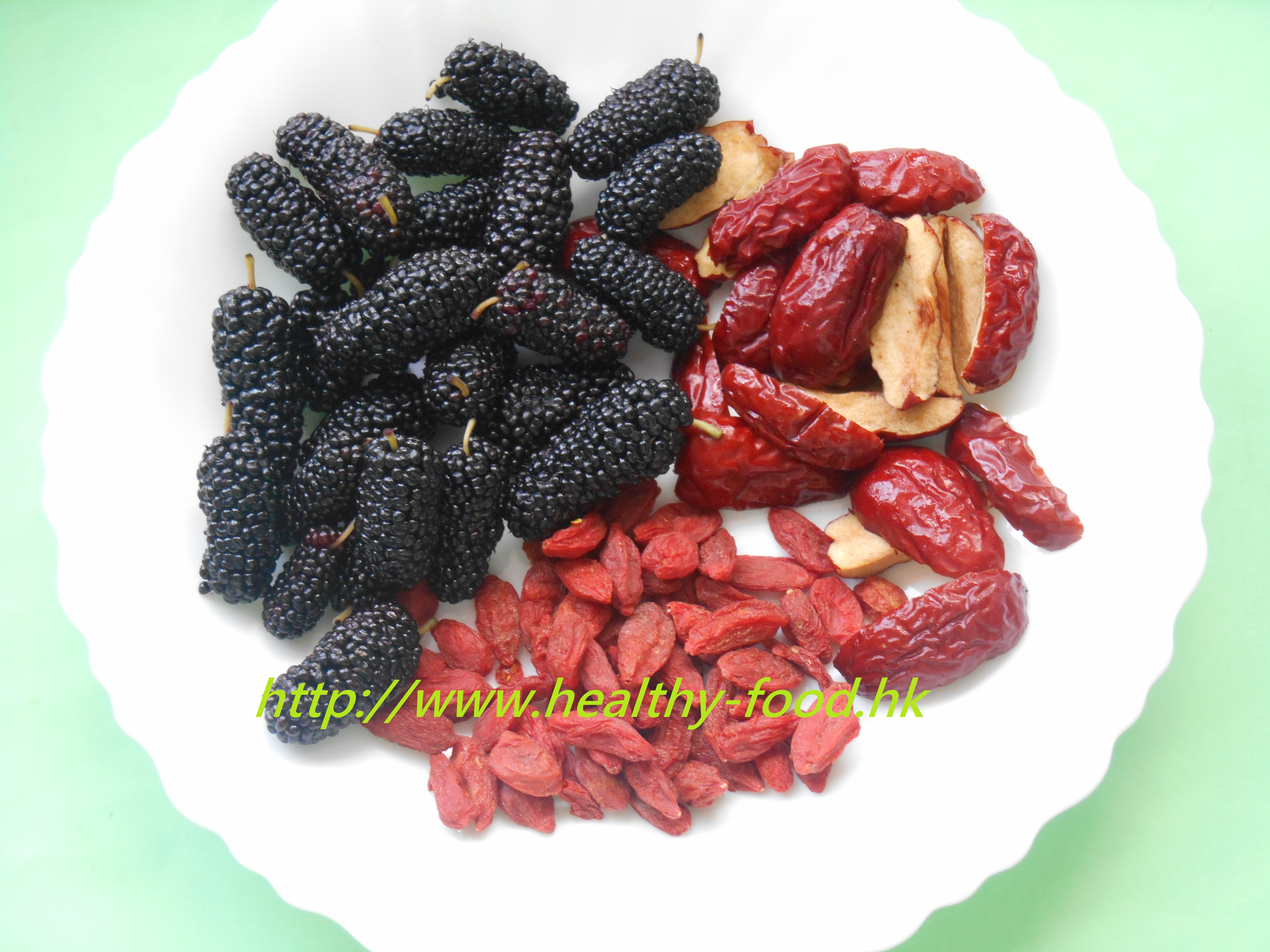
Why people make this paste
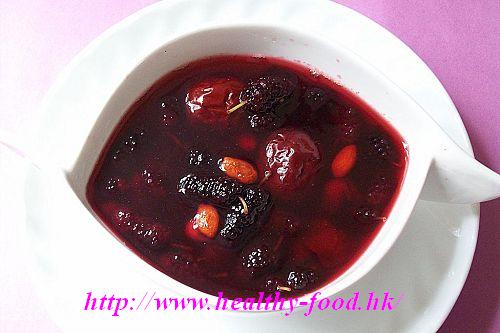
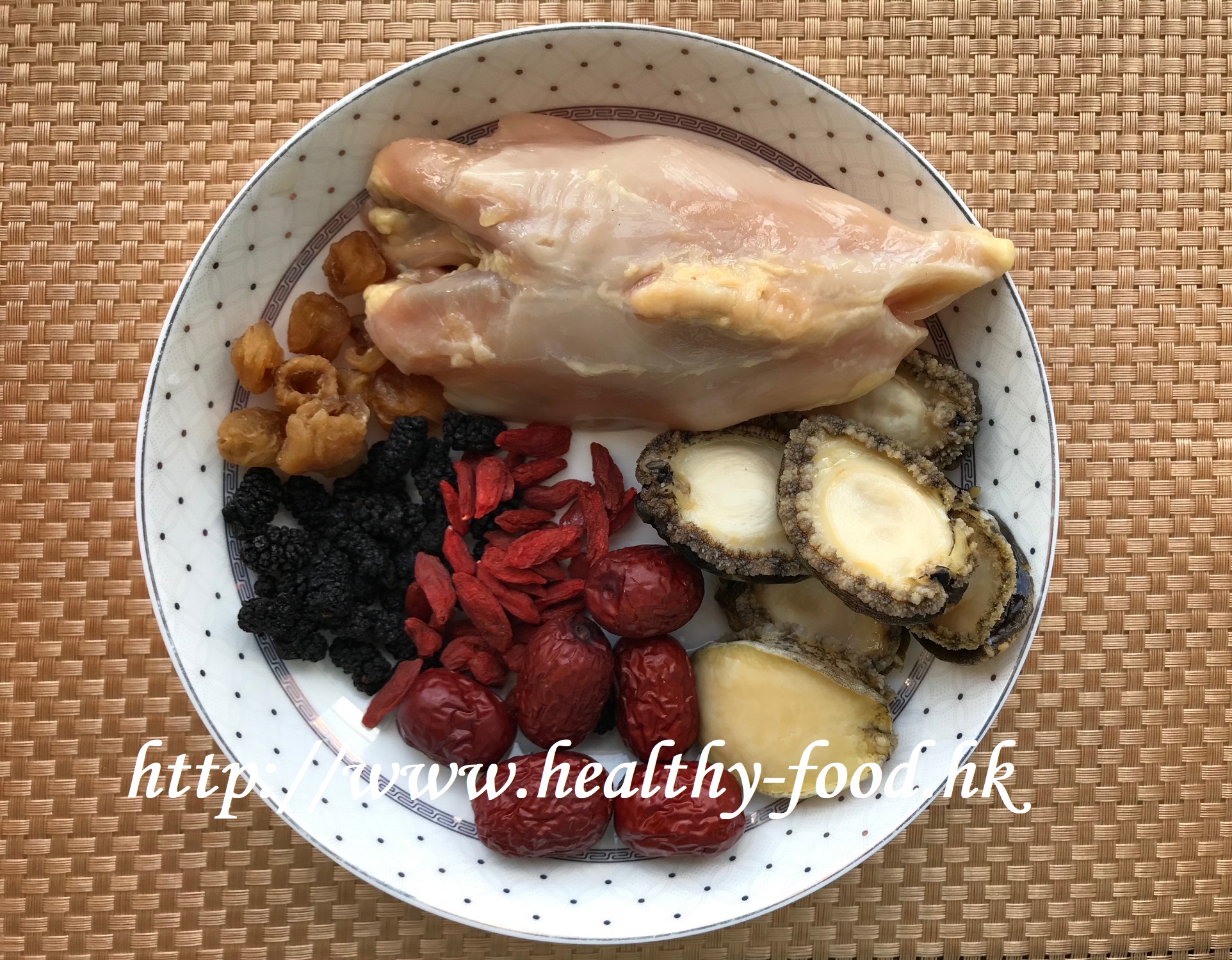
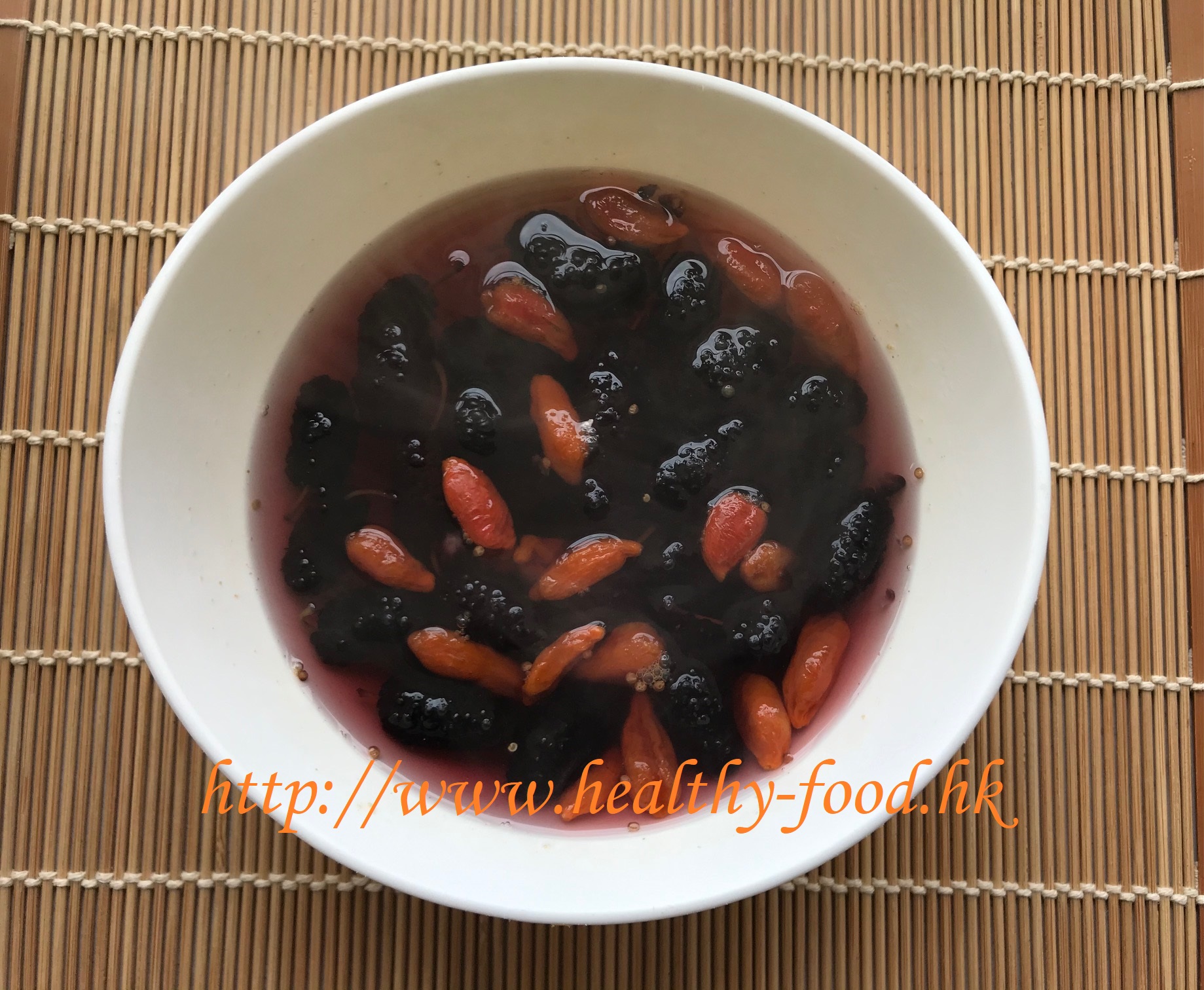
When fresh mulberries are in season — deep black, glossy, and irresistible — it is the perfect moment to put some to good use beyond fresh eating. Half a batch goes into a simple mulberry jam for spreading on bread or crackers, and the other half becomes this nourishing mulberry paste (sang shen gao), combined with goji berries and pitted red dates. The paste keeps in the fridge and can be stirred into a cup of warm water for a pleasant daily tonic.
Mulberries are rich in vitamin B, vitamin C, carotenoids, calcium, and organic acids. Traditional Chinese food therapy has long associated them with supporting the nervous system, improving sleep quality, supporting memory, and contributing to hair vitality — making them particularly interesting for anyone who has noticed early greying or mental fatigue.
Method
- Wash all fruit ingredients, drain well, and chop roughly.
- Place mulberries, goji berries, and dates in a pot with 1.5 L of water.
- Simmer over low heat for 1 hour, stirring occasionally.
- Add the sugar and continue simmering, stirring until the mixture thickens slightly and becomes a loose paste.
- Allow to cool, then transfer to a clean glass jar and store in the refrigerator.
- To serve: dissolve 1 tablespoon in a cup of warm water and drink. Take once or twice daily.
Nourilo’s Tips
The other half of those mulberries can be turned into a simple fruit jam very easily. Rinse and drain the mulberries, chop roughly, then simmer over low heat while stirring constantly with a wooden chopstick. After 6–8 minutes, add sugar and stir until dissolved. You will notice tiny seeds floating to the surface as the fruit cooks — you can skim them off or leave them in, as they do not affect the flavor. Spread on toast or crackers.
What studies say about the key ingredients
Traditional use is not the same as clinical proof. Here is the strongest human research we found for each ingredient, limitations included.
- Mulberries
Post-prandial self-monitored glucose was lower than placebo (18.2%), but A1C did not differ between mulberry leaf extract and placebo. Serum creatinine rose about 15% in the extract group.Limitation: Small pilot: only 17 of 24 enrolled participants completed the study, limiting statistical power.PubMed 28619294 · 3 more mulberries studies - Goji berries
Compared with placebo (n=80), the goji juice group (n=81) reported greater improvements in several self-rated symptoms, including stress, mental acuity, sleep quality and overall well-being, under a random effects model.Limitation: Outcomes were self-reported symptom questionnaires, and several symptoms showed significant heterogeneity across the four pooled trials of a single branded juice.PubMed 22897500 · 3 more goji berries studies - Red dates
Jujube was associated with significantly lower BMI and triglycerides, and lower fasting blood sugar in people with type 2 diabetes. LDL and total cholesterol fell only in some subgroups. HDL, AST and ALT did not change significantly.Limitation: The authors state the overall quality of the evidence is limited, and results varied significantly by dose, treatment duration and disease type.PubMed 40399274 · 3 more red dates studies
From the Nourilo Research Library. Findings come from specific doses, extracts and populations and may not apply to a home-cooked recipe.
Safety first — read before you cook
This is a traditional food, not a treatment. Please check with your doctor or pharmacist before making it a regular part of your diet if you:
- are pregnant or breastfeeding, or are cooking for a young child;
- take regular medicines — especially blood thinners, blood-pressure, diabetes or immune-suppressing drugs;
- have a kidney, liver or heart condition, or a known food allergy.
Ingredient notes for this recipe
- Goji berries: A few cases of raised INR (a bleeding-risk marker) have been reported in people taking warfarin after drinking concentrated goji tea or wine. If you take a blood thinner, check with your doctor. Source: Memorial Sloan Kettering — Lycium
Stop eating it and seek advice if you notice an allergic reaction or feel unwell. Safety notes reviewed 8 October 2026 · How we write safety notes
Comments
Join the conversation — sign in or create a free account to comment.
Continue with GoogleBy continuing with Google or email you confirm you are 16 or older and agree to our Terms of Use and Privacy Policy.
Loading comments…