Herbal & Flower Teas
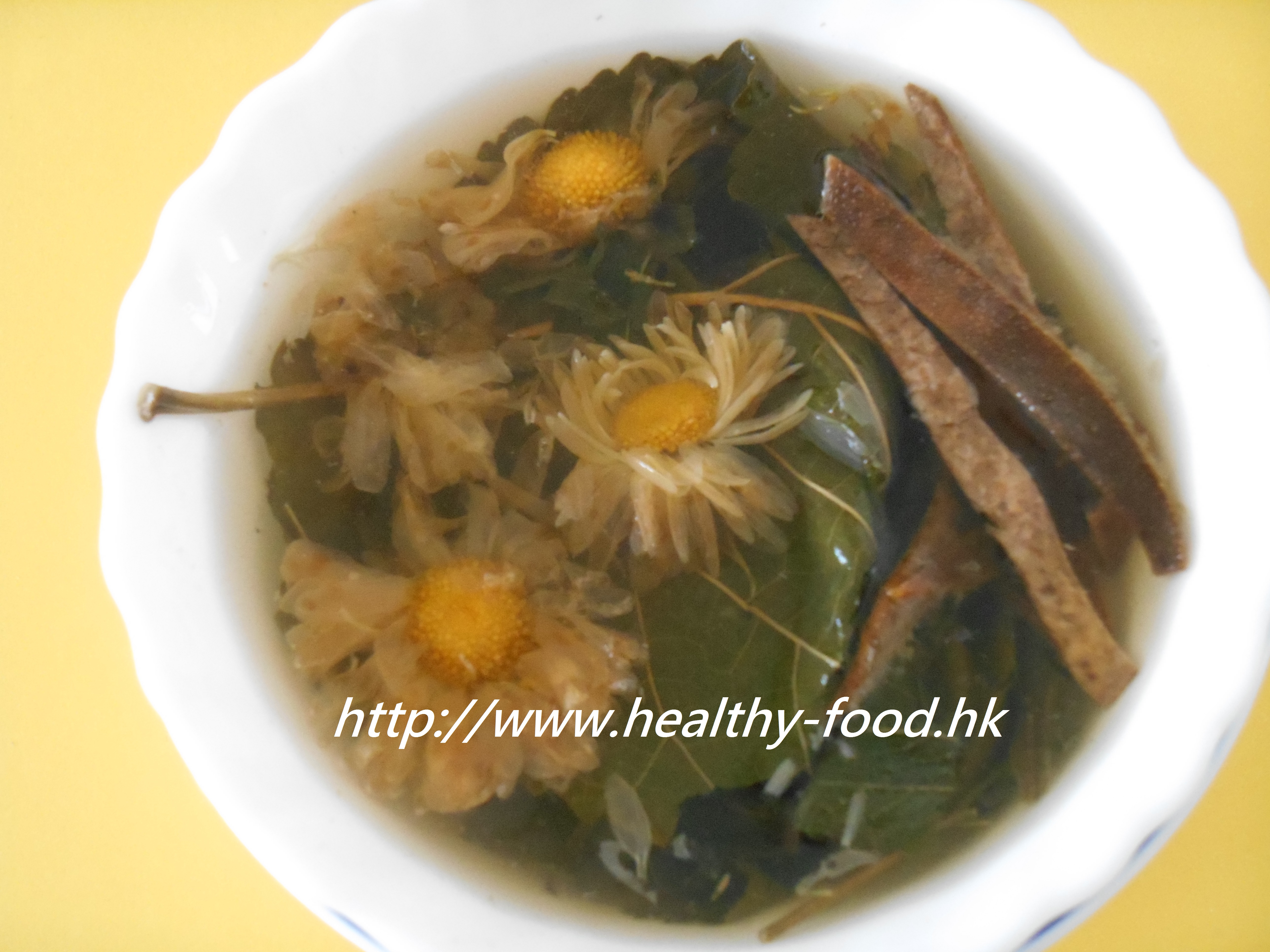
Mulberry Leaf, Chrysanthemum, and Stevia Leaf Tea
traditionally associated with calming liver heat, supporting clear eyesight, and benefiting blood sugar and blood pressure
In short: Mulberry Leaf, Chrysanthemum, and Stevia Leaf Tea is a herbal & flower tea that traditionally associated with calming liver heat, supporting clear eyesight, and benefiting blood sugar and blood pressure. It is most often made for blood sugar balance, heart & circulation, liver wellness. Total time about 11 min. Key ingredients: mulberry leaf, chrysanthemum.
Why people make this tea
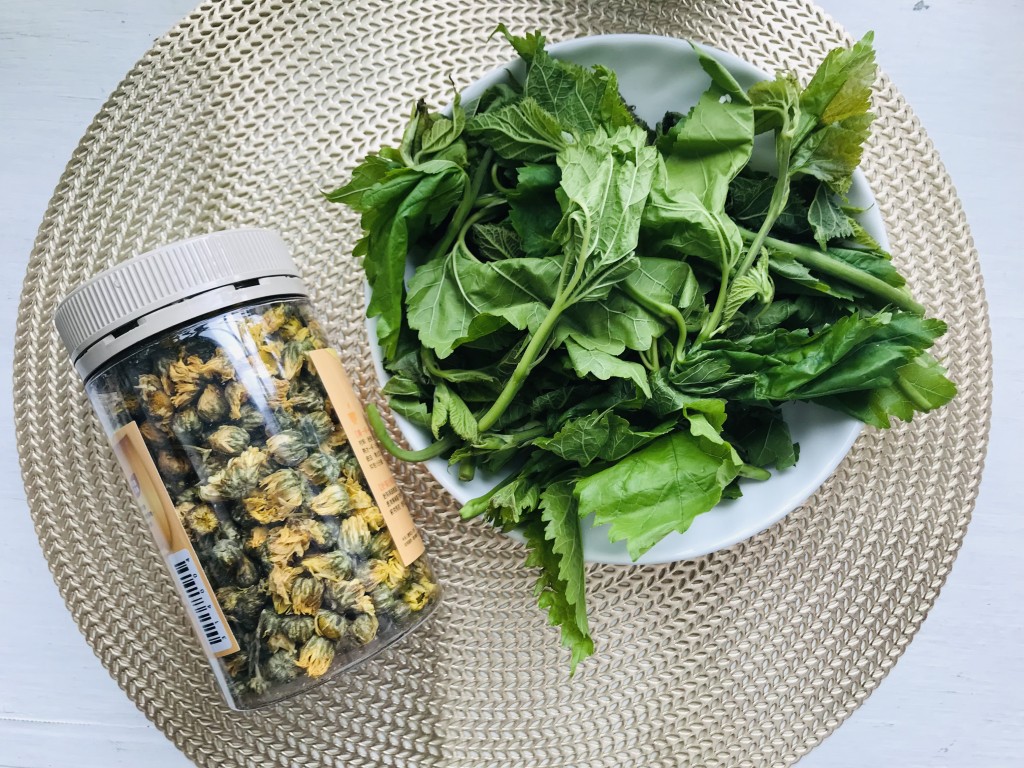
Mulberry leaf is one of the most versatile and underappreciated ingredients in the Chinese herbal pantry, yet it remains widely available at Chinese herb shops at very reasonable prices. Stevia leaf, the natural zero-calorie sweetener, is equally accessible. Brewing these two together with chrysanthemum and a sliver of tangerine peel produces something genuinely useful — a pleasant daily tea that supports the eyes, calms liver heat, and needs no added sugar.
This tea is particularly popular with people who stare at computer screens all day, those who sleep too little, or anyone who notices their eyes looking red, feeling hot, or producing more discharge than usual. In the traditional Chinese framework, these signs are associated with what is called “liver heat” or “yin deficiency with rising fire” — and this gentle tea is a classic daily remedy for that pattern.
Method
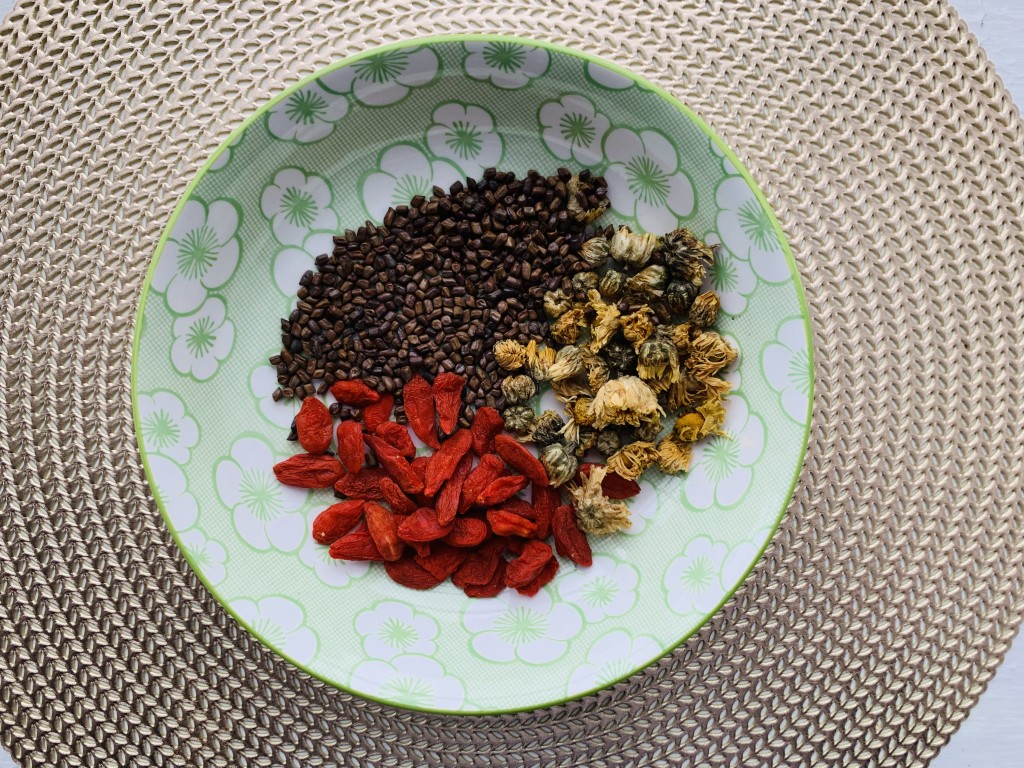
- Rinse all ingredients briefly.
- Place in a small pot with 900 ml of water.
- Bring to a boil, then simmer for 5 to 6 minutes.
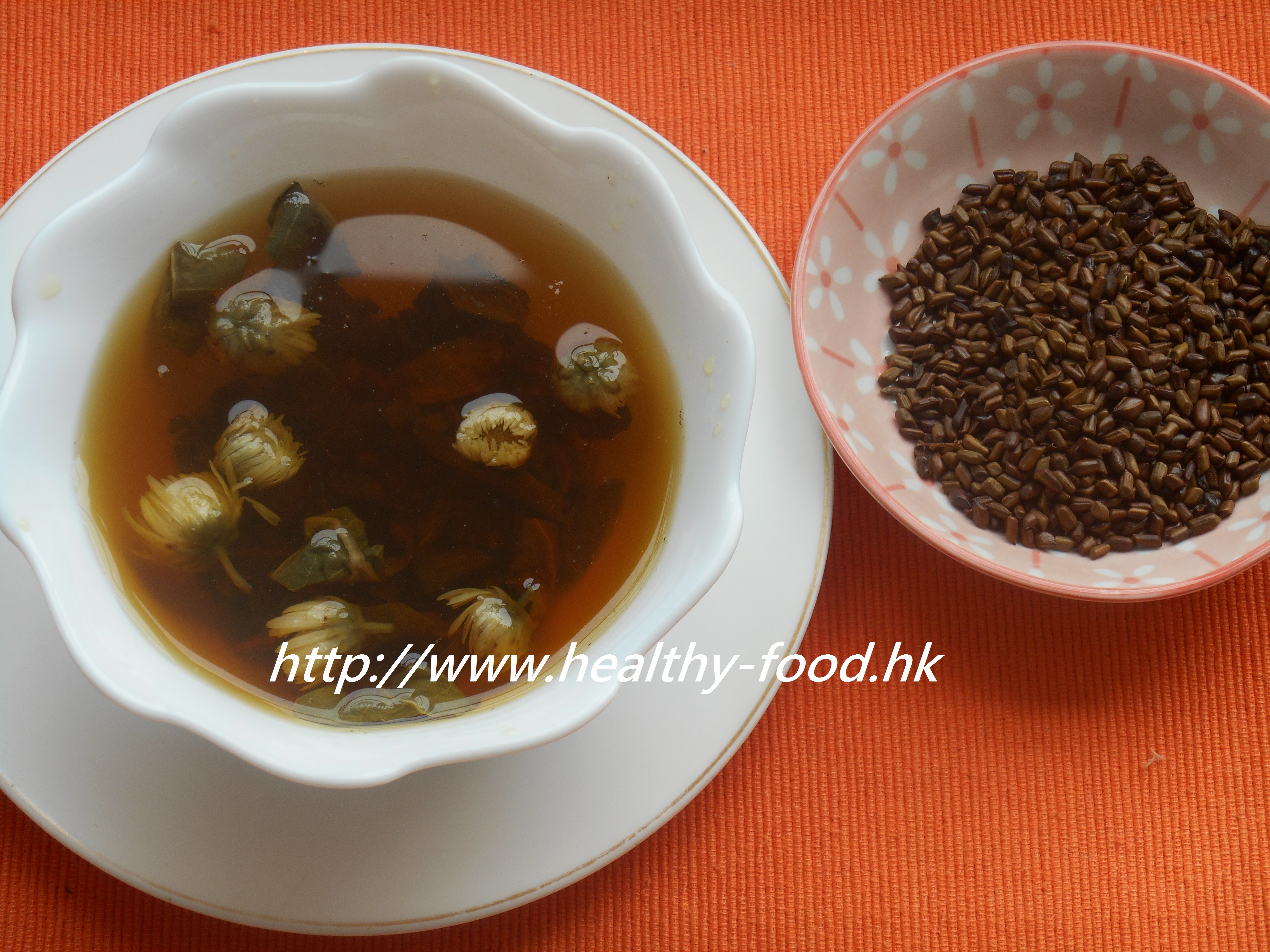
- Pour into cups and drink warm over the course of the day — 2 bowls total. No additional sugar is needed; the stevia provides natural sweetness.
- This tea can be brewed in larger quantities: scale up to 19 g of each ingredient and 8 g of licorice root (gan cao) to serve 4 to 5 people. Do not refrigerate; drink at room temperature.
Nourilo’s Tips
There is no need to add sugar — stevia leaf makes the tea naturally sweet. Do not drink it chilled from the refrigerator; room temperature or warm is ideal. If you cannot find stevia leaf, licorice root slices (gan cao) at 4 to 5 slices work as a pleasant substitute. Those who enjoy it can add 2 to 3 pitted red dates for extra nourishment. All ingredients are available at Chinese or Asian grocers, or online.
What studies say about the key ingredients
Traditional use is not the same as clinical proof. Here is the strongest human research we found for each ingredient, limitations included.
- Chrysanthemum
Compared with the high-fat meal alone, the extract group had lower postprandial glucose at 1 hour and higher antioxidant markers (T-AOC, SOD, GSH), with lower MDA. Incremental area under the curve did not differ significantly between groups.Limitation: Small sample of healthy young adults given a single high-fat meal, so longer-term effects and effects in people with metabolic conditions are unknown.PubMed 36677639 · 1 more chrysanthemum study - Tangerine peel
The tangerine peel drink group showed significant reductions in body weight and triglycerides after the intervention compared with the control group (p < 0.05). Safety markers showed no adverse effects. Gut microbiota and serum metabolite profiles also differed.Limitation: Small pilot trial with only 55 of 72 participants completing. The fermented product is not the same as plain tangerine peel, and the control group is not described.PubMed 40225325
From the Nourilo Research Library. Findings come from specific doses, extracts and populations and may not apply to a home-cooked recipe.
Safety first — read before you cook
This is a traditional food, not a treatment. Please check with your doctor or pharmacist before making it a regular part of your diet if you:
- are pregnant or breastfeeding, or are cooking for a young child;
- take regular medicines — especially blood thinners, blood-pressure, diabetes or immune-suppressing drugs;
- have a kidney, liver or heart condition, or a known food allergy.
Stop eating it and seek advice if you notice an allergic reaction or feel unwell. Safety notes reviewed 8 October 2026 · How we write safety notes
Comments
Join the conversation — sign in or create a free account to comment.
Continue with GoogleBy continuing with Google or email you confirm you are 16 or older and agree to our Terms of Use and Privacy Policy.
Loading comments…