Tonic Drinks & Waters
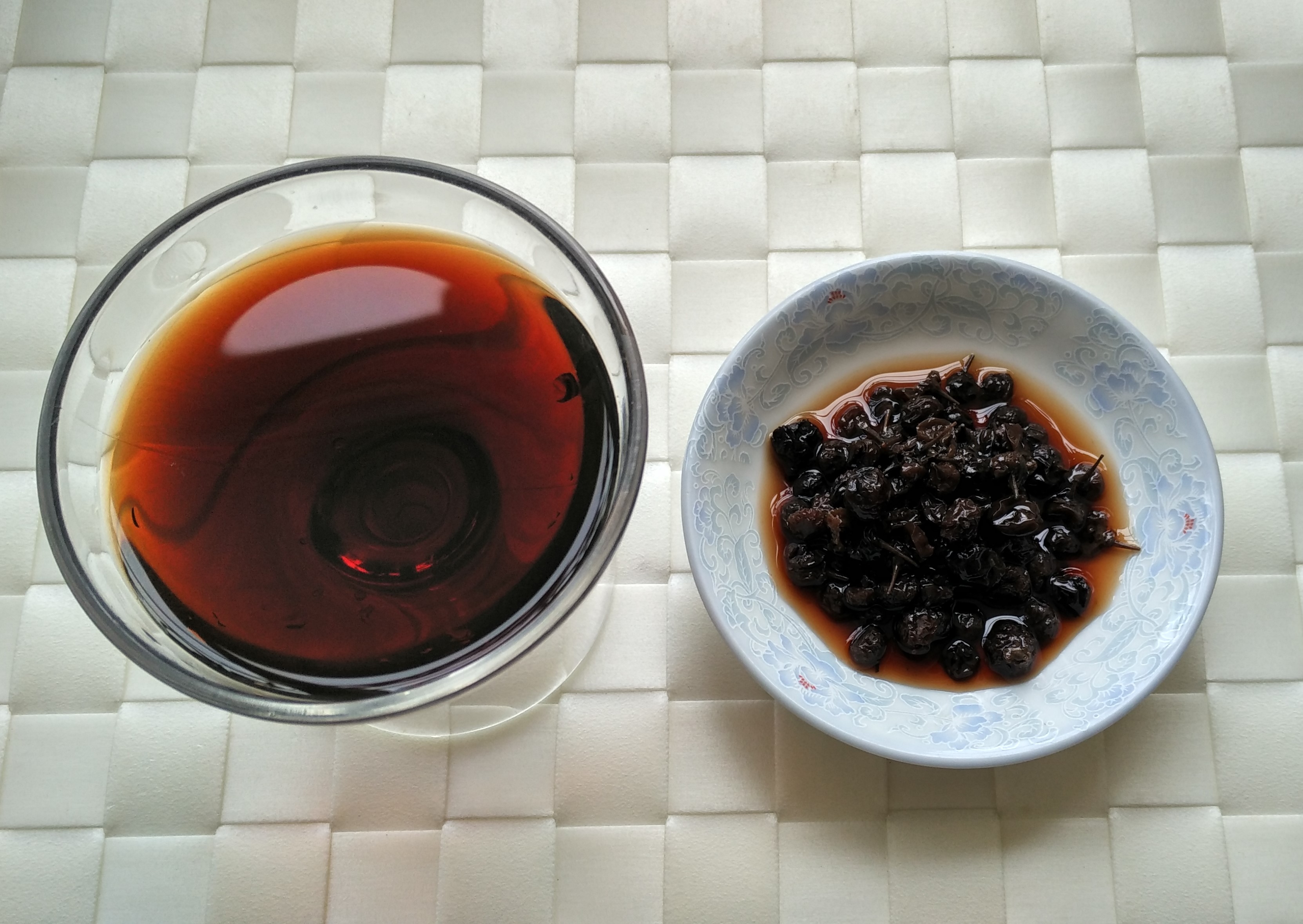
Black Wolfberry Rice Wine
traditionally used to support eye health, nourish the liver, and support cardiovascular wellness
In short: Black Wolfberry Rice Wine is a tonic drinks & water that traditionally used to support eye health, nourish the liver, and support cardiovascular wellness. It is most often made for blood sugar balance, heart & circulation, liver wellness. Key ingredients: rock sugar.
Why people make this infusion
A friend brought Nourilo a gift of premium black wolfberries sourced directly from their origin region in China — deeply purple, packed with anthocyanins, and noticeably more potent than the ordinary supermarket kind. Anthocyanins are pigments that give blueberries and other dark berries their colour and are associated with antioxidant activity; black wolfberries are considered among the richest natural sources. Nourilo brewed some as tea (the colour turns a vivid purple-red) and steeped the rest in rice wine. After two months, he opened the bottle to find a fragrant, mellow wine with a beautiful colour. Beyond eye support, the infusion is traditionally valued for circulation, joint ease, and anti-ageing nourishment.
Method
- Place the black wolfberries in a steaming dish and steam over boiling water for 7 minutes. This sterilises them and helps the colour and compounds infuse better.
- Allow to cool completely.
- Transfer to a clean, dry glass jar.
- Pour in the rice wine. Add a small amount of crushed rock sugar if desired.
- Seal the jar and store in a cool, dark place.
- The wine will be ready to drink after approximately one month.
- Serve in small amounts (about 1–2 tablespoons per serving).
Nourilo’s Tips
- This tonic wine is traditionally associated with supporting those with elevated blood pressure, cholesterol, or blood sugar (“three highs”), easy fatigue, hormonal imbalance, and dull skin.
- Because it is warming in nature, do not drink too much at a time. Those prone to internal heat should be especially moderate.
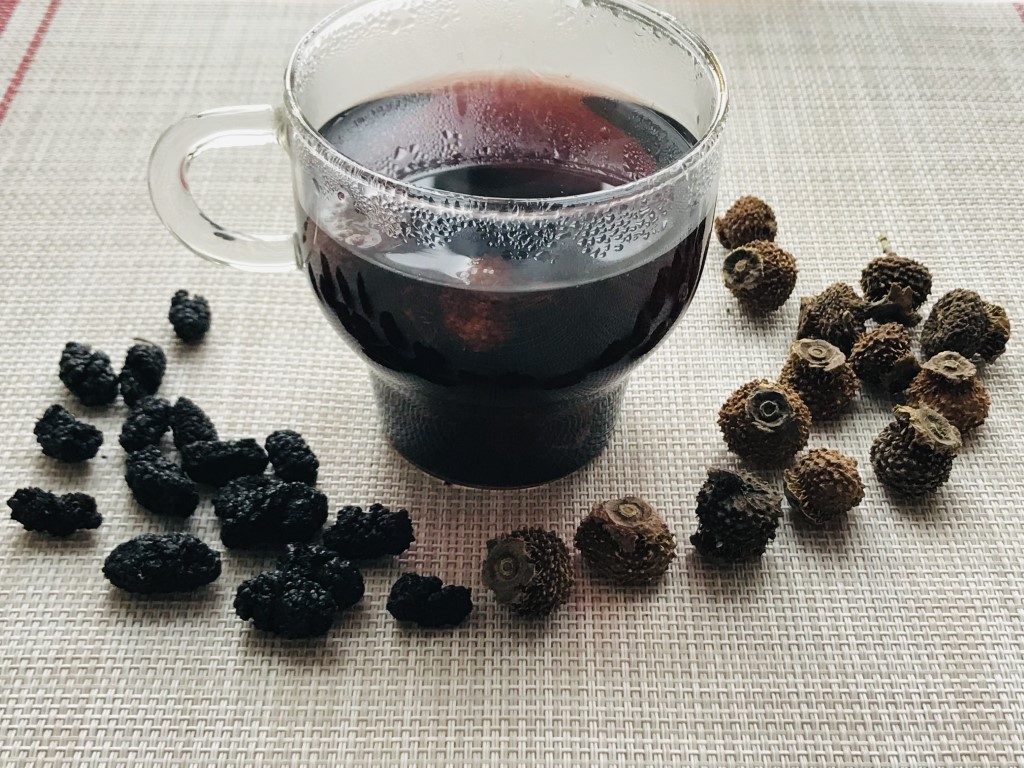
- For those who cannot drink alcohol (gout, liver issues, pregnancy): simply brew black wolfberries as a tea. Use about 1 tablespoon per cup of hot water; the colour turns a beautiful purple-red. For children, steep in mild rice vinegar with rock sugar as a treat.
- You can add crushed rock sugar to the wine for a more pleasant flavour.
What studies say about the key ingredients
Traditional use is not the same as clinical proof. Here is the strongest human research we found for each ingredient, limitations included.
- Goji berries
Compared with placebo (n=80), the goji juice group (n=81) reported greater improvements in several self-rated symptoms, including stress, mental acuity, sleep quality and overall well-being, under a random effects model.Limitation: Outcomes were self-reported symptom questionnaires, and several symptoms showed significant heterogeneity across the four pooled trials of a single branded juice.PubMed 22897500 · 3 more goji berries studies
From the Nourilo Research Library. Findings come from specific doses, extracts and populations and may not apply to a home-cooked recipe.
Safety first — read before you cook
This is a traditional food, not a treatment. Please check with your doctor or pharmacist before making it a regular part of your diet if you:
- are pregnant or breastfeeding, or are cooking for a young child;
- take regular medicines — especially blood thinners, blood-pressure, diabetes or immune-suppressing drugs;
- have a kidney, liver or heart condition, or a known food allergy.
Ingredient notes for this recipe
- Goji berries: A few cases of raised INR (a bleeding-risk marker) have been reported in people taking warfarin after drinking concentrated goji tea or wine. If you take a blood thinner, check with your doctor. Source: Memorial Sloan Kettering — Lycium
- Rice wine / alcohol: This recipe contains alcohol. If you are pregnant or planning a pregnancy, the NHS recommends not drinking alcohol; leave it out or choose another recipe. Source: NHS — Alcohol in pregnancy
Stop eating it and seek advice if you notice an allergic reaction or feel unwell. Safety notes reviewed 8 October 2026 · How we write safety notes


Comments
Join the conversation — sign in or create a free account to comment.
Continue with GoogleBy continuing with Google or email you confirm you are 16 or older and agree to our Terms of Use and Privacy Policy.
Loading comments…