Soups
Wolfberry Leaf and Lean Pork Soup
traditionally associated with supporting liver health, clearing blood heat, and nourishing the eyes
In short: Wolfberry Leaf and Lean Pork Soup is a soup that traditionally associated with supporting liver health, clearing blood heat, and nourishing the eyes. It is most often made for blood sugar balance, heart & circulation, liver wellness. Total time about 1 hr. Key ingredients: goji berries, lean pork.
Why people make this soup
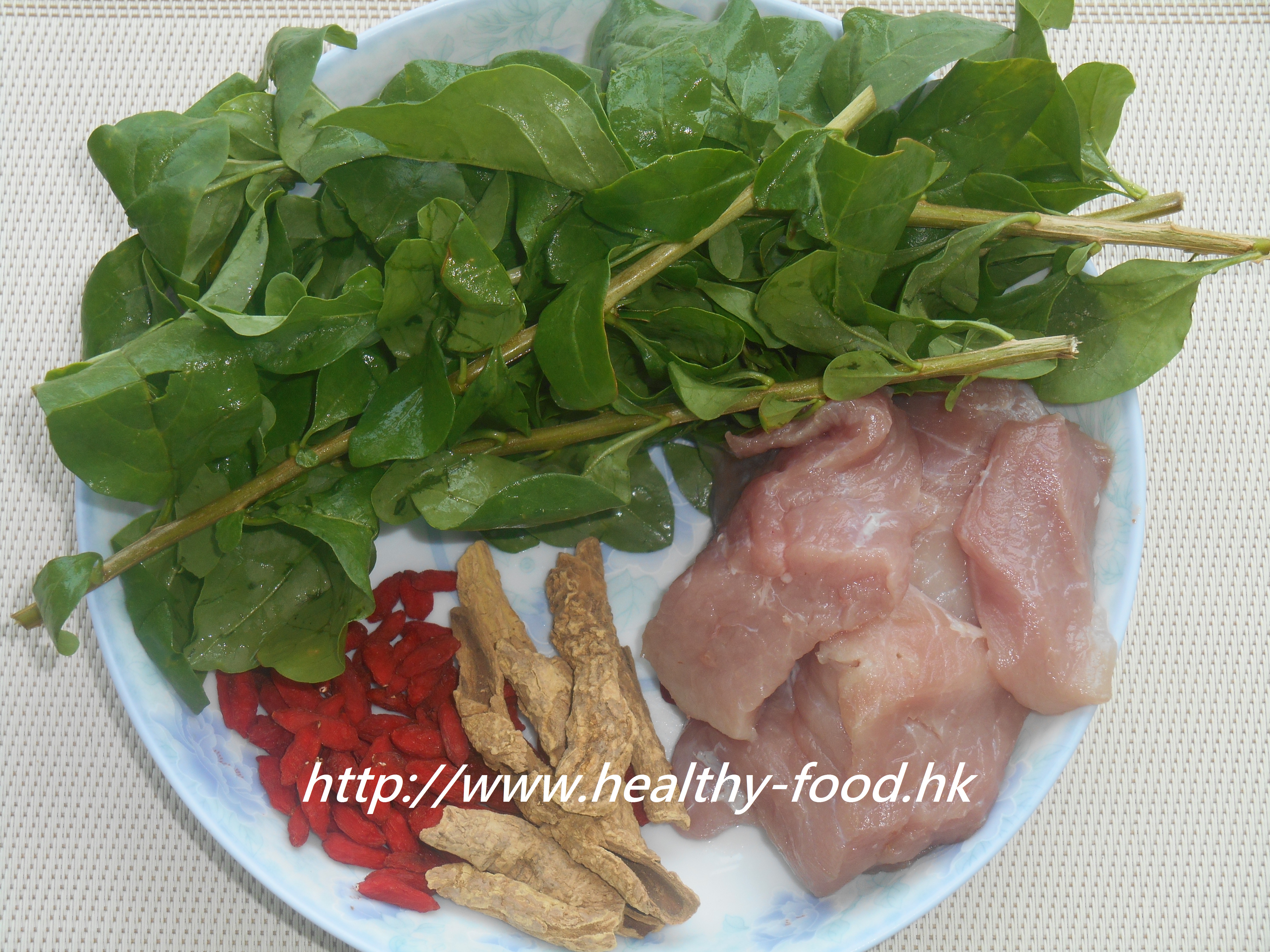
The wolfberry plant (Lycium barbarum) is known in the West mainly for its bright red berries — goji berries. But in traditional Cantonese cooking, the whole plant is a treasure. When wolfberry leaves come into season, it is the ideal time to make this classic soup. The fresh leaves have a mild, slightly grassy flavour, and together with the berries and the root bark, they create something genuinely restorative.
This is particularly popular among people whose eyes feel tired and strained from long hours in front of screens, or who are concerned about fatty liver — a condition increasingly common among city dwellers who eat a lot of meat and fried food. Traditional food therapy associates the wolfberry plant with supporting liver circulation, healthy fat metabolism in the liver, and promoting cell renewal. Of course, this is a soup, not a medicine — but it is a pleasant, healthy one that has been part of Cantonese kitchens for generations.
Method
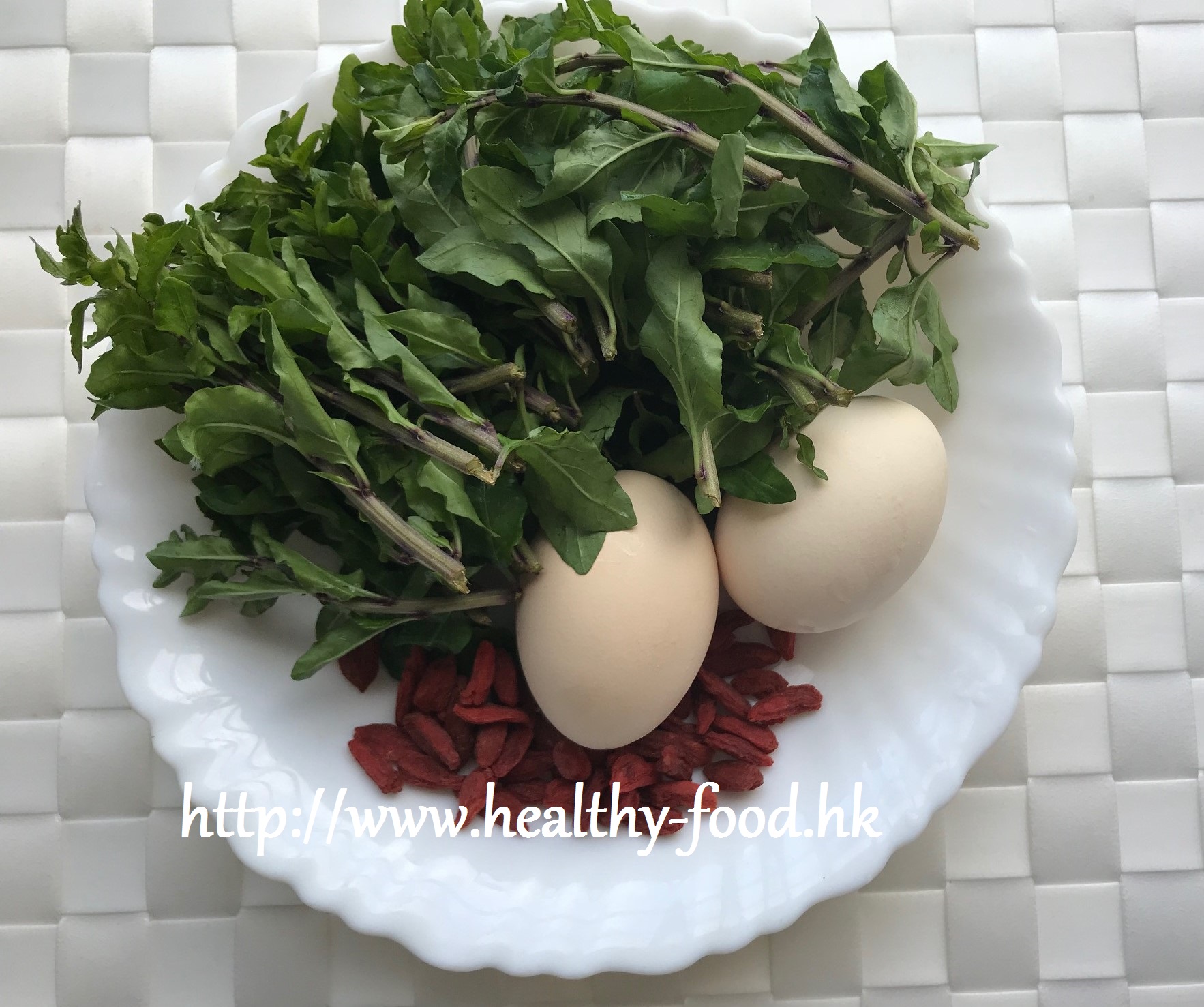
- Pick the leaves off the wolfberry stems and rinse them well. Rinse and soak the goji berries and wolfberry root bark briefly.
- Slice the lean pork into thin pieces.
- Add the pork and wolfberry root bark to a pot with 1.5 L of water. Bring to a boil and simmer for 30 minutes.
- Add the wolfberry leaves and goji berries. Continue to cook for a further 15 minutes.
- Serve immediately and eat the leaves along with the broth.
Nourilo’s Tips
This soup also benefits those with high blood pressure and high blood sugar, as the wolfberry plant is traditionally associated with helping to moderate blood sugar elevation. It does not have a dampness-draining effect, so do not add barley if that is your goal — make a separate dampness-clearing soup instead.
What studies say about the key ingredients
Traditional use is not the same as clinical proof. Here is the strongest human research we found for each ingredient, limitations included.
- Goji berries
Compared with placebo (n=80), the goji juice group (n=81) reported greater improvements in several self-rated symptoms, including stress, mental acuity, sleep quality and overall well-being, under a random effects model.Limitation: Outcomes were self-reported symptom questionnaires, and several symptoms showed significant heterogeneity across the four pooled trials of a single branded juice.PubMed 22897500 · 3 more goji berries studies
From the Nourilo Research Library. Findings come from specific doses, extracts and populations and may not apply to a home-cooked recipe.
Safety first — read before you cook
This is a traditional food, not a treatment. Please check with your doctor or pharmacist before making it a regular part of your diet if you:
- are pregnant or breastfeeding, or are cooking for a young child;
- take regular medicines — especially blood thinners, blood-pressure, diabetes or immune-suppressing drugs;
- have a kidney, liver or heart condition, or a known food allergy.
Ingredient notes for this recipe
- Goji berries: A few cases of raised INR (a bleeding-risk marker) have been reported in people taking warfarin after drinking concentrated goji tea or wine. If you take a blood thinner, check with your doctor. Source: Memorial Sloan Kettering — Lycium
Stop eating it and seek advice if you notice an allergic reaction or feel unwell. Safety notes reviewed 8 October 2026 · How we write safety notes
Comments
Join the conversation — sign in or create a free account to comment.
Continue with GoogleBy continuing with Google or email you confirm you are 16 or older and agree to our Terms of Use and Privacy Policy.
Loading comments…