Congee & Porridge
Laba Eight-Treasure Congee
traditionally used to warm the stomach and dispel cold in winter
In short: Laba Eight-Treasure Congee is a congee & porridge that traditionally used to warm the stomach and dispel cold in winter. It is most often made for respiratory & lung wellness, digestive wellness, everyday balance. Total time about 10 hr. Key ingredients: white rice, glutinous rice, millet, job's tears (coix).
Why people make this congee
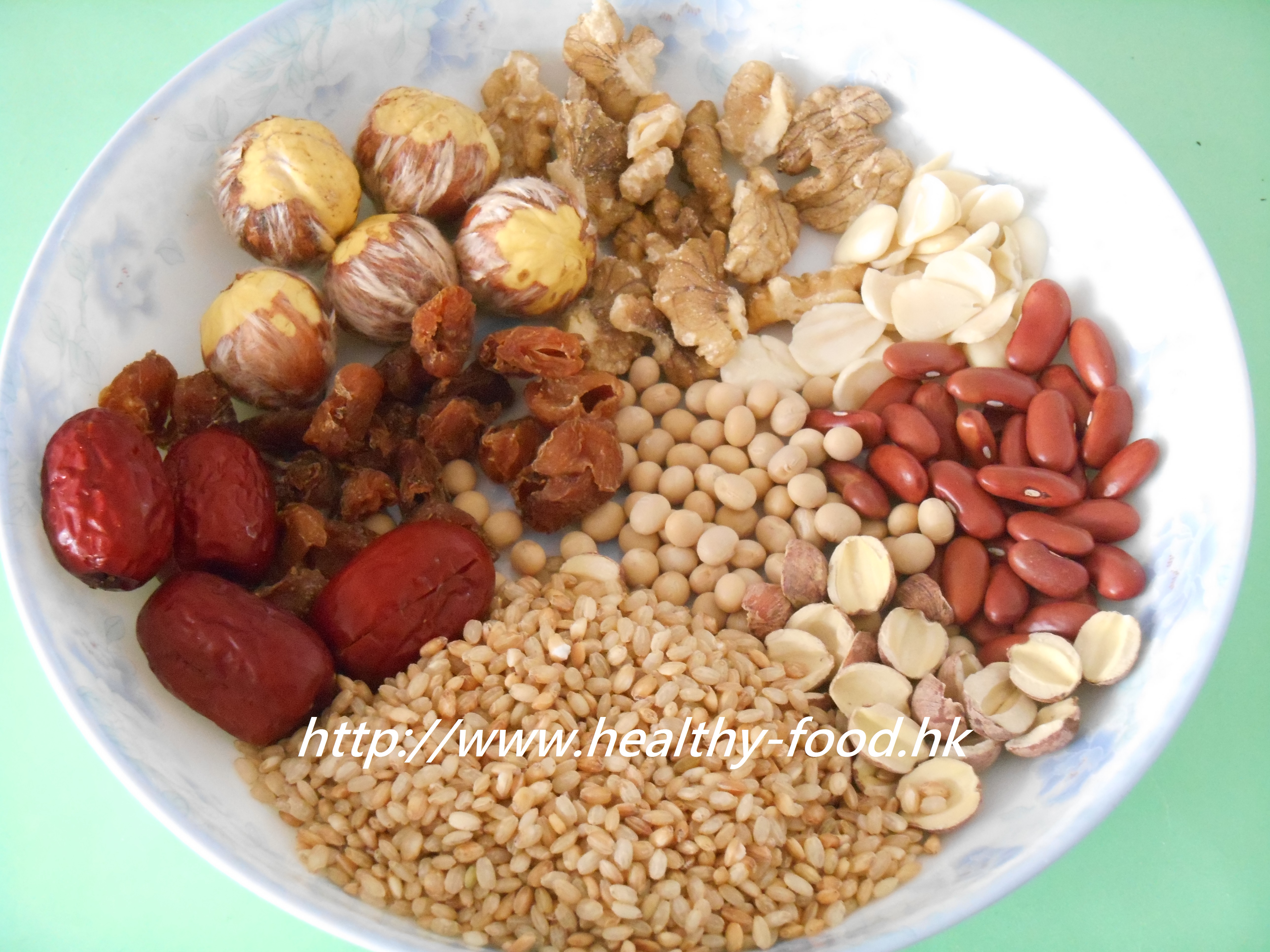
Every winter on Laba Day — the eighth day of the twelfth lunar month — families across China simmer a big pot of this multi-ingredient porridge. The idea is beautifully simple: combine whatever warming grains, hearty beans, and nourishing nuts you have on hand, slow-cook them until the whole pot becomes a fragrant, thick, comforting porridge, and share it with the people you love. It is the kind of dish that warms you from the inside out on the coldest days of the year. Traditional food therapy considers this combination to be supportive of the spleen and stomach, and gentle enough for the whole family.
Method
- The evening before, rinse the beans (kidney beans, adzuki beans, mung beans) and soak them overnight in cold water. They are much harder than the grains and need a head start. Drain and discard the soaking water before cooking.
- Rinse all remaining grains and nuts. If using dried lotus seeds, soak them for 30 minutes as well.
- Place all ingredients — drained beans, grains, nuts, longan, lily bulb, red dates, and raisins — into a large pot. Add water in a ratio of approximately 3 parts water to 1 part combined ingredients.
- Bring to a boil over high heat, then reduce to the lowest possible simmer. Cook for 1.5 to 2 hours, stirring occasionally, until the grains are completely soft and the congee is thick and fragrant. A rice cooker with a porridge setting makes this very easy — no watching required.
- Taste and adjust sweetness if desired; a small piece of rock sugar can be added near the end.
- Serve warm. If the congee thickens too much on standing, stir in a little hot water.
Nourilo’s Tips
- The key to smooth-textured congee is soaking the beans the night before; if you skip this step, the beans will take at least 2 hours to soften and the total cook time will be much longer.
- Water-to-ingredient ratio is roughly 3:1 — fill your pot with the ingredients, then add three times as much water. This is a forgiving recipe; adjust to how thick or thin you like your congee.
- Using a slow cooker or rice cooker overnight is the most convenient approach: set it up before bed and wake up to a ready pot.
- For peeling chestnuts easily: drop them into a large pot of boiling water for 1 minute, then lift them out onto a towel and rub with the towel while still hot. The inner skin comes off much more easily this way. Even if a little skin remains, it will float to the surface as the congee cooks and can be skimmed off.
What studies say about the key ingredients
Traditional use is not the same as clinical proof. Here is the strongest human research we found for each ingredient, limitations included.
- Job's tears (coix)
Myeloperoxidase activity rose significantly in the placebo group after 8 weeks but showed no significant change in the adlay tea group. Vascular endothelial function improved in the adlay group, especially in those over 40.Limitation: Participants were healthy adults and the outcomes were surrogate markers, so the results say little about clinical disease outcomes. Tea is a polyphenol-rich extract, not whole grain.PubMed 38945894 · 2 more job's tears (coix) studies - Adzuki beans
Adzuki bean meals had a low glycemic index (21–51 range reported with lotus seed), whereas other starchy foods did not differ significantly from rice. Adzuki bean hydrolysis index was lower than other test foods.Limitation: Only ten healthy participants and acute single-meal responses, so effects in people with diabetes or with regular intake are unknown.PubMed 30875961 · 1 more adzuki beans study - Mung beans
Breath hydrogen and methane were higher after wheat than after rice or mung bean noodles. Bloating scores after mung bean did not differ significantly from wheat, and mung bean produced gas levels similar to rice.Limitation: Small sample of 20 patients, with single meals tested rather than habitual intake, so longer-term effects of mung bean on symptoms are unknown.PubMed 31484315 · 1 more mung beans study
From the Nourilo Research Library. Findings come from specific doses, extracts and populations and may not apply to a home-cooked recipe.
Safety first — read before you cook
This is a traditional food, not a treatment. Please check with your doctor or pharmacist before making it a regular part of your diet if you:
- are pregnant or breastfeeding, or are cooking for a young child;
- take regular medicines — especially blood thinners, blood-pressure, diabetes or immune-suppressing drugs;
- have a kidney, liver or heart condition, or a known food allergy.
Stop eating it and seek advice if you notice an allergic reaction or feel unwell. Safety notes reviewed 8 October 2026 · How we write safety notes

Comments
Join the conversation — sign in or create a free account to comment.
Continue with GoogleBy continuing with Google or email you confirm you are 16 or older and agree to our Terms of Use and Privacy Policy.
Loading comments…