Soups
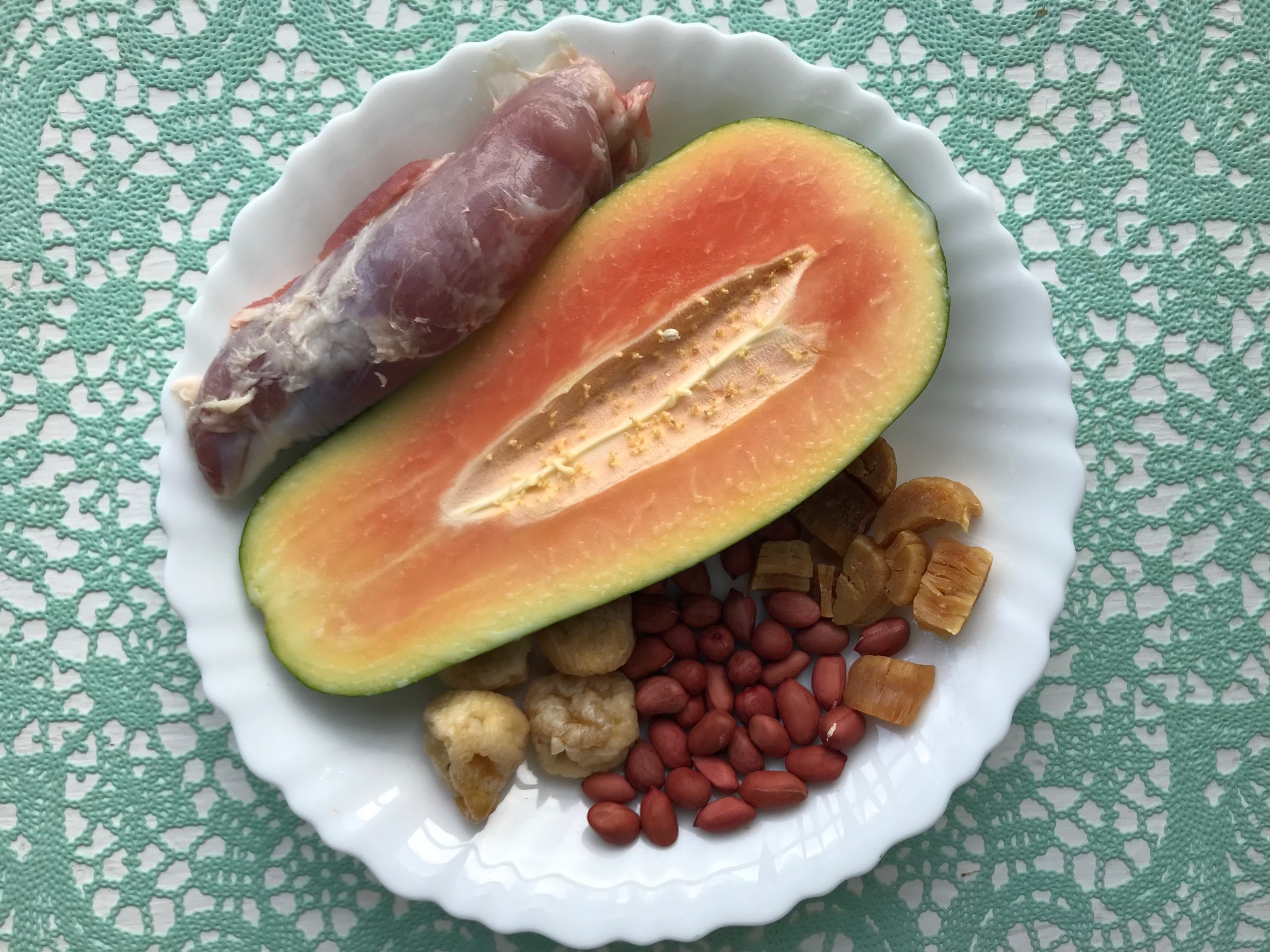
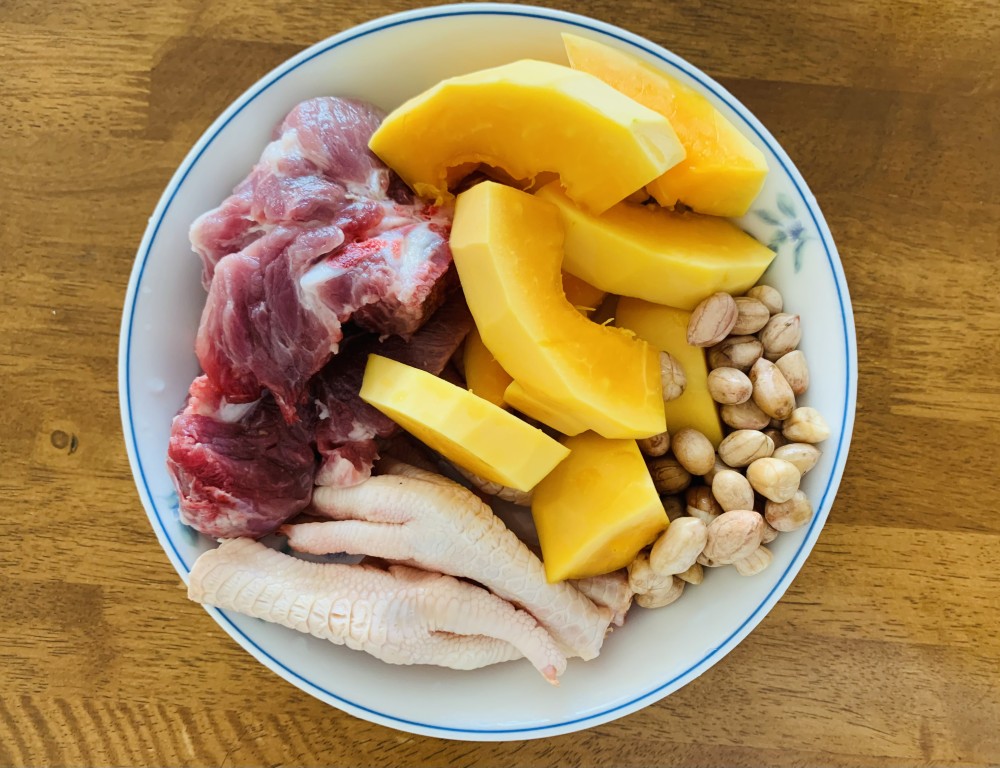
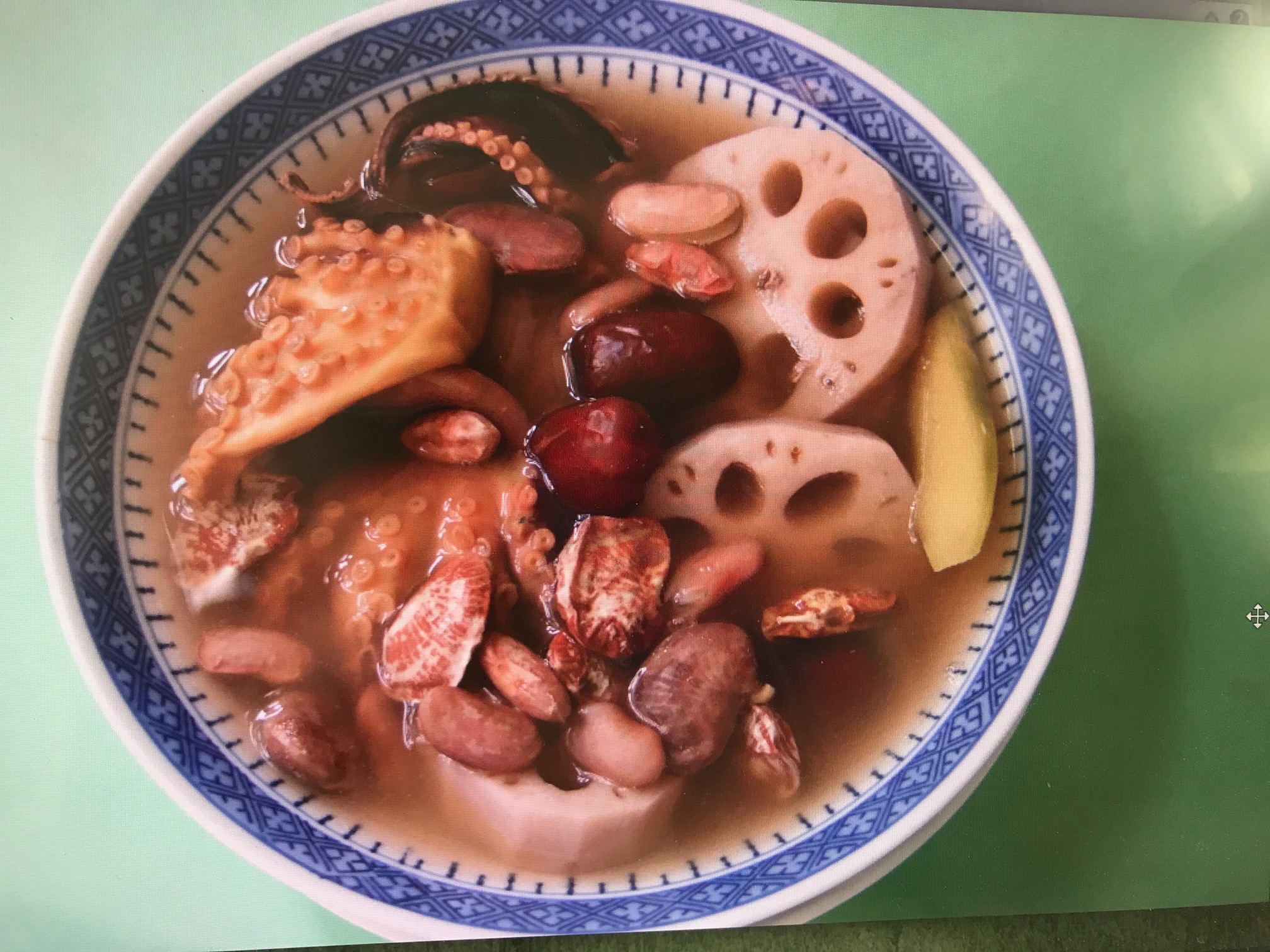
Green Papaya, Red-Skin Peanut, Dried Fig, Pork Shin & Dried Scallop Soup
Traditionally associated with supporting breast milk production and nourishing new mothers
In short: Green Papaya, Red-Skin Peanut, Dried Fig, Pork Shin & Dried Scallop Soup is a soup that Traditionally associated with supporting breast milk production and nourishing new mothers. It is most often made for women's wellness, everyday balance. Total time about 1 hr 20 min. Key ingredients: green papaya, red-skin peanuts, figs, lean pork.
Why people make this soup
Papaya comes in two distinct forms: the firm, pale-green unripe fruit used in savoury cooking, and the golden-orange ripe fruit enjoyed fresh or in dessert soups. They look like the same fruit, but in the kitchen they do very different things. Ripe papaya is sweet and gentle — wonderful to eat fresh or to use in a dessert soup. Green papaya is firmer, less sweet, and packed with natural enzymes that ripe papaya does not have in the same concentration. It is these enzymes that have made green papaya one of the best-known ingredients in Chinese (and indeed Southeast Asian) lactation cooking. Combined with red-skin peanuts and dried figs — both traditionally associated with milk production — and given body by pork shin and dried scallop, this soup is a warm, nourishing, and genuinely practical choice for a new mother who wants to build her milk supply.
Safety first — read before you cook
This is a traditional food, not a treatment. Please check with your doctor or pharmacist before making it a regular part of your diet if you:
- are pregnant or breastfeeding, or are cooking for a young child;
- take regular medicines — especially blood thinners, blood-pressure, diabetes or immune-suppressing drugs;
- have a kidney, liver or heart condition, or a known food allergy.
Stop eating it and seek advice if you notice an allergic reaction or feel unwell. Safety notes reviewed 8 October 2026 · How we write safety notes
Members only
Unlock the full method & Nourilo's tips
One payment, lifetime access to every one of our 2,344 recipes — step-by-step methods, preparation tips and serving notes.
- Full step-by-step method for this and all 2,344 recipes
- Nourilo's Tips — sourcing, substitutions and serving notes
- One-time payment · card, Apple Pay or Google Pay · no subscription, no renewals
Checking your access…
$59.99 one-time · all recipes
Sign in or create a free account, then pay once by card, Apple Pay or Google Pay.
Continue with GoogleBy continuing with Google or email you confirm you are 16 or older and agree to our Terms of Use and Privacy Policy.
$59.99 one-time · all recipes
Signed in as ·
Secure checkout by Stripe. One-time payment, no renewals. Access is linked to your Nourilo account and never expires. By paying you agree to our Terms of Use; you can get a full refund within 14 days (refund policy).
Comments
Join the conversation — sign in or create a free account to comment.
Continue with GoogleBy continuing with Google or email you confirm you are 16 or older and agree to our Terms of Use and Privacy Policy.
Loading comments…