Soups
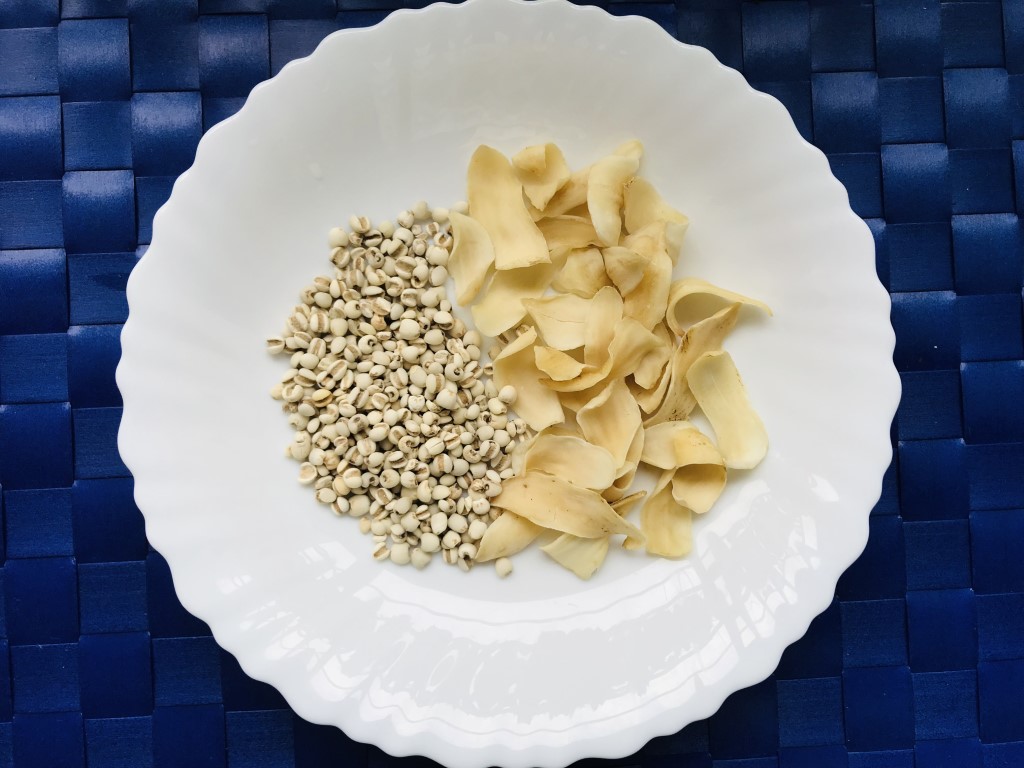
Lily Bulb and Job's Tears Soup
Traditionally used to ease joint discomfort and support uric acid management
In short: Lily Bulb and Job's Tears Soup is a soup that Traditionally used to ease joint discomfort and support uric acid management. It is most often made for bone & joint wellness. Total time about 1 hr 10 min. Key ingredients: lily bulb, job's tears (coix), rock sugar.
Why people make this soup
Gout flares up suddenly — red, hot, swollen joints, most often in the toes or ankles — and can be genuinely debilitating. It happens when uric acid crystals build up in the joint spaces, often triggered by foods high in purines: shellfish, organ meats, most legumes, mushrooms, and alcohol. Beyond diet changes and staying well hydrated, Cantonese food-therapy traditions have long turned to lily bulb (bai he) and job’s tears (sheng yi mi) as a gentle, daily-use brew to support the body’s fluid metabolism and ease joint discomfort. Lily bulb contains colchicine and related compounds, which have been shown to help reduce inflammation. Job’s tears are one of the most commonly used ingredients in Chinese wellness cooking for clearing dampness and supporting the urinary system.
Method
- Rinse the lily bulb and job’s tears, then soak separately in cold water for 20–30 minutes. Drain and discard the soaking water.
- Place both ingredients in a pot with 1.8 L of fresh water.
- Bring to a boil, then reduce to a medium simmer for 1 hour until the liquid reduces to about 600 ml.
- Add rock sugar to taste and stir until dissolved.
- Serve warm, eating the lily bulb and job’s tears along with the broth.
Nourilo’s Tips
This soup is light and pleasantly fragrant — a small addition of rock sugar makes it feel more like a dessert drink, which helps with regular use. Gout patients should also be mindful of their overall diet: whole grains (including brown rice and black rice) are generally fine, but most legumes apart from red adzuki beans should be kept to a minimum.
What studies say about the key ingredients
Traditional use is not the same as clinical proof. Here is the strongest human research we found for each ingredient, limitations included.
- Job's tears (coix)
Myeloperoxidase activity rose significantly in the placebo group after 8 weeks but showed no significant change in the adlay tea group. Vascular endothelial function improved in the adlay group, especially in those over 40.Limitation: Participants were healthy adults and the outcomes were surrogate markers, so the results say little about clinical disease outcomes. Tea is a polyphenol-rich extract, not whole grain.PubMed 38945894 · 2 more job's tears (coix) studies
From the Nourilo Research Library. Findings come from specific doses, extracts and populations and may not apply to a home-cooked recipe.
Safety first — read before you cook
This is a traditional food, not a treatment. Please check with your doctor or pharmacist before making it a regular part of your diet if you:
- are pregnant or breastfeeding, or are cooking for a young child;
- take regular medicines — especially blood thinners, blood-pressure, diabetes or immune-suppressing drugs;
- have a kidney, liver or heart condition, or a known food allergy.
Stop eating it and seek advice if you notice an allergic reaction or feel unwell. Safety notes reviewed 8 October 2026 · How we write safety notes
Comments
Join the conversation — sign in or create a free account to comment.
Continue with GoogleBy continuing with Google or email you confirm you are 16 or older and agree to our Terms of Use and Privacy Policy.
Loading comments…