Home-Style Dishes
Vinegar-Soaked Black Raisins (Osmanthus or Rose Vinegar)
traditionally supports circulation, skin health, blood nourishment and digestive wellbeing
In short: Vinegar-Soaked Black Raisins (Osmanthus or Rose Vinegar) is a home-style dishe that traditionally supports circulation, skin health, blood nourishment and digestive wellbeing. It is most often made for digestive wellness, women's wellness, skin & natural beauty. Total time about 8 hr.
Why people make this
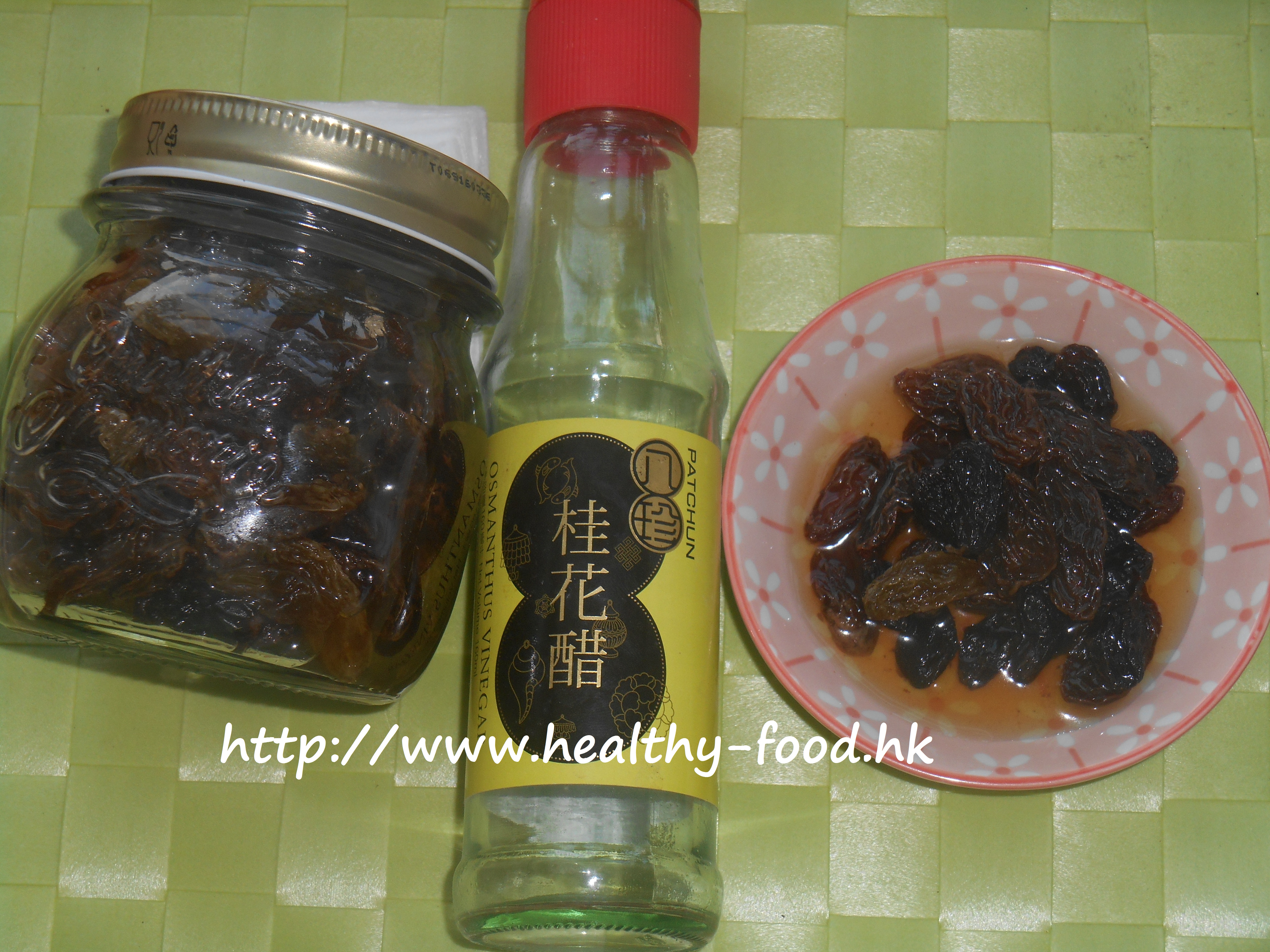
This is one of Nourilo’s simplest and most popular recipes — raisins soaked overnight in a fragrant vinegar, then eaten a small handful at a time each day. The idea draws on two well-established nutritional facts: raisins are concentrated sources of vitamins, minerals and anthocyanins (the pigment that gives dark grapes their color and antioxidant properties); and vinegar has long been used in food preservation and traditionally valued for its antimicrobial qualities. Together, the two seem to combine into something that people find genuinely supportive of their skin, energy, and digestion over time — with the pleasant bonus that osmanthus vinegar turns this into something that actually tastes good.
Nourilo recommends using dark-colored raisins (black or purple) rather than green, because the dark skin contains higher concentrations of anthocyanins. He finds that pure rice vinegar alone can be a little harsh, while osmanthus-flavored vinegar (a sweetened, lightly floral variety sold at Chinese grocers) makes the whole thing much more palatable.
Safety first — read before you cook
This is a traditional food, not a treatment. Please check with your doctor or pharmacist before making it a regular part of your diet if you:
- are pregnant or breastfeeding, or are cooking for a young child;
- take regular medicines — especially blood thinners, blood-pressure, diabetes or immune-suppressing drugs;
- have a kidney, liver or heart condition, or a known food allergy.
Stop eating it and seek advice if you notice an allergic reaction or feel unwell. Safety notes reviewed 8 October 2026 · How we write safety notes
Members only
Unlock the full method & Nourilo's tips
One payment, lifetime access to every one of our 2,344 recipes — step-by-step methods, preparation tips and serving notes.
- Full step-by-step method for this and all 2,344 recipes
- Nourilo's Tips — sourcing, substitutions and serving notes
- One-time payment · card, Apple Pay or Google Pay · no subscription, no renewals
Checking your access…
$59.99 one-time · all recipes
Sign in or create a free account, then pay once by card, Apple Pay or Google Pay.
Continue with GoogleBy continuing with Google or email you confirm you are 16 or older and agree to our Terms of Use and Privacy Policy.
$59.99 one-time · all recipes
Signed in as ·
Secure checkout by Stripe. One-time payment, no renewals. Access is linked to your Nourilo account and never expires. By paying you agree to our Terms of Use; you can get a full refund within 14 days (refund policy).



Comments
Join the conversation — sign in or create a free account to comment.
Continue with GoogleBy continuing with Google or email you confirm you are 16 or older and agree to our Terms of Use and Privacy Policy.
Loading comments…