Congee & Porridge
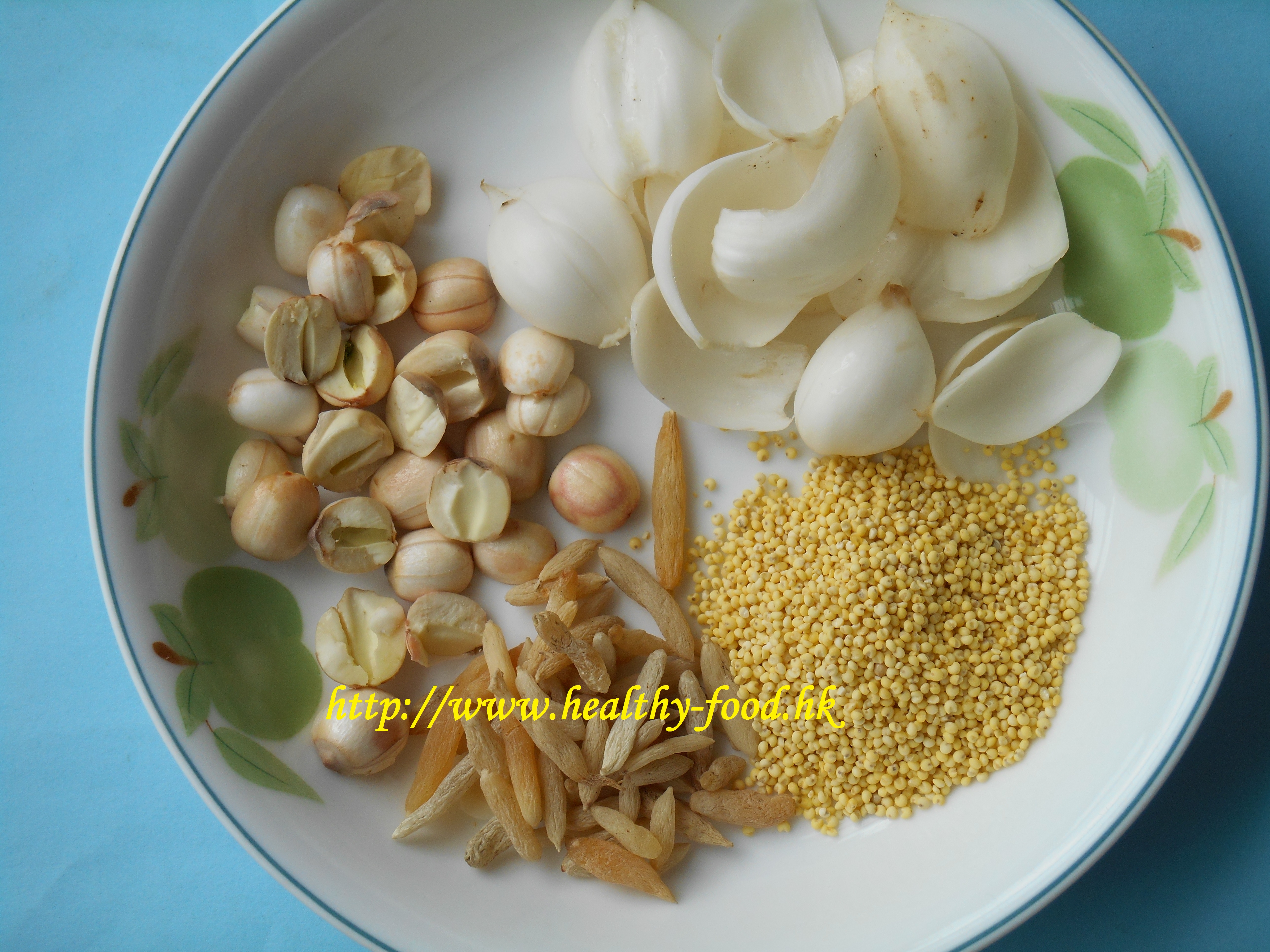
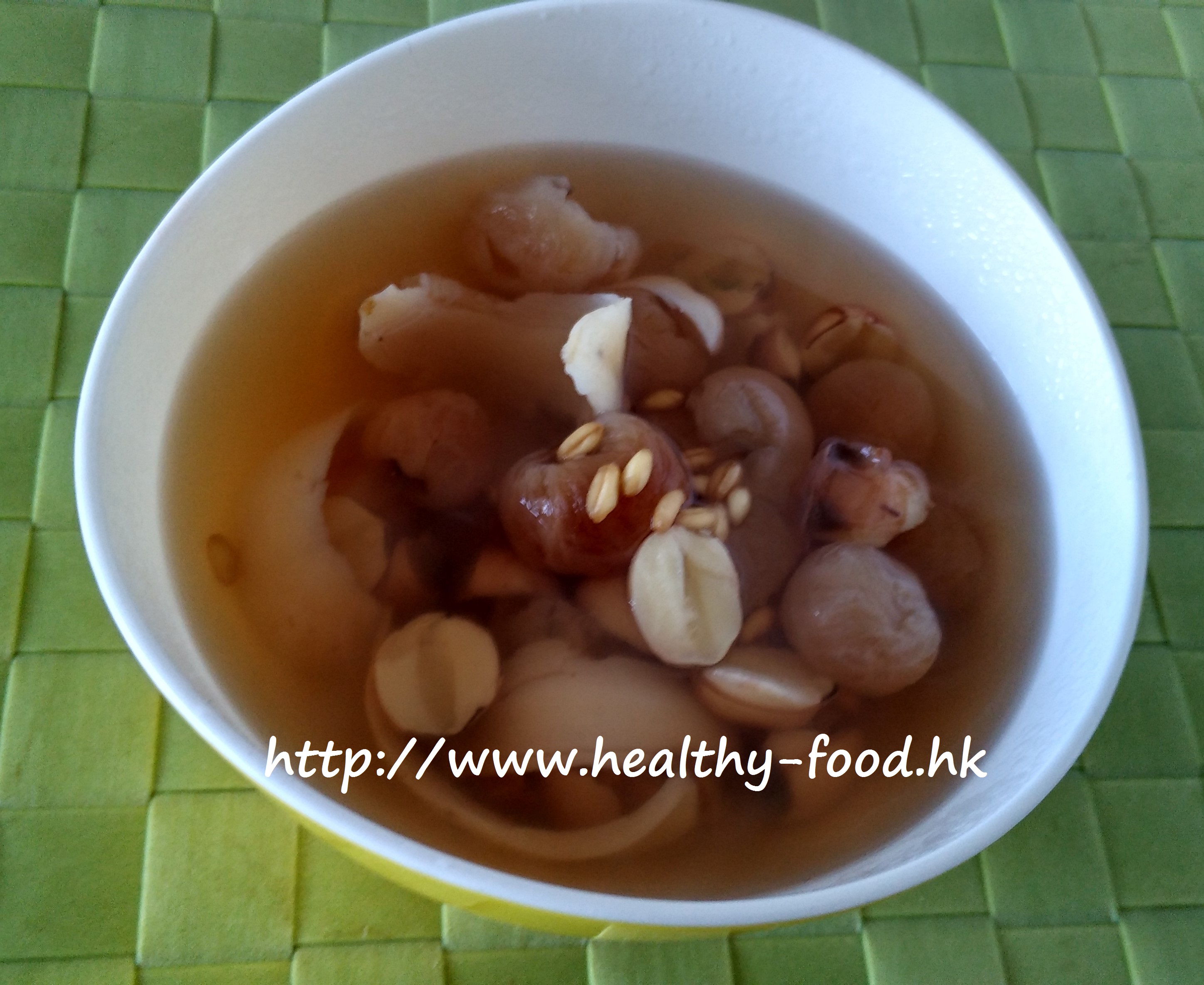
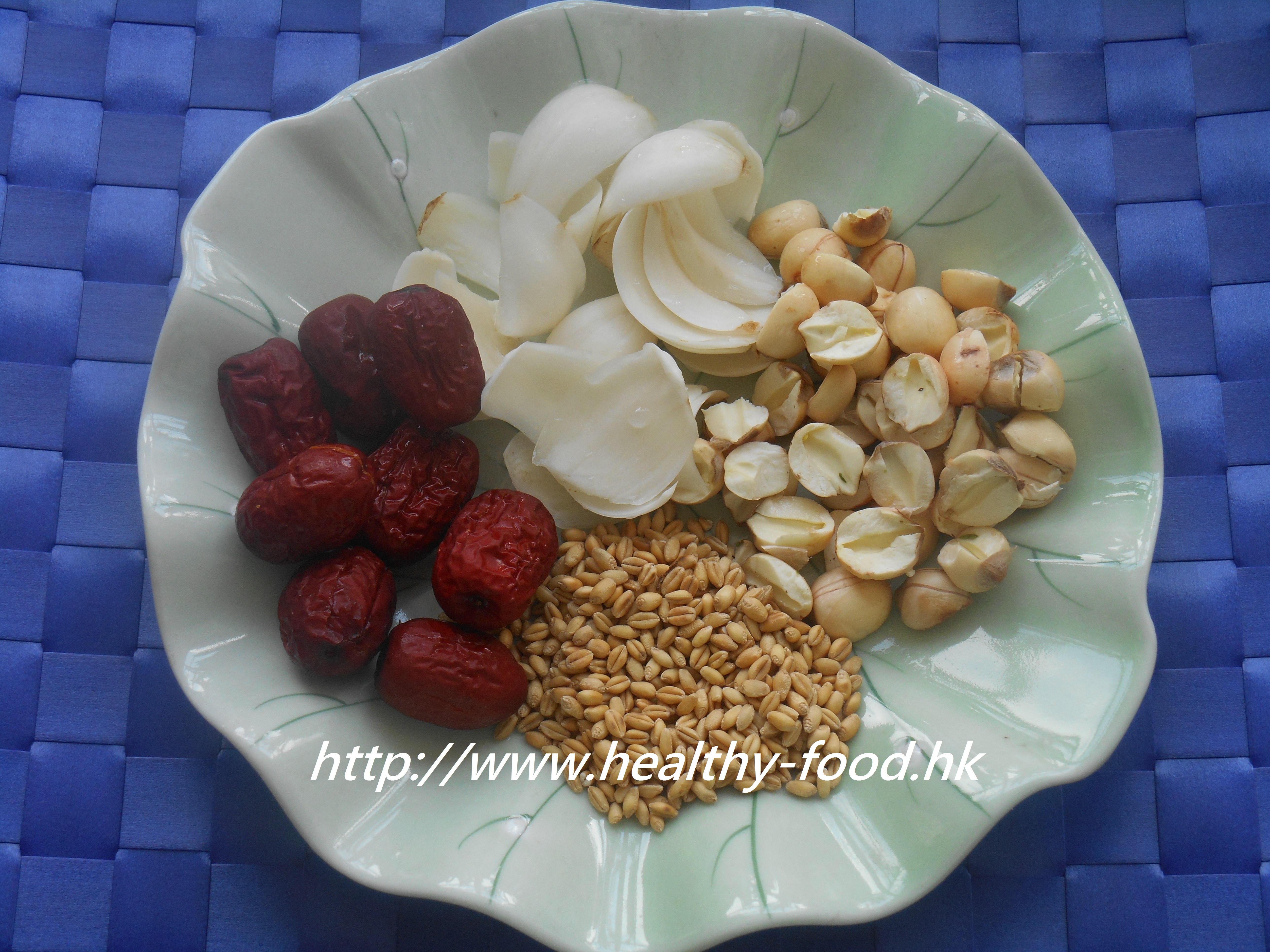
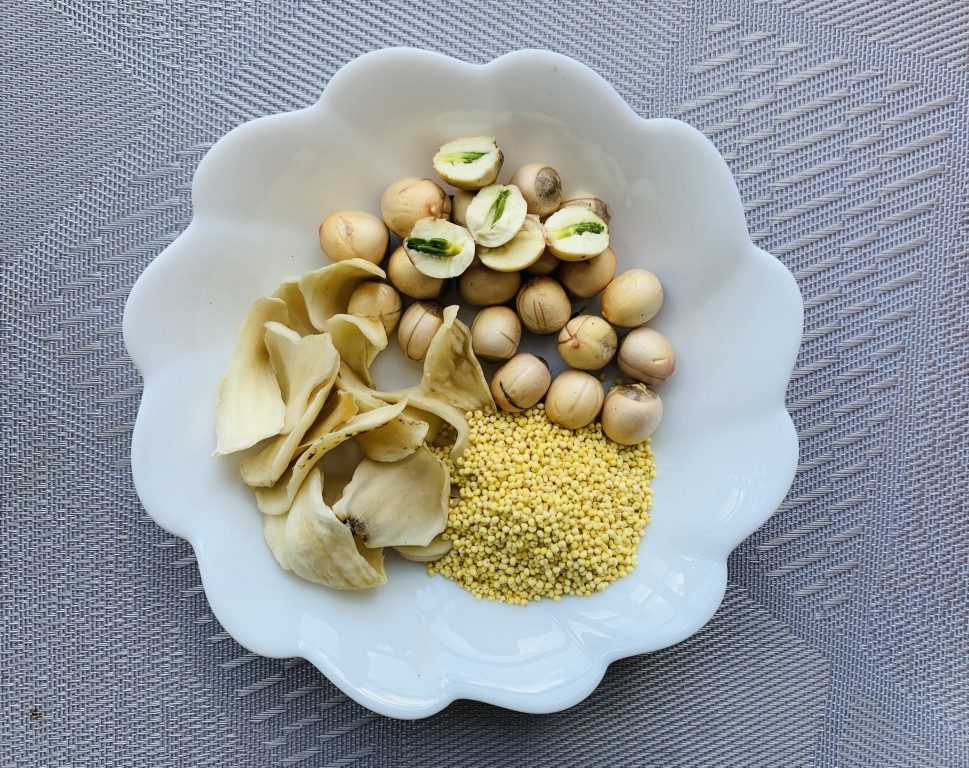
Fresh Lotus Seed, Lily Bulb and Millet Congee
traditionally used to calm the mind, clear heart fire, and support restful sleep
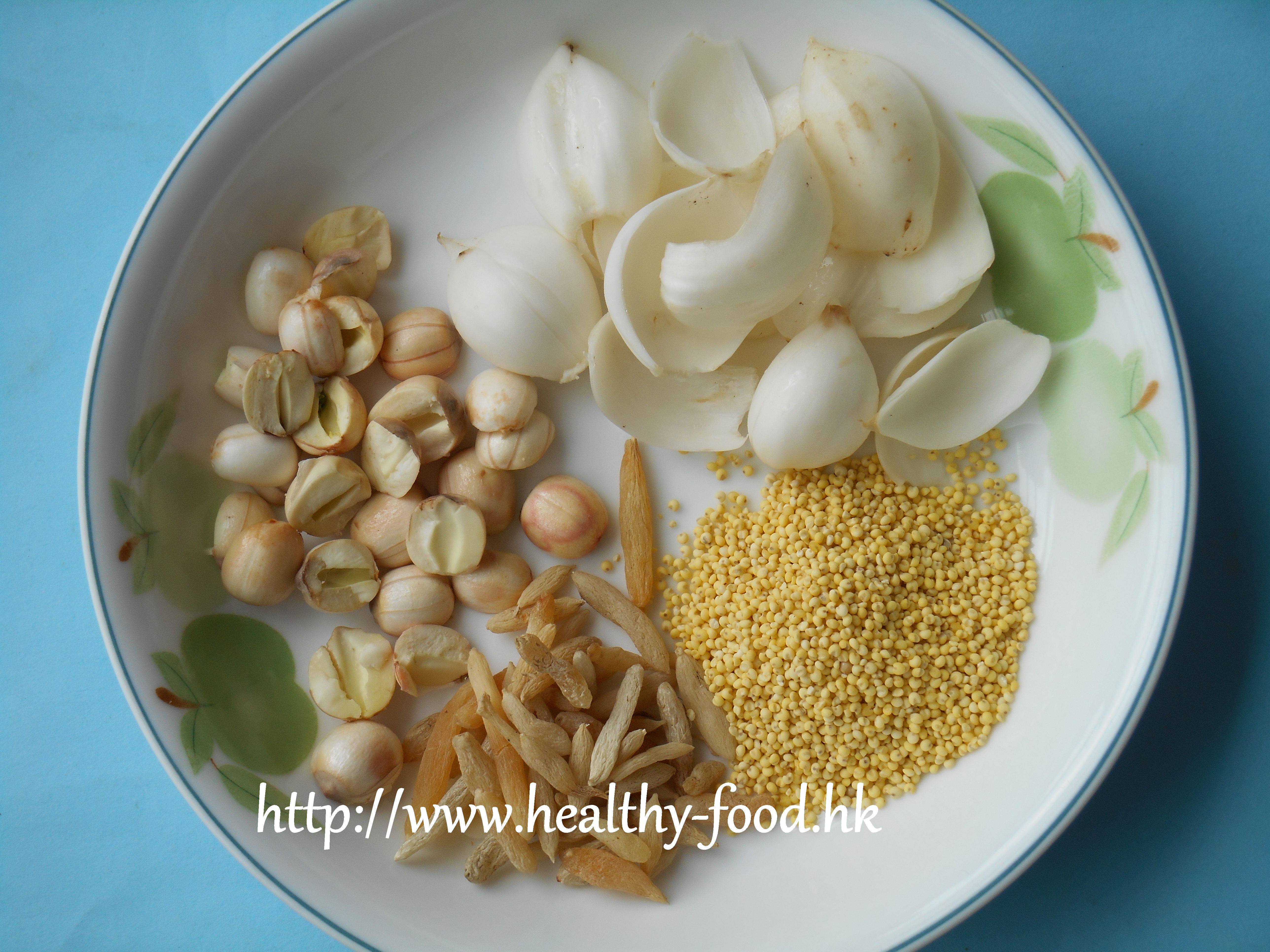
In short: Fresh Lotus Seed, Lily Bulb and Millet Congee is a congee & porridge that traditionally used to calm the mind, clear heart fire, and support restful sleep. It is most often made for heart & circulation, sleep & calm. Total time about 1 hr 10 min. Key ingredients: lotus seeds, lily bulb, millet.
Why people make this congee
Some people run hot in a mental and emotional sense — they are easily irritated, prone to overthinking, find it hard to wind down at night, and may feel a persistent restlessness that is difficult to name. In traditional Chinese food-therapy, this pattern is described as excessive heart fire, and the approach is to nourish yin (the cooling, calming, moistening principle) while gently clearing the heat.
This congee does exactly that. It is not a dramatic intervention — it is a quiet, sustaining bowl of food that you eat regularly and let work over time. Millet is one of the most spleen-friendly grains in Chinese food culture, considered gentle and supportive of digestive function. Combined with lotus seeds (for the heart and spleen), lily bulb (for the lungs and heart), and ophiopogon (a classic yin-nourishing herb), the congee is mild, slightly sweet, and deeply settling.
Fresh lotus seeds and lily bulbs are particularly fragrant in season and cook more quickly than their dried counterparts — look for them at Chinese or Asian grocers in summer.
What studies say about the key ingredients
Traditional use is not the same as clinical proof. Here is the strongest human research we found for each ingredient, limitations included.
- Lotus seeds
Lotus seed meals had a low glycemic index (GI 21–51 across the lotus seed and adzuki bean meals), while several other starchy foods did not differ significantly from rice. Lotus seed's in vitro hydrolysis index was also lower than that of other test foods.Limitation: Only ten healthy participants and acute single-meal tests, so findings may not apply to people with diabetes or to long-term intake.PubMed 30875961
From the Nourilo Research Library. Findings come from specific doses, extracts and populations and may not apply to a home-cooked recipe.
Safety first — read before you cook
This is a traditional food, not a treatment. Please check with your doctor or pharmacist before making it a regular part of your diet if you:
- are pregnant or breastfeeding, or are cooking for a young child;
- take regular medicines — especially blood thinners, blood-pressure, diabetes or immune-suppressing drugs;
- have a kidney, liver or heart condition, or a known food allergy.
Stop eating it and seek advice if you notice an allergic reaction or feel unwell. Safety notes reviewed 8 October 2026 · How we write safety notes
Members only
Unlock the full method & Nourilo's tips
One payment, lifetime access to every one of our 2,344 recipes — step-by-step methods, preparation tips and serving notes.
- Full step-by-step method for this and all 2,344 recipes
- Nourilo's Tips — sourcing, substitutions and serving notes
- One-time payment · card, Apple Pay or Google Pay · no subscription, no renewals
Checking your access…
$59.99 one-time · all recipes
Sign in or create a free account, then pay once by card, Apple Pay or Google Pay.
Continue with GoogleBy continuing with Google or email you confirm you are 16 or older and agree to our Terms of Use and Privacy Policy.
$59.99 one-time · all recipes
Signed in as ·
Secure checkout by Stripe. One-time payment, no renewals. Access is linked to your Nourilo account and never expires. By paying you agree to our Terms of Use; you can get a full refund within 14 days (refund policy).
Comments
Join the conversation — sign in or create a free account to comment.
Continue with GoogleBy continuing with Google or email you confirm you are 16 or older and agree to our Terms of Use and Privacy Policy.
Loading comments…