Soups
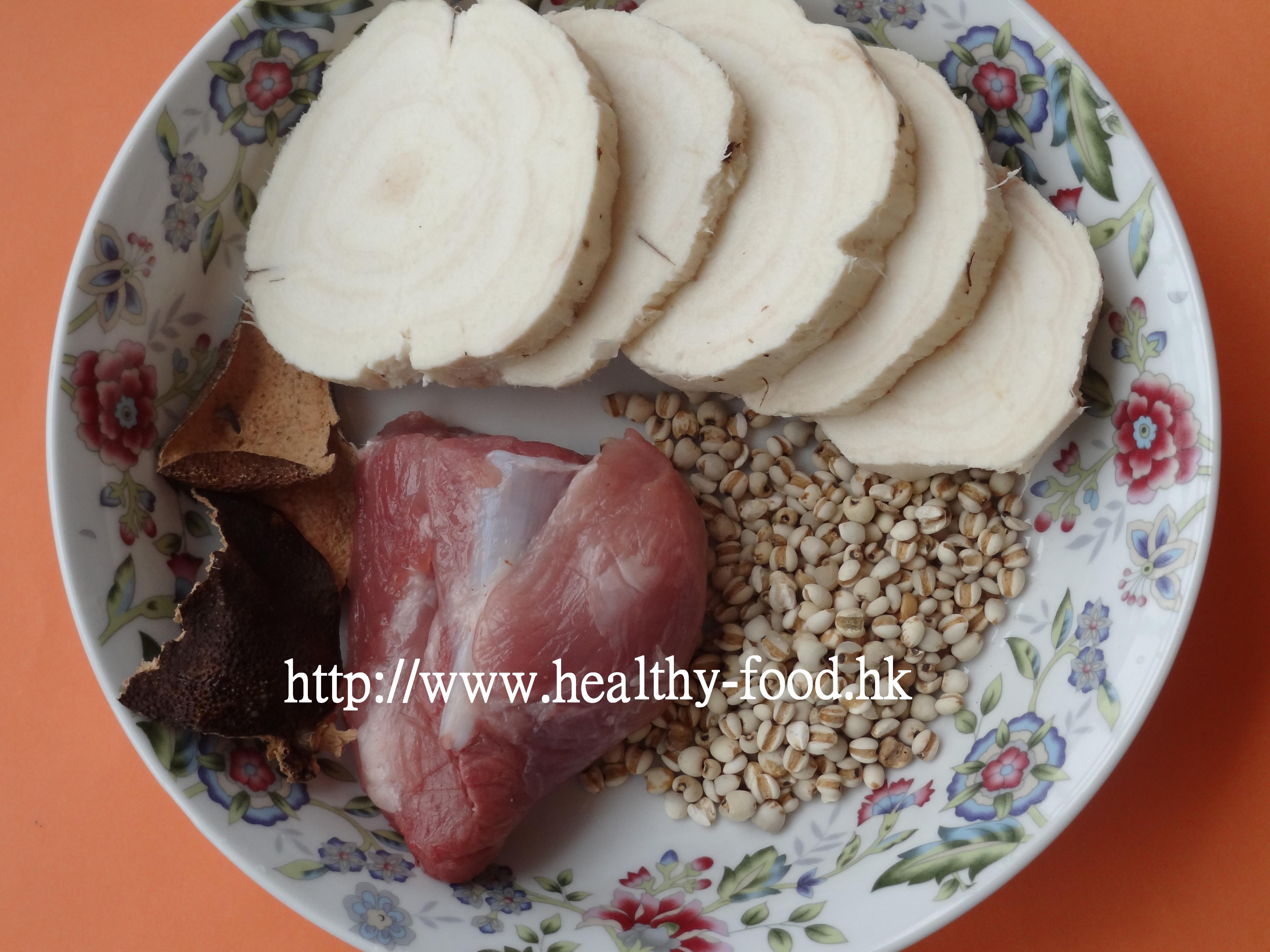
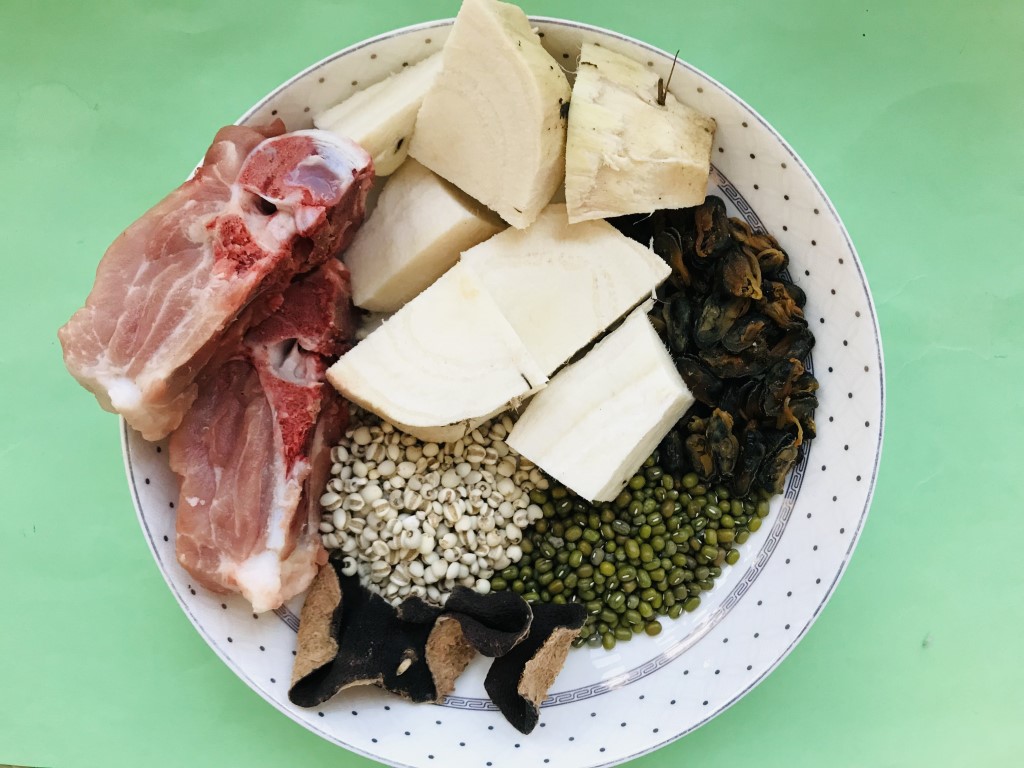
Kudzu Root and Job's Tears Pork Soup (Fen Ge Yi Mi Shou Rou Tang)
traditionally associated with relaxing tight muscles, reducing inflammation, and supporting circulation for neck, shoulder and upper back tension
In short: Kudzu Root and Job's Tears Pork Soup (Fen Ge Yi Mi Shou Rou Tang) is a soup that traditionally associated with relaxing tight muscles, reducing inflammation, and supporting circulation for neck, shoulder and upper back tension. It is most often made for heart & circulation, sleep & calm, bone & joint wellness. Total time about 135 min. Key ingredients: kudzu root, job's tears (coix), tangerine peel, lean pork.
Why people make this soup
Many people notice that when they get tense, stressed, or spend too long hunched over a screen, it is their neck and shoulders that seize up first. Kudzu root — a large, knobby tuber that looks a bit like an irregular sweet potato — is a Cantonese kitchen staple that is also a serious food-therapy ingredient. In traditional Chinese medicine, kudzu is associated with relieving surface tension, easing stiff neck and shoulder muscles, clearing heat and irritability, and supporting healthy blood pressure. It also has a gentle mild flavour that makes the soup pleasant and drinkable for the whole family. Combined with raw Job’s tears (pearl barley), which is associated with clearing internal dampness and easing inflamed or tight muscles, this becomes a particularly useful soup for the office worker, the driver, or anyone who has been holding tension in their upper body. Although both kudzu and Job’s tears are slightly cooling in nature, proper long cooking (at least 2 hours) rounds off their sharp edges and produces a soup that is clear and nourishing without being weakening.
Method
- Peel the kudzu root using Nourilo’s technique: press a small knife firmly against the skin at the widest part of the top and peel downward in strips, following the contours. Cut into chunks. For the irregular areas, use the same technique rather than a vegetable peeler.
- Soak and rinse the Job’s tears and tangerine peel.
- Blanch the pork in boiling water for a few minutes, then drain.
- Combine all ingredients in a large pot with 2.4 L of water.
- Bring to a boil, then reduce to a gentle simmer. Cook for 2 hours until the liquid reduces to about 1.2 L.
- Drink the soup and eat the solid ingredients.
Nourilo’s Tips
Although kudzu root and Job’s tears are both somewhat cooling in nature, cooking the soup for a full 2 hours rounds off the cooling effect — the finished soup is described as “clear and nourishing without being cold and depleting, promotes sweating without damaging the body, and supports urination without weakening the kidneys.” This makes it suitable for the whole family. If fresh kudzu is unavailable, you can use 75 g (about 75 g) of dried kudzu root instead.
What studies say about the key ingredients
Traditional use is not the same as clinical proof. Here is the strongest human research we found for each ingredient, limitations included.
- Kudzu root
The kudzu group reduced intake from 3.0 to 1.9 beers after treatment, while the placebo group rose from 2.7 to 3.4. Kudzu-treated participants also drank more slowly.Limitation: Very small sample (10 per group) with a single dose in a laboratory setting, so results may not carry over to everyday drinking.PubMed 26048637 · 2 more kudzu root studies - Job's tears (coix)
Myeloperoxidase activity rose significantly in the placebo group after 8 weeks but showed no significant change in the adlay tea group. Vascular endothelial function improved in the adlay group, especially in those over 40.Limitation: Participants were healthy adults and the outcomes were surrogate markers, so the results say little about clinical disease outcomes. Tea is a polyphenol-rich extract, not whole grain.PubMed 38945894 · 2 more job's tears (coix) studies - Tangerine peel
The tangerine peel drink group showed significant reductions in body weight and triglycerides after the intervention compared with the control group (p < 0.05). Safety markers showed no adverse effects. Gut microbiota and serum metabolite profiles also differed.Limitation: Small pilot trial with only 55 of 72 participants completing. The fermented product is not the same as plain tangerine peel, and the control group is not described.PubMed 40225325
From the Nourilo Research Library. Findings come from specific doses, extracts and populations and may not apply to a home-cooked recipe.
Safety first — read before you cook
This is a traditional food, not a treatment. Please check with your doctor or pharmacist before making it a regular part of your diet if you:
- are pregnant or breastfeeding, or are cooking for a young child;
- take regular medicines — especially blood thinners, blood-pressure, diabetes or immune-suppressing drugs;
- have a kidney, liver or heart condition, or a known food allergy.
Stop eating it and seek advice if you notice an allergic reaction or feel unwell. Safety notes reviewed 8 October 2026 · How we write safety notes
Comments
Join the conversation — sign in or create a free account to comment.
Continue with GoogleBy continuing with Google or email you confirm you are 16 or older and agree to our Terms of Use and Privacy Policy.
Loading comments…