Home-Style Dishes
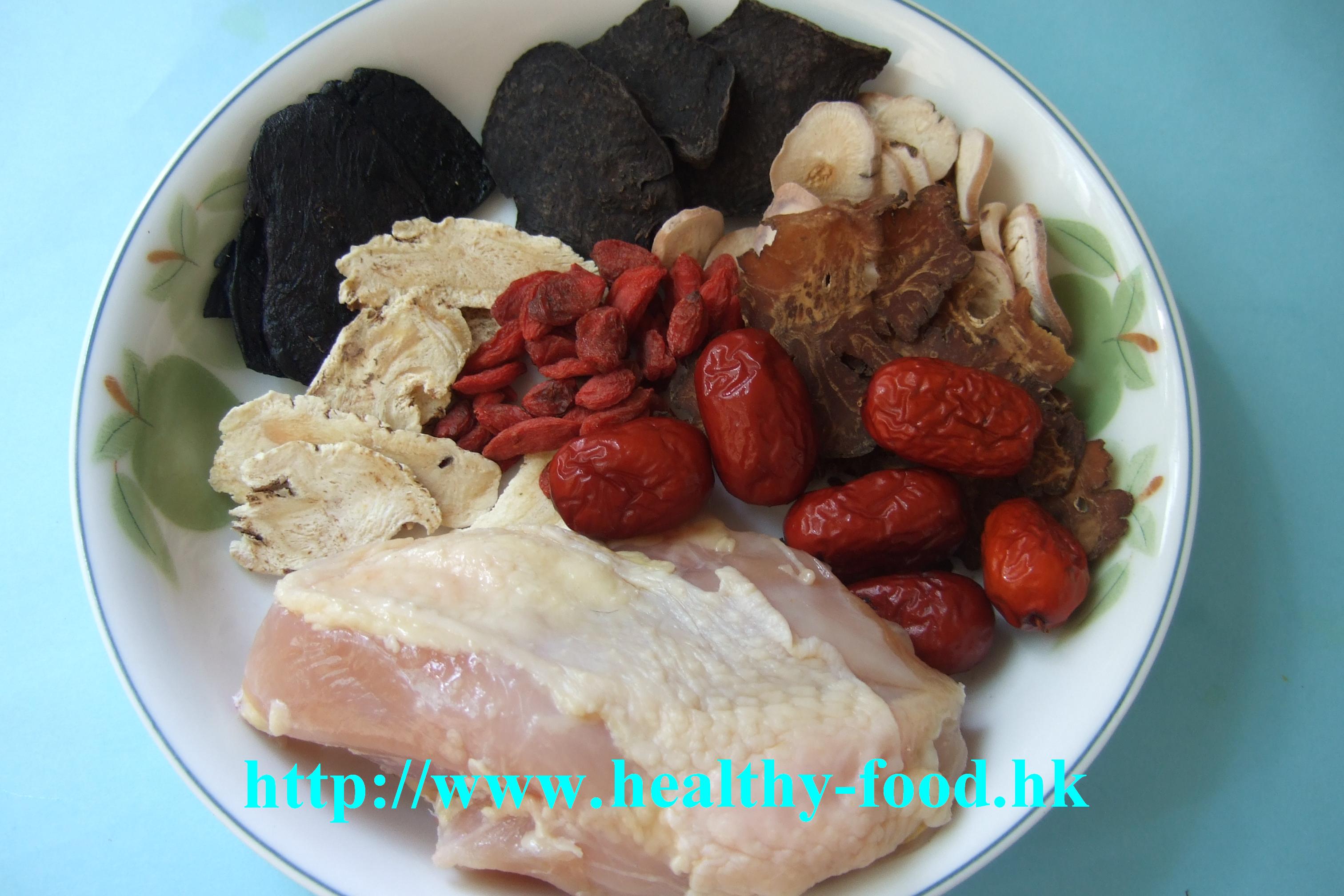
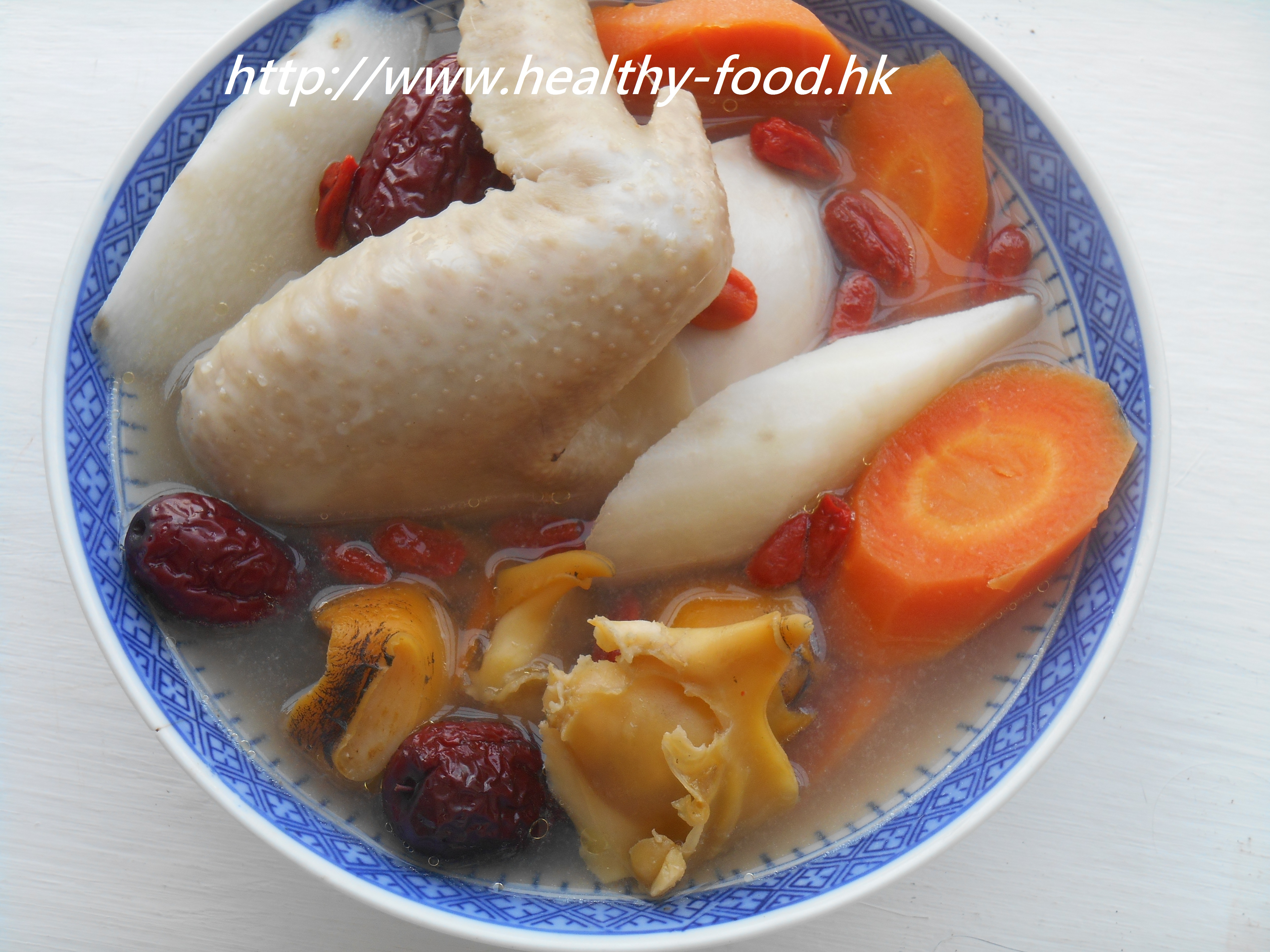
He Shou Wu, Goji and Four-Herb Chicken Stew
traditionally used to nourish liver blood, support healthy hair and complexion
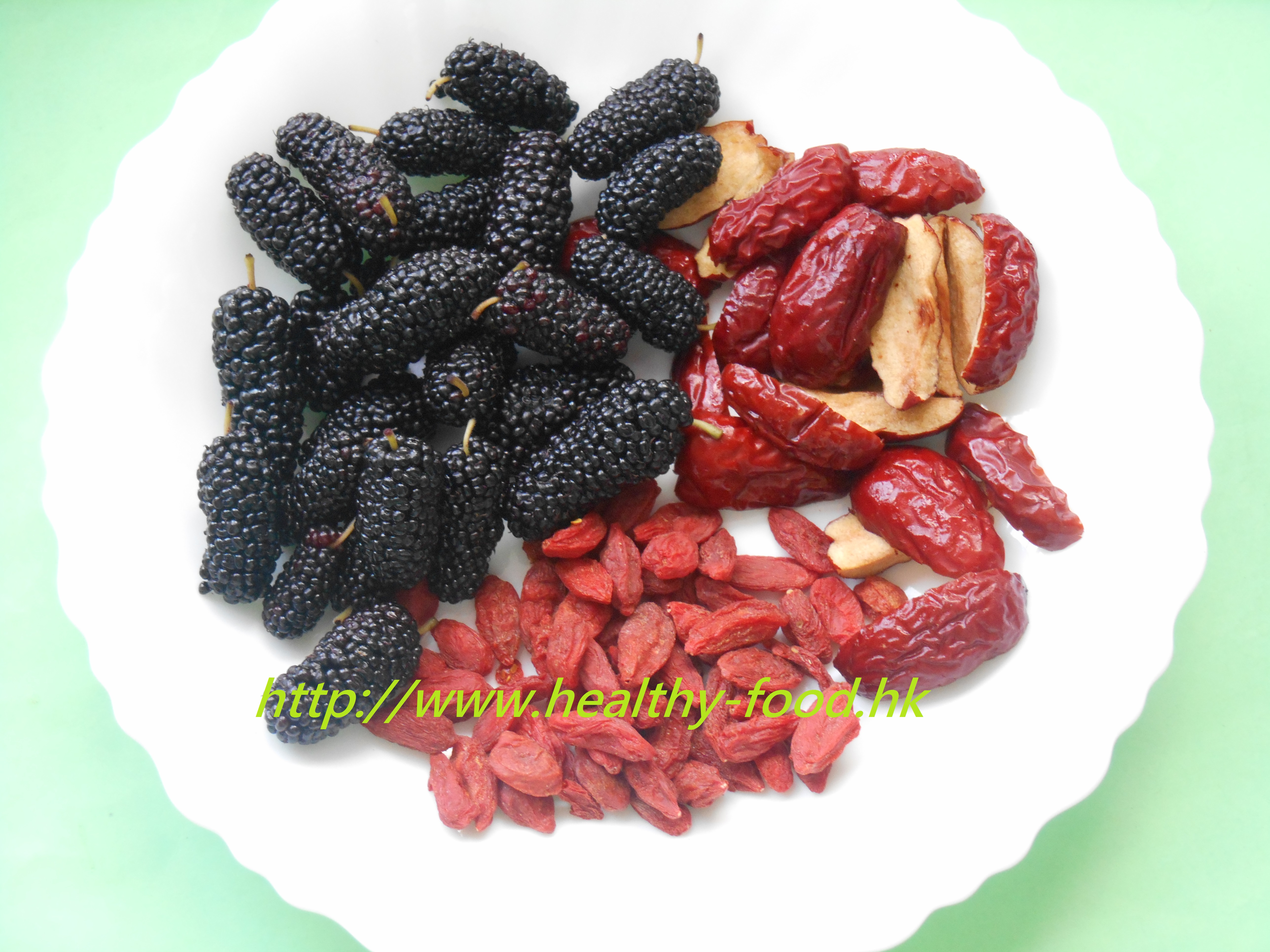
In short: He Shou Wu, Goji and Four-Herb Chicken Stew is a home-style dishe that traditionally used to nourish liver blood, support healthy hair and complexion. It is most often made for skin & natural beauty, liver wellness, energy & vitality. Total time about 3 hr 20 min. Key ingredients: goji berries, red dates.
Why people make this stew
Some signs that tend to appear earlier than expected — a dull complexion, premature grey strands, hair that lacks body, a general flatness of energy, or joints that feel less comfortable than they should — can point, in the framework of traditional Chinese food therapy, to what practitioners call liver blood deficiency. The classic four-herb formula, si wu tang, has been used for centuries in this context: dong quai to move and nourish blood, white peony to gently soften and regulate, sichuan lovage to promote circulation, and rehmannia to provide deep nourishment. In this stew, that classic base is enhanced with he shou wu (the herb most closely associated in Chinese tradition with hair darkening and kidney-liver support) and goji berries. The result is a rich, double-boiled stew with a distinctive herbal aroma and a flavour that is more pleasant than you might expect from such a medicinal-looking ingredient list.
Method
- Blanch the chicken pieces in boiling water for 2 minutes. Rinse with cold water and set aside.
- Rinse all dried herbs and soak briefly in cold water.
- Place all ingredients into a double-boiler pot (dun zhong). Pour boiling water over the ingredients to fill the pot.
- Set the inner pot into the outer pot of boiling water. Cover and double-boil (dun) for approximately 3 hours.
- Alternatively, if using a regular pot: combine everything with 2.4 L of water, bring to a boil, then simmer over low heat for 2 hours until the liquid reduces to 0.9–1.2 L.
- Drink the broth warm. The dates and goji berries can also be eaten.
Nourilo’s Tips
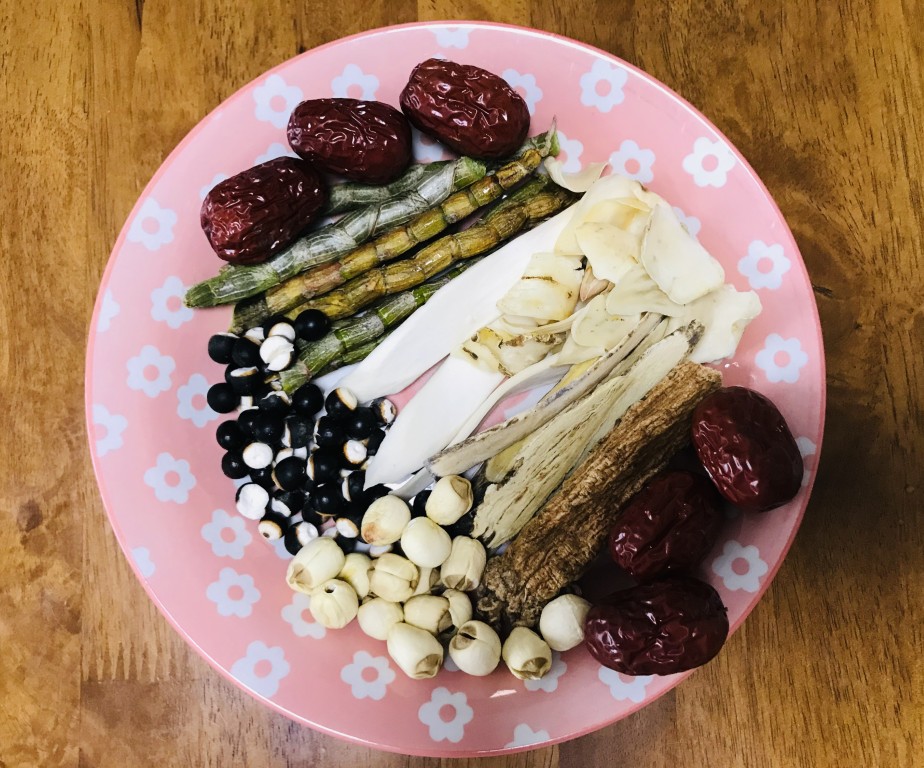
- The four herbs — chuan xiong, dang gui, bai shao and shu di — form the classical formula known as si wu tang, which has been used for centuries to nourish blood and vitality. This stew will have a noticeable herbal taste, but most people find it pleasantly deep and warming rather than unpleasant.
- If you tend to heat up easily or develop breakouts after taking rich tonic soups, start with half the herb quantities and see how your body responds before increasing.
- Women with uterine fibroids: remove dong quai from the recipe and add a few pieces of longan (yuan rou) instead — the soup remains nourishing without the blood-moving action that is best avoided with fibroids.
- The stew can be cooked in a pot rather than double-boiled — simply use 2.4 L of water and simmer for 2 hours.
What studies say about the key ingredients
Traditional use is not the same as clinical proof. Here is the strongest human research we found for each ingredient, limitations included.
- Goji berries
Compared with placebo (n=80), the goji juice group (n=81) reported greater improvements in several self-rated symptoms, including stress, mental acuity, sleep quality and overall well-being, under a random effects model.Limitation: Outcomes were self-reported symptom questionnaires, and several symptoms showed significant heterogeneity across the four pooled trials of a single branded juice.PubMed 22897500 · 3 more goji berries studies - Red dates
Jujube was associated with significantly lower BMI and triglycerides, and lower fasting blood sugar in people with type 2 diabetes. LDL and total cholesterol fell only in some subgroups. HDL, AST and ALT did not change significantly.Limitation: The authors state the overall quality of the evidence is limited, and results varied significantly by dose, treatment duration and disease type.PubMed 40399274 · 3 more red dates studies
From the Nourilo Research Library. Findings come from specific doses, extracts and populations and may not apply to a home-cooked recipe.
Safety first — read before you cook
This is a traditional food, not a treatment. Please check with your doctor or pharmacist before making it a regular part of your diet if you:
- are pregnant or breastfeeding, or are cooking for a young child;
- take regular medicines — especially blood thinners, blood-pressure, diabetes or immune-suppressing drugs;
- have a kidney, liver or heart condition, or a known food allergy.
Ingredient notes for this recipe
- Goji berries: A few cases of raised INR (a bleeding-risk marker) have been reported in people taking warfarin after drinking concentrated goji tea or wine. If you take a blood thinner, check with your doctor. Source: Memorial Sloan Kettering — Lycium
Stop eating it and seek advice if you notice an allergic reaction or feel unwell. Safety notes reviewed 8 October 2026 · How we write safety notes
Comments
Join the conversation — sign in or create a free account to comment.
Continue with GoogleBy continuing with Google or email you confirm you are 16 or older and agree to our Terms of Use and Privacy Policy.
Loading comments…