Soups
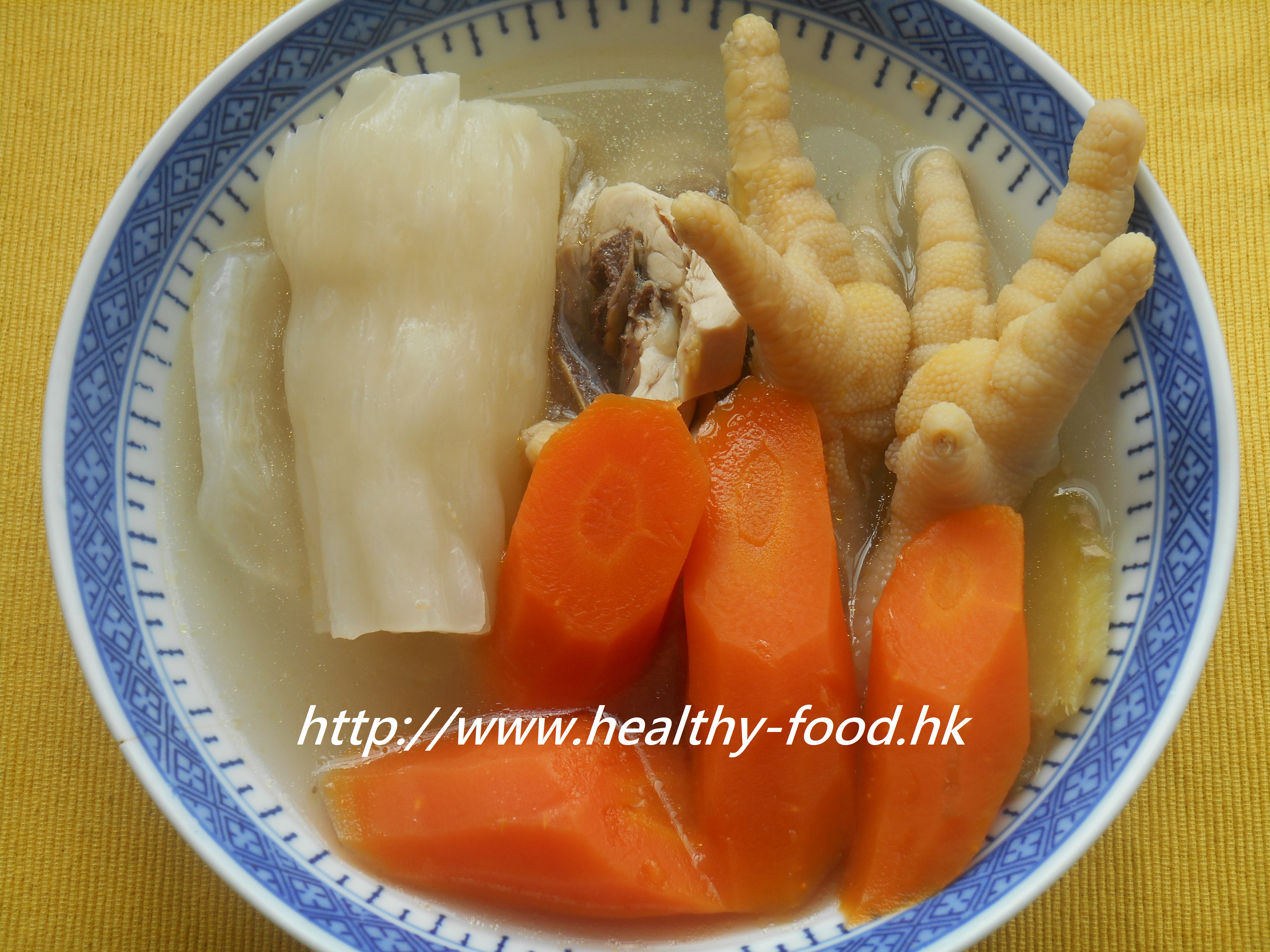
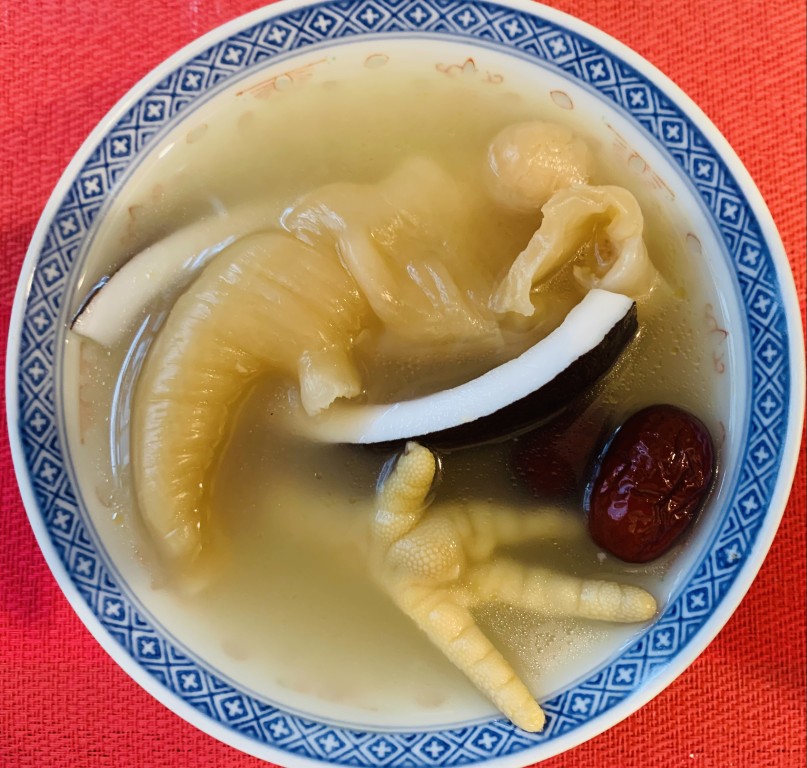
Fish Maw and Carrot Double-Boiled Chicken Soup
traditionally used to nourish the skin, strengthen the body, and support recovery after illness or childbirth
In short: Fish Maw and Carrot Double-Boiled Chicken Soup is a soup that traditionally used to nourish the skin, strengthen the body, and support recovery after illness or childbirth. It is most often made for women's wellness, children's wellness, skin & natural beauty. Total time about 200 min. Key ingredients: carrot, ginger, chicken.
Why people make this soup
Fish maw — the dried swim bladder of large fish, usually sold in flat dried sheets or tubes at dried seafood stalls — is one of the traditional Four Treasures of Cantonese tonic cooking (alongside abalone, sea cucumber, and shark fin). It is rich in collagen protein and amino acids, and in Chinese food therapy it is particularly associated with nourishing the skin, supporting recovery after operations or illness, and benefiting pregnant and postpartum women.
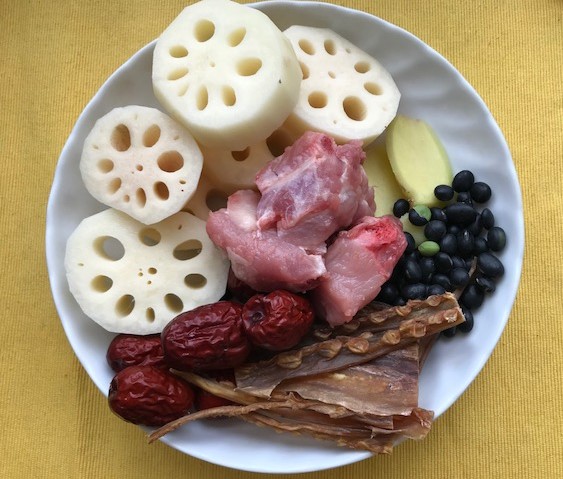
Nourilo’s version is a simple, pure double-boiled (stewed) preparation: chicken, soaked fish maw, carrot, and a little ginger, slowly coaxed over three hours in a double boiler. Double-boiling (as opposed to open simmering) keeps the flavour sealed inside and results in a clear, concentrated broth. Importantly, Nourilo chooses hormone-free chicken — chicken raised with growth hormones retains more residual hormones in the meat, particularly older hens, and over time this can have unintended effects on health.
Method
- If using dried fish maw, soak it in cold water for several hours or overnight until it is fully soft and pliable. Drain.
- Clean the chicken and cut into pieces. Blanch in boiling water for 1–2 minutes, then rinse off any impurities.
- Peel and cut the carrot into chunks.
- Place all ingredients — fish maw, chicken pieces, carrot, and ginger — into a double boiler (stewing pot / 炖盅).
- Add 0.9–1.2 L of water (enough to just cover).
- Double-boil for 3 hours. (If you have an electric slow cooker, use the slow-stew setting for the equivalent time.)
- Serve warm. Both the soup and the ingredients can be eaten. Eat in moderate portions.
Nourilo’s Tips
- Choose hormone-free chicken where possible. Chicken raised with hormones — especially older hens — can carry significantly more residual hormones than younger, naturally reared birds. Jiamei chicken and Kangbao chicken (available at major Hong Kong supermarkets) are good options.
- Do not eat a large quantity of fish maw in one sitting — it is rich and can be heavy on the stomach (particularly for pregnant women and those with weaker digestion). Nourilo suggests at most once or twice a week during pregnancy.
- If you are a postpartum mother who has had a caesarean section, wait until your milk is flowing well and freely before eating fish maw; eating it too soon can cause the milk to thicken and block the ducts.
- For those who have colds or fever, skip this soup entirely until fully recovered.
- This soup is nourishing but not heating — it will not cause internal heat even with regular use.
What studies say about the key ingredients
Traditional use is not the same as clinical proof. Here is the strongest human research we found for each ingredient, limitations included.
- Ginger
Overall, acute and delayed nausea and vomiting did not differ significantly between ginger and control groups. A subgroup taking 1 g/day or less for over four days had less acute vomiting (OR 0.30).Limitation: Clinical heterogeneity between trials required subgroup analyses, and the authors state that sufficiently large, high-quality RCTs are still needed.PubMed 36501010 · 3 more ginger studies
From the Nourilo Research Library. Findings come from specific doses, extracts and populations and may not apply to a home-cooked recipe.
Safety first — read before you cook
This is a traditional food, not a treatment. Please check with your doctor or pharmacist before making it a regular part of your diet if you:
- are pregnant or breastfeeding, or are cooking for a young child;
- take regular medicines — especially blood thinners, blood-pressure, diabetes or immune-suppressing drugs;
- have a kidney, liver or heart condition, or a known food allergy.
Stop eating it and seek advice if you notice an allergic reaction or feel unwell. Safety notes reviewed 8 October 2026 · How we write safety notes
Comments
Join the conversation — sign in or create a free account to comment.
Continue with GoogleBy continuing with Google or email you confirm you are 16 or older and agree to our Terms of Use and Privacy Policy.
Loading comments…