Soups
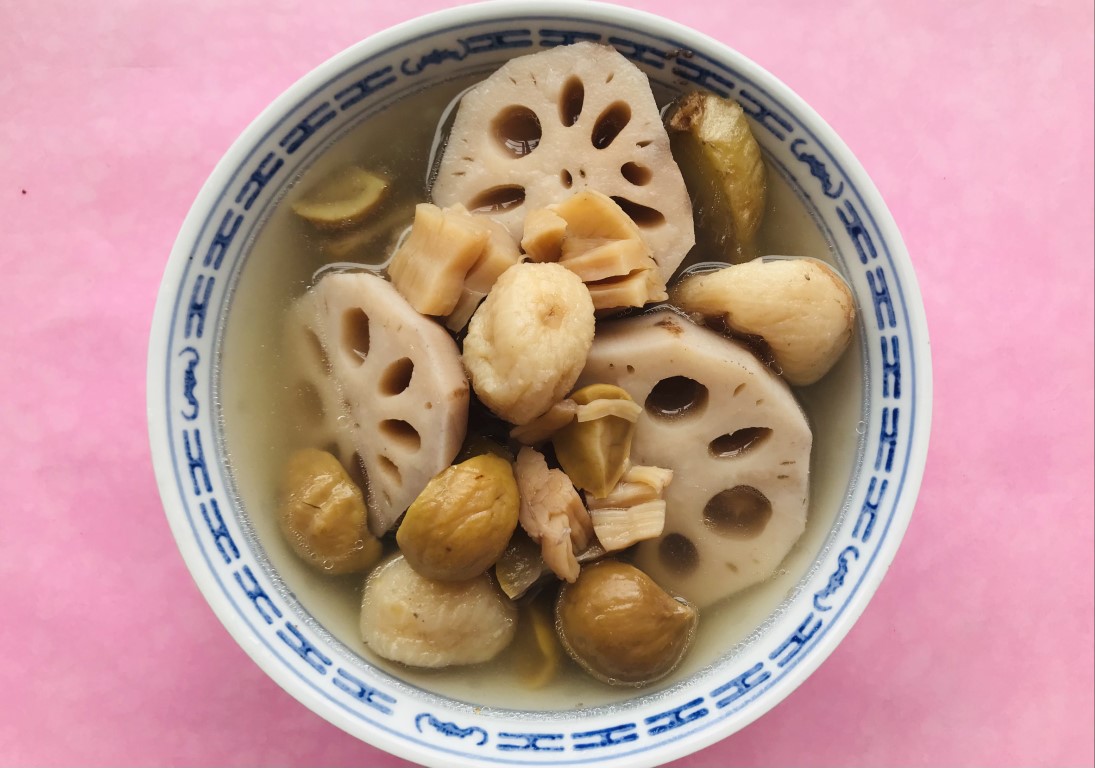
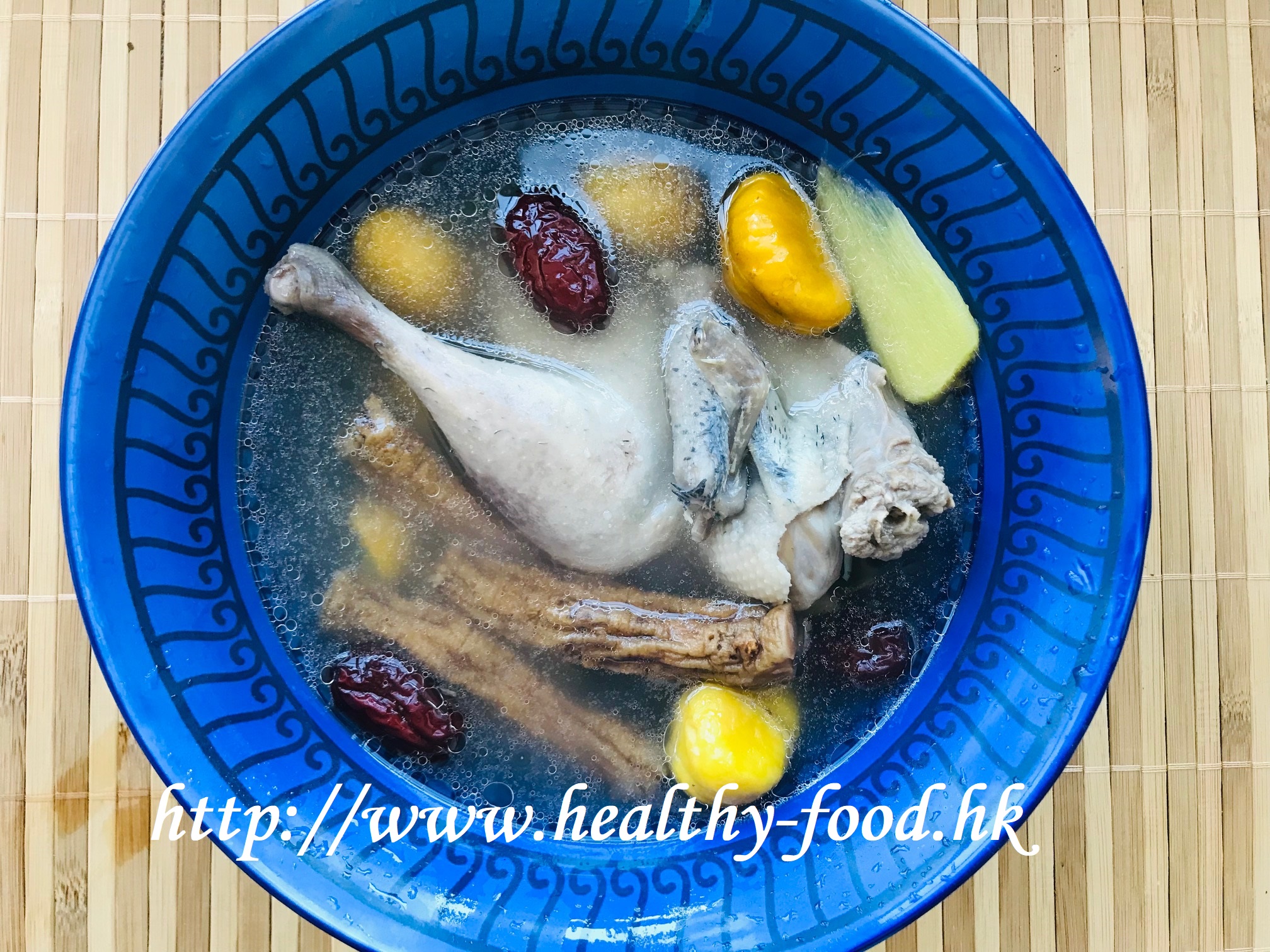
Chestnut, Lotus Seed, and Squab Soup
traditionally used to strengthen the sinews and bones, nourish blood, and support reproductive and general vitality
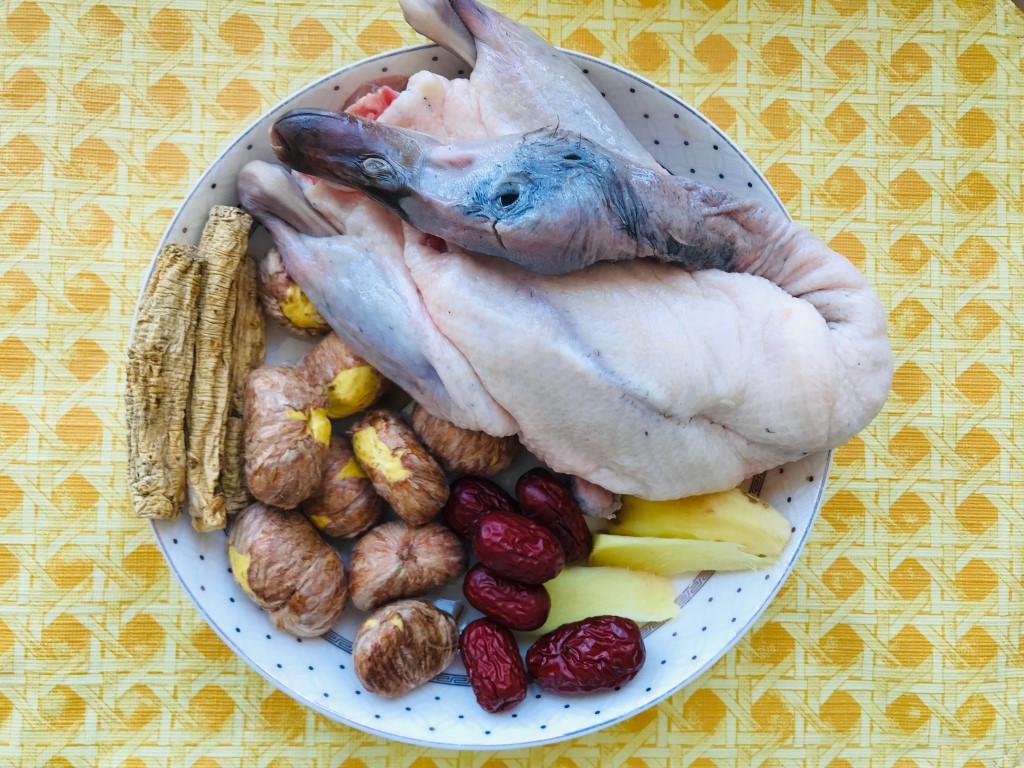
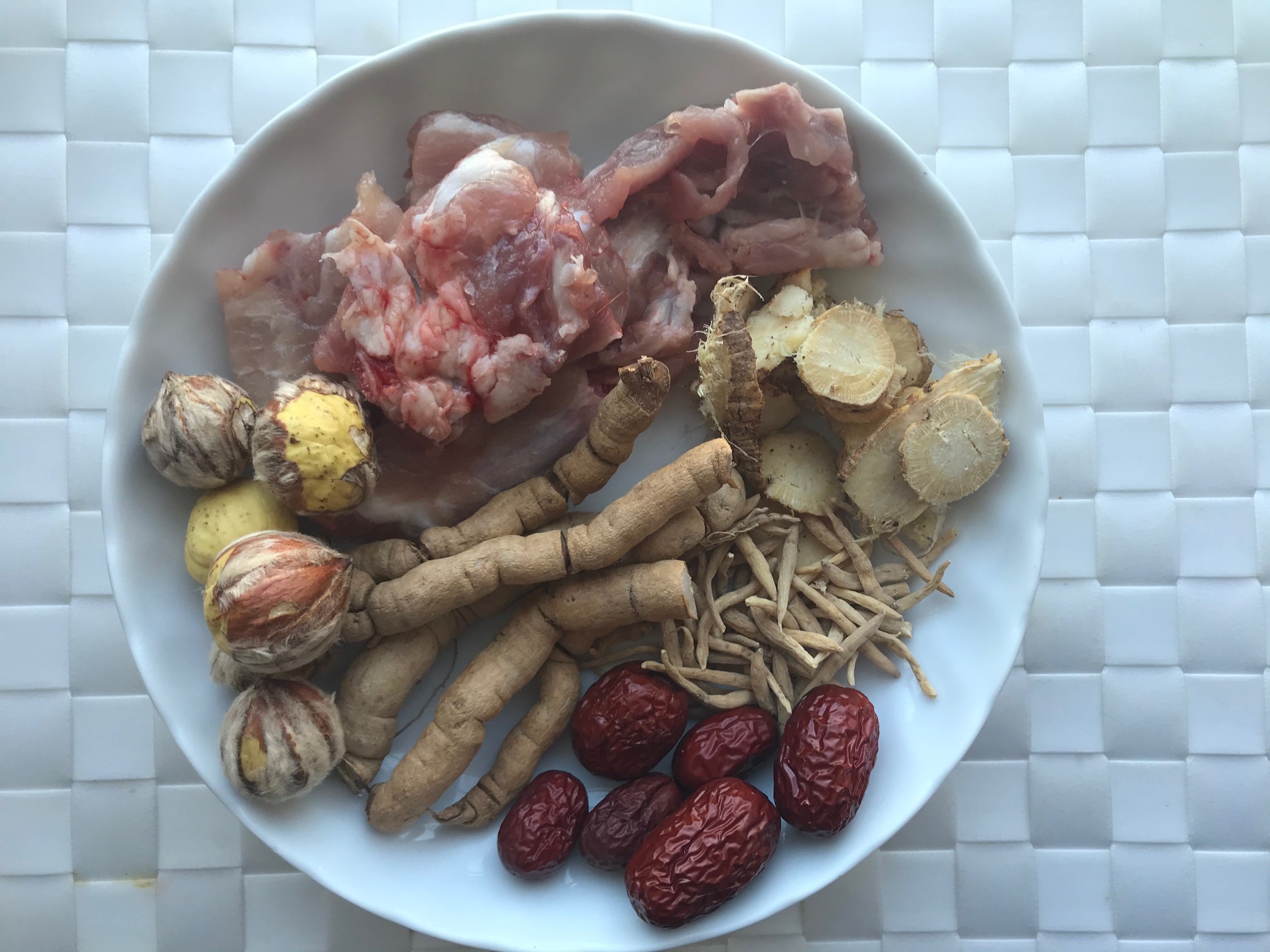
In short: Chestnut, Lotus Seed, and Squab Soup is a soup that traditionally used to strengthen the sinews and bones, nourish blood, and support reproductive and general vitality. It is most often made for energy & vitality, blood nourishment, bone & joint wellness. Total time about 2 hr 20 min. Key ingredients: lotus seeds, fox nut / euryale seed, chestnuts, ginger.

Why people make this soup
Chestnuts come into their peak season in autumn — and in Chinese food therapy, this is the ideal time to make the most of their bone-supporting properties. Chestnuts are traditionally considered to tonify the kidneys and strengthen the sinews, and they are particularly valued for supporting children’s skeletal development and for helping adults maintain strong bones and joints. Squab (young pigeon) is one of the most prized meats in Cantonese cooking for its tender, flavourful flesh. Traditional food therapy considers pigeon meat to be nourishing to qi and blood, supportive of reproductive health, and beneficial for memory and recovery from weakness. Combined with lotus seeds and fox nut to tonify the spleen and kidneys, and dried figs for natural sweetness, this is a soup that is both genuinely delicious and deeply nourishing.
Method
- Soak and rinse lotus seeds, fox nut, and dried figs.
- To peel chestnuts: place in a dry pan and dry-toast for about 1 minute, or briefly boil in water — this makes the shell and inner skin much easier to remove.
- Clean the squab, cut into large pieces, blanch briefly in boiling water, and drain.
- Combine all ingredients in a pot with 2.4–2.7 L of water.
- Bring to a boil, then reduce to a low simmer for 2 hours until the liquid reduces to about 1.2 L.
- Serve warm; eat the solid ingredients along with the broth.
Nourilo’s Tips
This soup has a wonderful natural sweetness and a rich, clean flavour. Old and young alike can enjoy it. For women with pale complexion, irregular periods, or difficulty conceiving, this soup is particularly worthwhile making regularly. The one caveat: those with constipation should drink the broth but go easy on eating the lotus seeds and fox nut, as both have a binding, astringent effect on the bowels. For the chestnuts, a quick dry-toast in a wok before peeling saves a lot of effort.
What studies say about the key ingredients
Traditional use is not the same as clinical proof. Here is the strongest human research we found for each ingredient, limitations included.
- Lotus seeds
Lotus seed meals had a low glycemic index (GI 21–51 across the lotus seed and adzuki bean meals), while several other starchy foods did not differ significantly from rice. Lotus seed's in vitro hydrolysis index was also lower than that of other test foods.Limitation: Only ten healthy participants and acute single-meal tests, so findings may not apply to people with diabetes or to long-term intake.PubMed 30875961 - Ginger
Overall, acute and delayed nausea and vomiting did not differ significantly between ginger and control groups. A subgroup taking 1 g/day or less for over four days had less acute vomiting (OR 0.30).Limitation: Clinical heterogeneity between trials required subgroup analyses, and the authors state that sufficiently large, high-quality RCTs are still needed.PubMed 36501010 · 3 more ginger studies
From the Nourilo Research Library. Findings come from specific doses, extracts and populations and may not apply to a home-cooked recipe.
Safety first — read before you cook
This is a traditional food, not a treatment. Please check with your doctor or pharmacist before making it a regular part of your diet if you:
- are pregnant or breastfeeding, or are cooking for a young child;
- take regular medicines — especially blood thinners, blood-pressure, diabetes or immune-suppressing drugs;
- have a kidney, liver or heart condition, or a known food allergy.
Stop eating it and seek advice if you notice an allergic reaction or feel unwell. Safety notes reviewed 8 October 2026 · How we write safety notes




Comments
Join the conversation — sign in or create a free account to comment.
Continue with GoogleBy continuing with Google or email you confirm you are 16 or older and agree to our Terms of Use and Privacy Policy.
Loading comments…