Herbal & Flower Teas
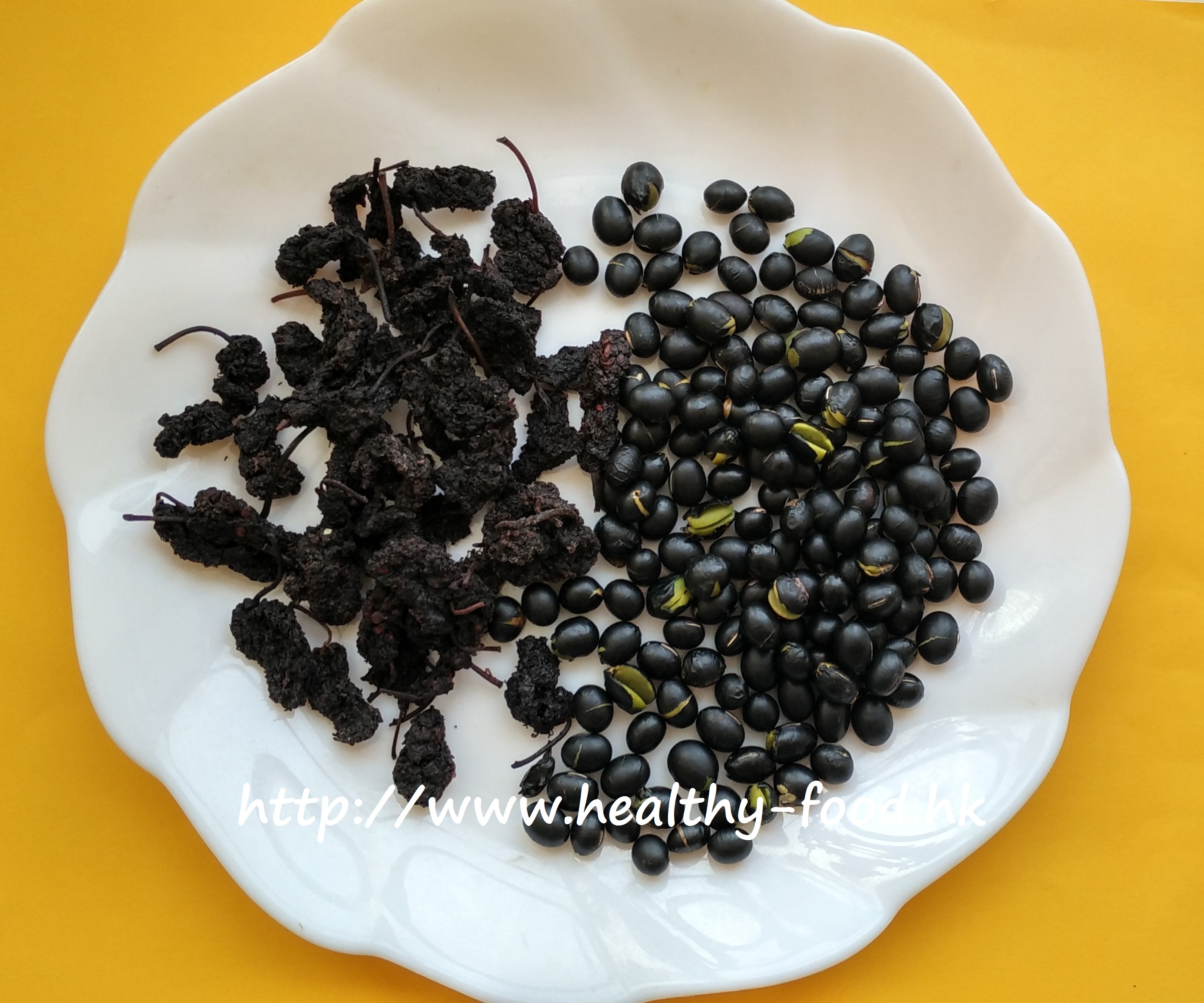
Black Bean and Licorice Root Tea
traditionally associated with clearing accumulated toxins, supporting healthy skin, and calming restlessness in children
In short: Black Bean and Licorice Root Tea is a herbal & flower tea that traditionally associated with clearing accumulated toxins, supporting healthy skin, and calming restlessness in children. It is most often made for cleansing & regularity, children's wellness, skin & natural beauty. Total time about 70 min. Key ingredients: green-kernel black beans, licorice root.

Why people make this tea
In traditional Cantonese households, this humble two-ingredient tea holds a quietly important role: it is the “reset” after a course of medication. When a child has been through a week of cold medicine, or when an adult has been taking multiple prescriptions for a long period, this tea is brewed to help the body “clear out” what has accumulated.
Black beans and licorice root make a natural pairing. Black beans are cooling in nature yet not overly cold — considered neutral enough for most constitutions — and are traditionally associated with clearing heat and supporting the body’s natural processes. Licorice root is famous in Chinese herbal medicine as an ingredient that “harmonises” other herbs and is said to counteract plant-derived toxins broadly. Together, they make a gentle, accessible everyday tea.
For infants who are restless, feverish, or crying at night, the recipe can be adapted: use black beans with rush pith grass (deng xin cao) instead of licorice, to serve as a soothing warming milk tea.
Method
- Rinse and soak the black beans for 30 minutes.
- Place the black beans, licorice root, and water in a pot. Start with cold water.
- Bring to a boil, then reduce to a steady simmer.
- Cook for 45–60 minutes (45 min if simmering; 1 hour to make a stronger brew). The tea is ready when the liquid has reduced to about 600 ml.
- Drink the liquid; the cooked beans can also be eaten.
Note: if you prefer a lighter, steeping method rather than simmering, dry-toast the black beans in a dry pan over medium heat for about 7 minutes first, then steep in hot water. This method is quicker but produces a slightly different flavour. If it feels too warming, add a slice of dried fig.
Nourilo’s Tips
This tea is a traditional cleansing-style drink, particularly popular for children or adults who have been taking a lot of medication — it is traditionally associated with supporting the body’s natural processes afterwards. For infants with fetal heat, night restlessness, or crying, adapt the recipe by using black beans with rush pith grass (deng xin cao) 5–6 bundles, brewed as a warming tea — effective and safe. Do not use this tea during an active fever. Use 2 times per week for about a month to clear residual drug accumulation; for general wellness, once or twice a week is fine. Store dry-toasted black beans in an airtight container — they will keep for several months.
What studies say about the key ingredients
Traditional use is not the same as clinical proof. Here is the strongest human research we found for each ingredient, limitations included.
- Black soybeans
Systolic blood pressure fell more in the black soy peptide group (-9.69 mm Hg) than in the placebo group (-2.91 mm Hg) after baseline adjustment. Plasma malondialdehyde decreased and superoxide dismutase activity increased compared with placebo.Limitation: Used an isolated peptide supplement rather than whole black soybeans, and followed participants for only 8 weeks, so the results may not apply to food intake.PubMed 23924691 - Licorice root
Compared with placebo plus the same low-calorie diet, licorice extract was associated with greater improvements in body weight, BMI, body fat, lipid profile, fasting glucose, insulin and HOMA-IR at 8 weeks.Limitation: Small sample, short 8-week duration, and an extract dose that is not comparable to licorice eaten as food; the authors call for confirmatory research.PubMed 39080737 · 3 more licorice root studies
From the Nourilo Research Library. Findings come from specific doses, extracts and populations and may not apply to a home-cooked recipe.
Safety first — read before you cook
This is a traditional food, not a treatment. Please check with your doctor or pharmacist before making it a regular part of your diet if you:
- are pregnant or breastfeeding, or are cooking for a young child;
- take regular medicines — especially blood thinners, blood-pressure, diabetes or immune-suppressing drugs;
- have a kidney, liver or heart condition, or a known food allergy.
Ingredient notes for this recipe
- Licorice root: Contains glycyrrhizin. Large amounts or long-term use have been linked to raised blood pressure and irregular heartbeat, and even smaller amounts have caused problems in people with high blood pressure, heart or kidney conditions, or a high-salt diet. Large amounts are unsafe in pregnancy, and it can interact with corticosteroids. Source: NIH NCCIH — Licorice Root
Stop eating it and seek advice if you notice an allergic reaction or feel unwell. Safety notes reviewed 8 October 2026 · How we write safety notes
Comments
Join the conversation — sign in or create a free account to comment.
Continue with GoogleBy continuing with Google or email you confirm you are 16 or older and agree to our Terms of Use and Privacy Policy.
Loading comments…