Herbal & Flower Teas
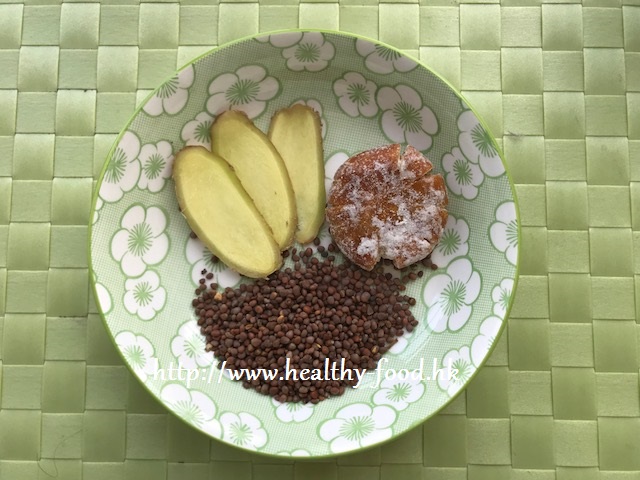
Roasted Radish Seed, Ginger and Tangerine Cake Tea
traditionally used to warm the lungs, transform cold phlegm, and relieve cough with thin white sputum
In short: Roasted Radish Seed, Ginger and Tangerine Cake Tea is a herbal & flower tea that traditionally used to warm the lungs, transform cold phlegm, and relieve cough with thin white sputum. It is most often made for respiratory & lung wellness. Total time about 35 min. Key ingredients: ginger, tangerine cake.
Why people make this tea
Not all coughs are the same. Traditional Chinese food therapy draws a clear distinction between a cough caused by heat patterns — with yellow, thick, sticky phlegm — and one caused by cold, where the phlegm is thin, white, and watery, and the person feels chilled and congested. This tea is designed specifically for the second type: the wind-cold cough.
Radish seeds (lai fu zi) are the seeds of the common radish, and have long been used in Chinese herbal cooking as a phlegm-dissolving, digestion-supporting ingredient. The raw seed has a strong upward-rushing action that can cause nausea or vomiting, so dry-roasting transforms this: roasted radish seeds (炒莱菔子, chao lai fu zi) work downward and inward, reducing phlegm and settling the chest without causing discomfort. Modern research has confirmed antimicrobial activity against a range of bacteria, as well as mild blood-pressure-lowering effects.
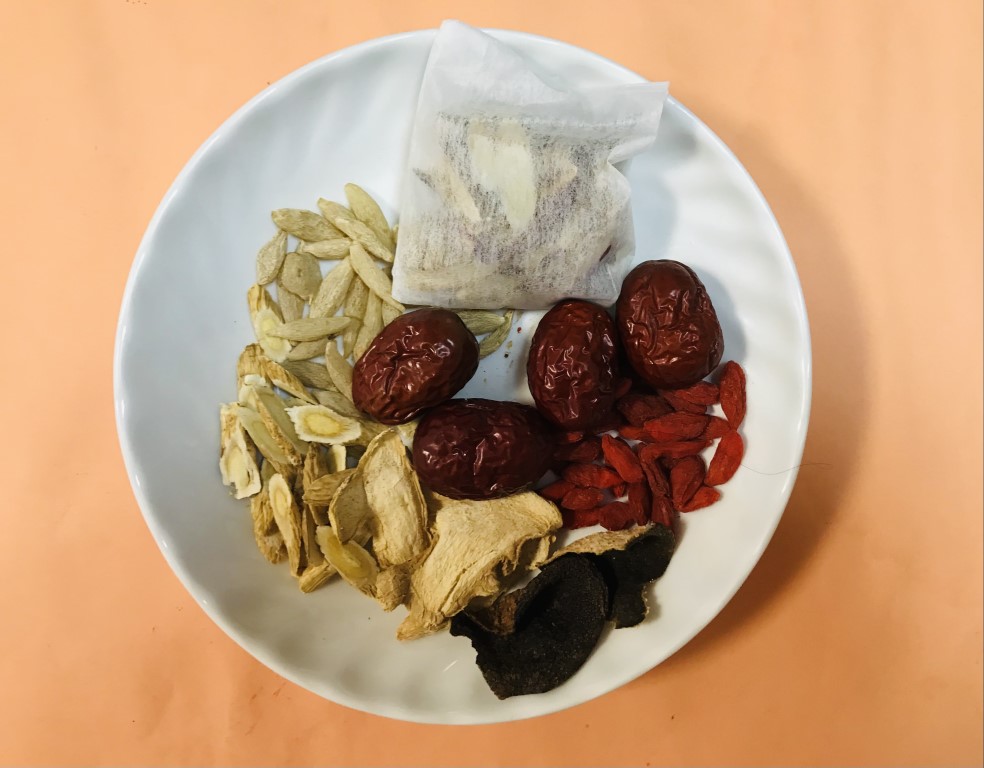
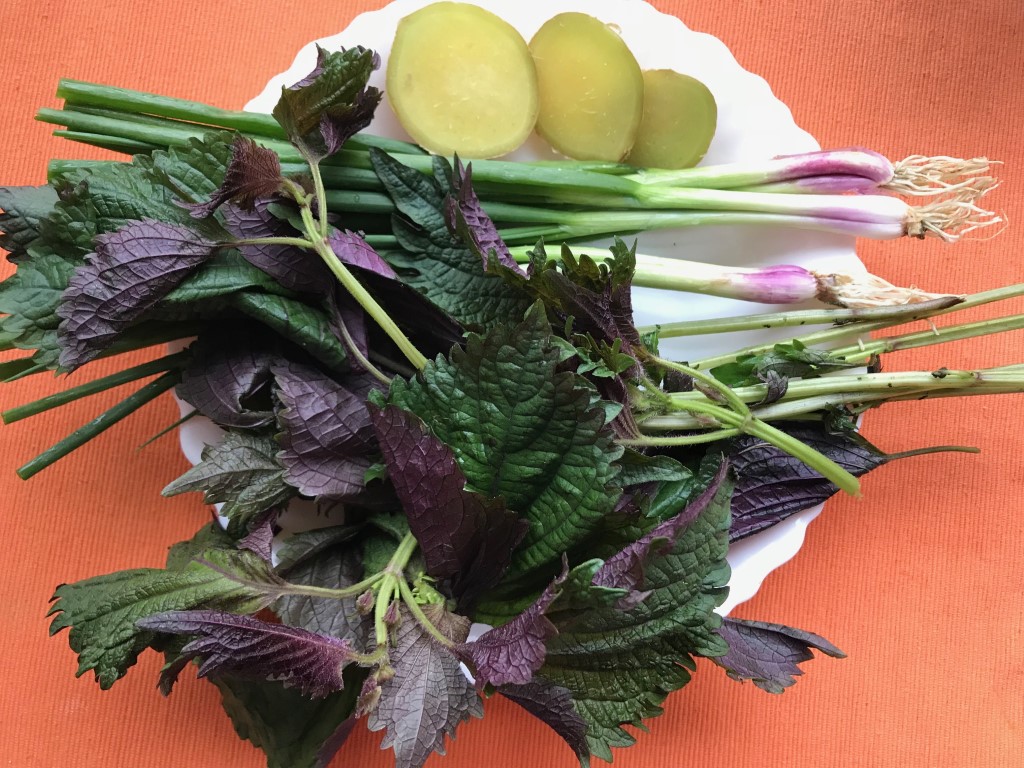
Fresh ginger warms the lungs from within, helping to dissolve cold phlegm and restore warmth to a chest that feels tight and congested. Tangerine cake adds throat-soothing sweetness and rounds out the blend.
What studies say about the key ingredients
Traditional use is not the same as clinical proof. Here is the strongest human research we found for each ingredient, limitations included.
- Ginger
Overall, acute and delayed nausea and vomiting did not differ significantly between ginger and control groups. A subgroup taking 1 g/day or less for over four days had less acute vomiting (OR 0.30).Limitation: Clinical heterogeneity between trials required subgroup analyses, and the authors state that sufficiently large, high-quality RCTs are still needed.PubMed 36501010 · 3 more ginger studies
From the Nourilo Research Library. Findings come from specific doses, extracts and populations and may not apply to a home-cooked recipe.
Safety first — read before you cook
This is a traditional food, not a treatment. Please check with your doctor or pharmacist before making it a regular part of your diet if you:
- are pregnant or breastfeeding, or are cooking for a young child;
- take regular medicines — especially blood thinners, blood-pressure, diabetes or immune-suppressing drugs;
- have a kidney, liver or heart condition, or a known food allergy.
Stop eating it and seek advice if you notice an allergic reaction or feel unwell. Safety notes reviewed 8 October 2026 · How we write safety notes
Members only
Unlock the full method & Nourilo's tips
One payment, lifetime access to every one of our 2,344 recipes — step-by-step methods, preparation tips and serving notes.
- Full step-by-step method for this and all 2,344 recipes
- Nourilo's Tips — sourcing, substitutions and serving notes
- One-time payment · card, Apple Pay or Google Pay · no subscription, no renewals
Checking your access…
$59.99 one-time · all recipes
Sign in or create a free account, then pay once by card, Apple Pay or Google Pay.
Continue with GoogleBy continuing with Google or email you confirm you are 16 or older and agree to our Terms of Use and Privacy Policy.
$59.99 one-time · all recipes
Signed in as ·
Secure checkout by Stripe. One-time payment, no renewals. Access is linked to your Nourilo account and never expires. By paying you agree to our Terms of Use; you can get a full refund within 14 days (refund policy).
Comments
Join the conversation — sign in or create a free account to comment.
Continue with GoogleBy continuing with Google or email you confirm you are 16 or older and agree to our Terms of Use and Privacy Policy.
Loading comments…