Soups
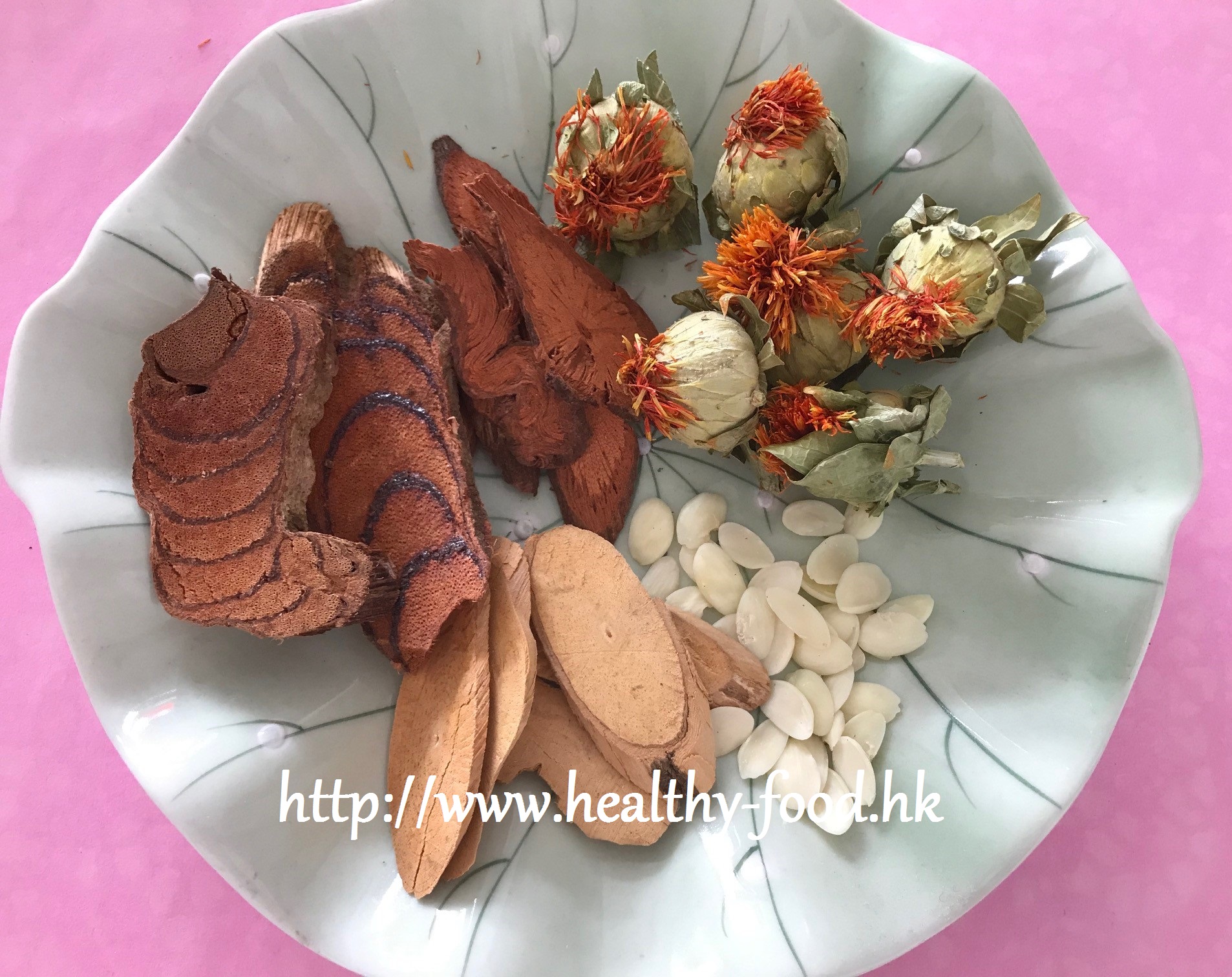
Three-Vine Safflower Peach Kernel Soup
traditionally used to activate blood circulation, dispel wind, unblock the meridians, and ease discomfort from varicose veins and rheumatic joint pain
In short: Three-Vine Safflower Peach Kernel Soup is a soup that traditionally used to activate blood circulation, dispel wind, unblock the meridians, and ease discomfort from varicose veins and rheumatic joint pain. It is most often made for heart & circulation, bone & joint wellness. Total time about 75 min.
Why people make this soup
People who stand for long periods, do heavy physical labour, or are carrying excess weight are especially prone to developing varicose veins over time. Traditional Chinese medicine considers vine-type plants — because of how they grow, spreading and reaching through obstacles — to have a natural affinity for activating circulation, dispelling wind, and unblocking stagnation in the body’s channels. This soup pairs three such vines with safflower and peach kernels to create a decoction that targets poor circulation and vascular stagnation. Safflower is worth a note: both Chinese safflower (Carthamus tinctorius, chuan hong hua) and the genuinely rare and expensive Tibetan saffron (Crocus sativus) are used in traditional Chinese herbalism, but for this everyday recipe the widely available Chinese variety from a reputable herb shop is what Nourilo recommends.
Safety first — read before you cook
This is a traditional food, not a treatment. Please check with your doctor or pharmacist before making it a regular part of your diet if you:
- are pregnant or breastfeeding, or are cooking for a young child;
- take regular medicines — especially blood thinners, blood-pressure, diabetes or immune-suppressing drugs;
- have a kidney, liver or heart condition, or a known food allergy.
Stop eating it and seek advice if you notice an allergic reaction or feel unwell. Safety notes reviewed 8 October 2026 · How we write safety notes
Members only
Unlock the full method & Nourilo's tips
One payment, lifetime access to every one of our 2,344 recipes — step-by-step methods, preparation tips and serving notes.
- Full step-by-step method for this and all 2,344 recipes
- Nourilo's Tips — sourcing, substitutions and serving notes
- One-time payment · card, Apple Pay or Google Pay · no subscription, no renewals
Checking your access…
$59.99 one-time · all recipes
Sign in or create a free account, then pay once by card, Apple Pay or Google Pay.
Continue with GoogleBy continuing with Google or email you confirm you are 16 or older and agree to our Terms of Use and Privacy Policy.
$59.99 one-time · all recipes
Signed in as ·
Secure checkout by Stripe. One-time payment, no renewals. Access is linked to your Nourilo account and never expires. By paying you agree to our Terms of Use; you can get a full refund within 14 days (refund policy).

Comments
Join the conversation — sign in or create a free account to comment.
Continue with GoogleBy continuing with Google or email you confirm you are 16 or older and agree to our Terms of Use and Privacy Policy.
Loading comments…