Home-Style Dishes
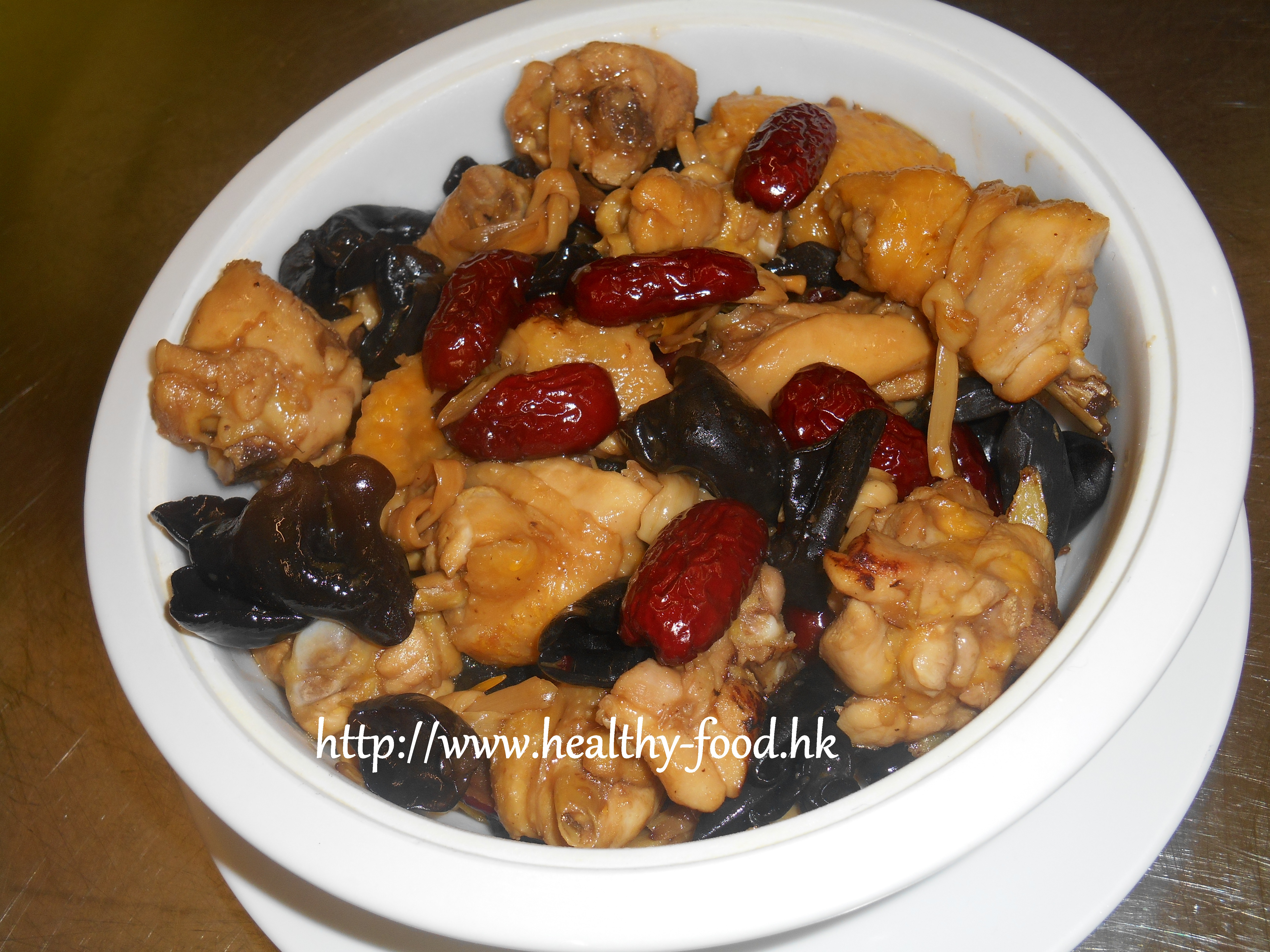
Three-Mushroom Stewed Chicken
Traditionally used to nourish qi and blood, strengthen the body after illness or childbirth

Why people make this stew
Organic or free-range chicken, slow double-boiled over three hours, yields a profoundly sweet and nourishing broth — one of the most valued preparations in Cantonese food therapy. Bro Niu makes it even more restorative by adding three medicinal mushrooms that are all well-regarded in both traditional herbalism and modern nutrition research: himematsutake (ji song rong), tea tree mushroom (cha shu gu), and lion’s mane (hou tou gu). Together they are believed to support immunity, benefit the spleen, and nourish the liver and kidneys. This is the kind of bowl you would bring to someone recuperating from surgery, struggling after a difficult birth, or simply running low on energy.
Who it suits / who should be cautious
- Suitable for weak constitution, post-illness recovery, postpartum recovery, and those with poor qi and blood.
- Suitable for pregnant women and the elderly; gentle and non-drying.
- Suitable for children as well as adults.
- Those who are concerned about fresh mushrooms triggering dampness in the body can rest easy — these are dried mushrooms, which do not have the same dampening effect. Adding a small amount of Chinese yam (huai shan) or poria (fu ling) can further support the spleen if needed.
Why these ingredients (the food-therapy logic)
- Himematsutake (ji song rong): A prized medicinal mushroom, traditionally associated with boosting immune function, supporting the spleen, and benefitting the liver and kidneys.
- Tea tree mushroom (cha shu gu): Rich in dietary fibre and polysaccharides; traditionally considered supportive of kidney and spleen function.
- Lion’s mane mushroom (hou tou gu): Known in traditional medicine for supporting digestive health and nourishing the stomach and spleen; increasingly studied for its potential effects on nervous system health.
- Red dates (hong zao): Widely used as a gentle blood-nourishing ingredient that also helps calm the mind and moderate the flavour of other herbs.
- Organic chicken: Free-range or organic poultry is preferred for tonifying soups because it is leaner, more flavourful, and considered to carry fewer exogenous hormones than factory-raised birds.
Ingredients (1 pot, ~3 bowls broth)
| Ingredient | Amount | Notes |
|---|---|---|
| Himematsutake mushrooms (dried) | 4–5 pieces | Soak and rinse before use |
| Tea tree mushrooms (dried) | 38 g | Soak and rinse before use |
| Lion’s mane mushrooms (dried) | 2–3 pieces | Soak and rinse before use |
| Fresh ginger | 3 slices | |
| Red dates, pitted | 6 pieces | |
| Organic free-range chicken | Half a chicken | Blanch in boiling water first |
| Boiling water | 3 bowls | Added to double-boiler |
Method
- Joint the chicken and blanch the pieces briefly in boiling water; drain and rinse.
- Pit the red dates.
- Soak and rinse all three types of mushrooms.
- Place all ingredients into a double-boiler insert (dun zhong).
- Pour in 3 bowls of freshly boiled water.
- Cover and double-boil for 3 hours.
- Serve the broth; eat the mushrooms and some of the chicken meat as well.
Bro Niu’s tips
- This broth is naturally sweet and delicious — no strong herbal flavour at all.
- Suitable for the whole family, young and old.
- Bro Niu notes that these mushrooms are also associated with cancer prevention in traditional usage, and the broth is nourishing without being drying.
- Pregnant women can drink this throughout pregnancy.
- If you are adding sea cucumber (hai shen), add it later in the process — around the 40-minute mark — so it retains a better texture rather than fully dissolving.
- Bro Niu prefers to use boiling water (not cold water) when double-boiling to shorten the cooking time.
Community questions answered (selected)
-
Q (Meki): Are himematsutake and lion’s mane considered damp-inducing (shi zhong) foods? How can I counteract that in the soup? Bro Niu: Dried himematsutake and lion’s mane do not cause dampness — it is generally fresh mushrooms that can be an issue for dampness-prone individuals. Adding some Chinese yam (huai shan) and poria (fu ling) will give the broth a spleen-strengthening, dampness-resolving effect.
-
Q (Bobby): Can I substitute quail, partridge, or silky fowl for the chicken? Can I use one whole bird? Bro Niu: You can use one whole partridge or half a silky fowl instead. For sea cucumber, choose the Australian bald variety (tu can) — it holds its shape better after two hours of double-boiling. For a firmer texture, add it around 40 minutes before the end.
-
Q (reader): Is it better to use boiling water or cold water when double-boiling? Bro Niu: I always use boiling water for double-boiling — it shortens the cooking time.
Published March 26, 2019 · Adapted and translated for Nourilo from a traditional home-kitchen recipe. Approx. 4 min read.