Home-Style Dishes
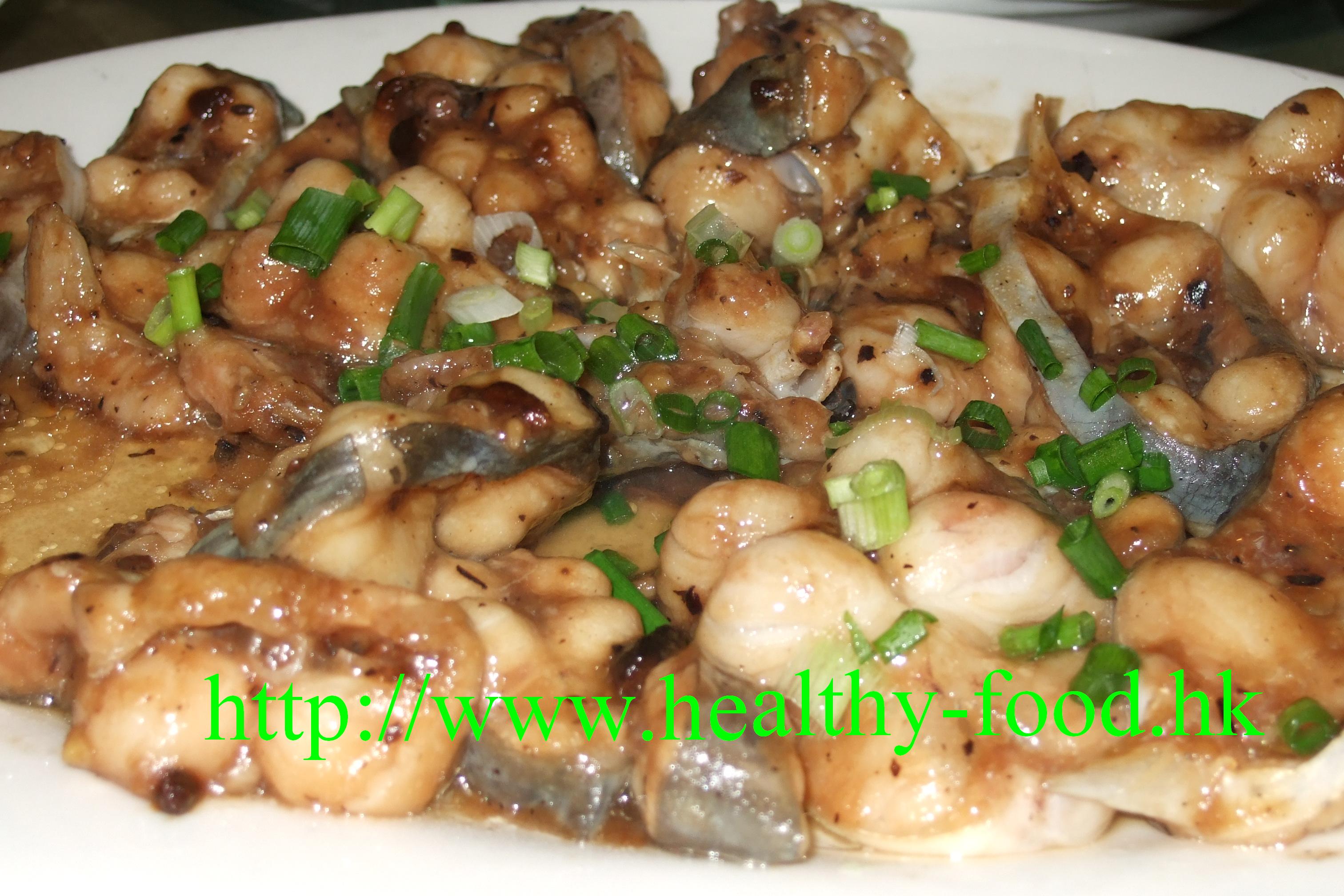
Steamed White Eel with Black Bean Sauce
Traditionally used to nourish deficiency, clear mild internal heat and support constitutional fatigue
In short: Steamed White Eel with Black Bean Sauce is a home-style dishe that Traditionally used to nourish deficiency, clear mild internal heat and support constitutional fatigue. It is most often made for energy & vitality, everyday balance. Total time about 23 min. Key ingredients: ginger, garlic.
Why people make this dish
White eel (anguilla-type freshwater eel, called 白鳝 in Cantonese) is a beautifully flavoured fish — rich, slightly gelatinous from the natural collagen in its skin, and deeply satisfying in a way that speaks to its traditional reputation as a restorative food. Buying it whole from a live fish counter is ideal; a good fishmonger can handle the slippery business of blanching, scraping and cutting, leaving you with neatly portioned pieces ready to season and steam.
In Chinese food medicine, white eel occupies a particular niche: it tonifies deficiency without being too heaty, and it specifically addresses a pattern sometimes called “lung-yin insufficiency” — where a person tends toward low-grade fatigue, occasional night sweats, alternating chills and warmth, easy colds, mild chronic cough, and lower back tenderness. This is what traditional practitioners mean by “neurasthenic” constitution: not a specific psychiatric diagnosis, but rather a pattern of insufficient reserves. Steaming with fermented black beans, ginger and garlic keeps the preparation simple, preserving the delicate flavour of fresh eel while adding savoury depth.
Method
- If preparing the eel yourself: blanch briefly in boiling water to set the skin and make it easier to handle; scrape off the slippery mucus coating with a cloth or paper towel. Cut into sections (or score into spiral cuts, keeping on the skin, for a dramatic presentation).
- Finely chop the fermented black beans together with the minced ginger and garlic. Mix with a small pinch of salt and sugar.
- Place the eel pieces in a heatproof dish. Spread the black bean paste mixture evenly over the eel.
- Place the dish in a steamer over vigorously boiling water. Steam for approximately 8 minutes, until the eel is just cooked through.
- Remove from the steamer. Scatter the minced spring onion over the top.
- Heat 1–2 tablespoons of oil in a small pan until smoking. Pour the hot oil over the spring onion to release its fragrance.
- Drizzle with light soy sauce and serve immediately with steamed rice.
Nourilo’s Tips
Always source live eel from a fish counter that keeps them live — a freshly blanched eel is far superior to one that has been sitting on ice. If the fishmonger offers to scrape and cut the eel for you, take the offer — the slippery skin is the most challenging part of home preparation. Steam for exactly the right amount of time: eel becomes rubbery if overcooked. Eight minutes over high steam is usually right for sections about 3–4 cm thick. Spleen-stomach damp-heat types and those prone to loose stools should limit their portions of this rich dish.
What studies say about the key ingredients
Traditional use is not the same as clinical proof. Here is the strongest human research we found for each ingredient, limitations included.
- Black soybeans
Systolic blood pressure fell more in the black soy peptide group (-9.69 mm Hg) than in the placebo group (-2.91 mm Hg) after baseline adjustment. Plasma malondialdehyde decreased and superoxide dismutase activity increased compared with placebo.Limitation: Used an isolated peptide supplement rather than whole black soybeans, and followed participants for only 8 weeks, so the results may not apply to food intake.PubMed 23924691 - Ginger
Overall, acute and delayed nausea and vomiting did not differ significantly between ginger and control groups. A subgroup taking 1 g/day or less for over four days had less acute vomiting (OR 0.30).Limitation: Clinical heterogeneity between trials required subgroup analyses, and the authors state that sufficiently large, high-quality RCTs are still needed.PubMed 36501010 · 3 more ginger studies - Garlic
Gamma-delta T and NK cells proliferated better and were more activated than with placebo. The number of illnesses did not differ significantly, but cold and flu severity and missed days were lower.Limitation: Cold and flu outcomes were self-reported in daily diaries, and the dose was a concentrated extract that is not comparable to dietary garlic.PubMed 26764332 · 2 more garlic studies
From the Nourilo Research Library. Findings come from specific doses, extracts and populations and may not apply to a home-cooked recipe.
Safety first — read before you cook
This is a traditional food, not a treatment. Please check with your doctor or pharmacist before making it a regular part of your diet if you:
- are pregnant or breastfeeding, or are cooking for a young child;
- take regular medicines — especially blood thinners, blood-pressure, diabetes or immune-suppressing drugs;
- have a kidney, liver or heart condition, or a known food allergy.
Stop eating it and seek advice if you notice an allergic reaction or feel unwell. Safety notes reviewed 8 October 2026 · How we write safety notes
Comments
Join the conversation — sign in or create a free account to comment.
Continue with GoogleBy continuing with Google or email you confirm you are 16 or older and agree to our Terms of Use and Privacy Policy.
Loading comments…