Soups
Honeysuckle, Bland Bamboo Leaf & Mung Bean Sweet Soup
Traditionally used to clear heat, soothe throat sores, and support recovery from herpangina
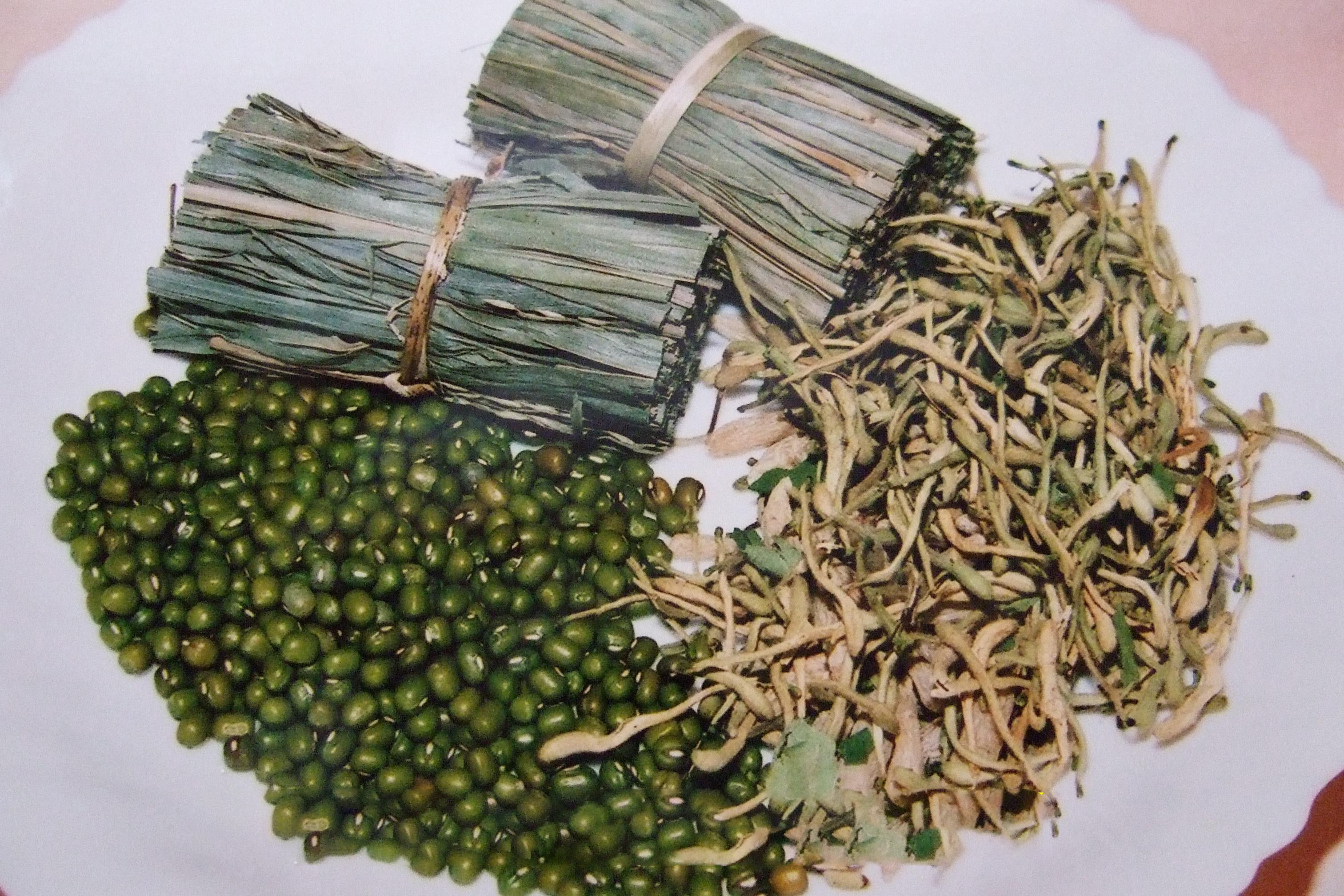
In short: Honeysuckle, Bland Bamboo Leaf & Mung Bean Sweet Soup is a soup that Traditionally used to clear heat, soothe throat sores, and support recovery from herpangina. It is most often made for respiratory & lung wellness, cooling & summer heat, children's wellness. Total time about 30 min. Key ingredients: honeysuckle flowers, mung beans, rock sugar.
Why people make this soup
Herpangina — a viral infection causing painful blisters at the back of the throat — tends to spike in kindergartens during early summer and autumn. Young children can run a fever and refuse to eat because swallowing hurts. In traditional Chinese food therapy, this condition is considered a “heat pattern” (热症), and the traditional approach is to gently cool and clear heat.
One of Nourilo’s more creative suggestions is to turn this herbal brew into a jelly — set with agar or gelatin, chilled, and served as a wobbly dessert that children associate with jelly rather than medicine. The cool, smooth texture soothes the inflamed throat while delivering the herbal benefit. A small bowl of green jelly made from honeysuckle, mung beans, and bamboo leaf is something most feverish children will actually want to eat.
The brew itself is straightforward: a handful of honeysuckle flowers, some mung beans, and bland bamboo leaf — all herbs associated with clearing heat and promoting mild diuresis to help the body’s natural processes during a heat pattern. Sweetened with rock sugar and served cool.
To make jelly (optional):
| Ingredient | Amount | Notes |
|---|---|---|
| Agar strips or gelatin powder | As per packet instructions | Soak agar until soft; gelatin powder dissolve in warm water |
Method
Sweet soup:
- Rinse all three herbal ingredients.
- Combine honeysuckle flowers, mung beans, and bland bamboo leaf with 1.5 L of water in a pot.
- Bring to a boil, then reduce heat and simmer for 20 minutes, until liquid reduces to about 600 ml.
- Add rock sugar and stir until dissolved.
- Allow to cool to room temperature; serve cool or at room temperature (not piping hot).
To make as a jelly for children:
- After brewing, strain out the solids.
- While still warm, add softened agar strips or dissolved gelatin powder to the strained liquid. Stir until fully melted.
- Pour into small moulds or cups. Refrigerate until set.
- Serve cold — the wobbling cool jelly is easier to swallow and soothes the sore throat.
Nourilo’s Tips
When a child’s throat is so sore they refuse to eat, this jelly form is a game changer. Most children willingly eat a cool, sweet, wobbly jelly — they don’t see it as medicine at all. The cold temperature itself also provides some pain relief. Make sure to let the soup cool properly before drinking; hot liquid will aggravate an inflamed throat. Green mung bean sweet soup made with coix seed (Yi Yi Ren / raw Job’s tears) is another simple option that works similarly.
What studies say about the key ingredients
Traditional use is not the same as clinical proof. Here is the strongest human research we found for each ingredient, limitations included.
- Mung beans
Breath hydrogen and methane were higher after wheat than after rice or mung bean noodles. Bloating scores after mung bean did not differ significantly from wheat, and mung bean produced gas levels similar to rice.Limitation: Small sample of 20 patients, with single meals tested rather than habitual intake, so longer-term effects of mung bean on symptoms are unknown.PubMed 31484315 · 1 more mung beans study
From the Nourilo Research Library. Findings come from specific doses, extracts and populations and may not apply to a home-cooked recipe.
Safety first — read before you cook
This is a traditional food, not a treatment. Please check with your doctor or pharmacist before making it a regular part of your diet if you:
- are pregnant or breastfeeding, or are cooking for a young child;
- take regular medicines — especially blood thinners, blood-pressure, diabetes or immune-suppressing drugs;
- have a kidney, liver or heart condition, or a known food allergy.
Stop eating it and seek advice if you notice an allergic reaction or feel unwell. Safety notes reviewed 8 October 2026 · How we write safety notes

Comments
Join the conversation — sign in or create a free account to comment.
Continue with GoogleBy continuing with Google or email you confirm you are 16 or older and agree to our Terms of Use and Privacy Policy.
Loading comments…