Soups
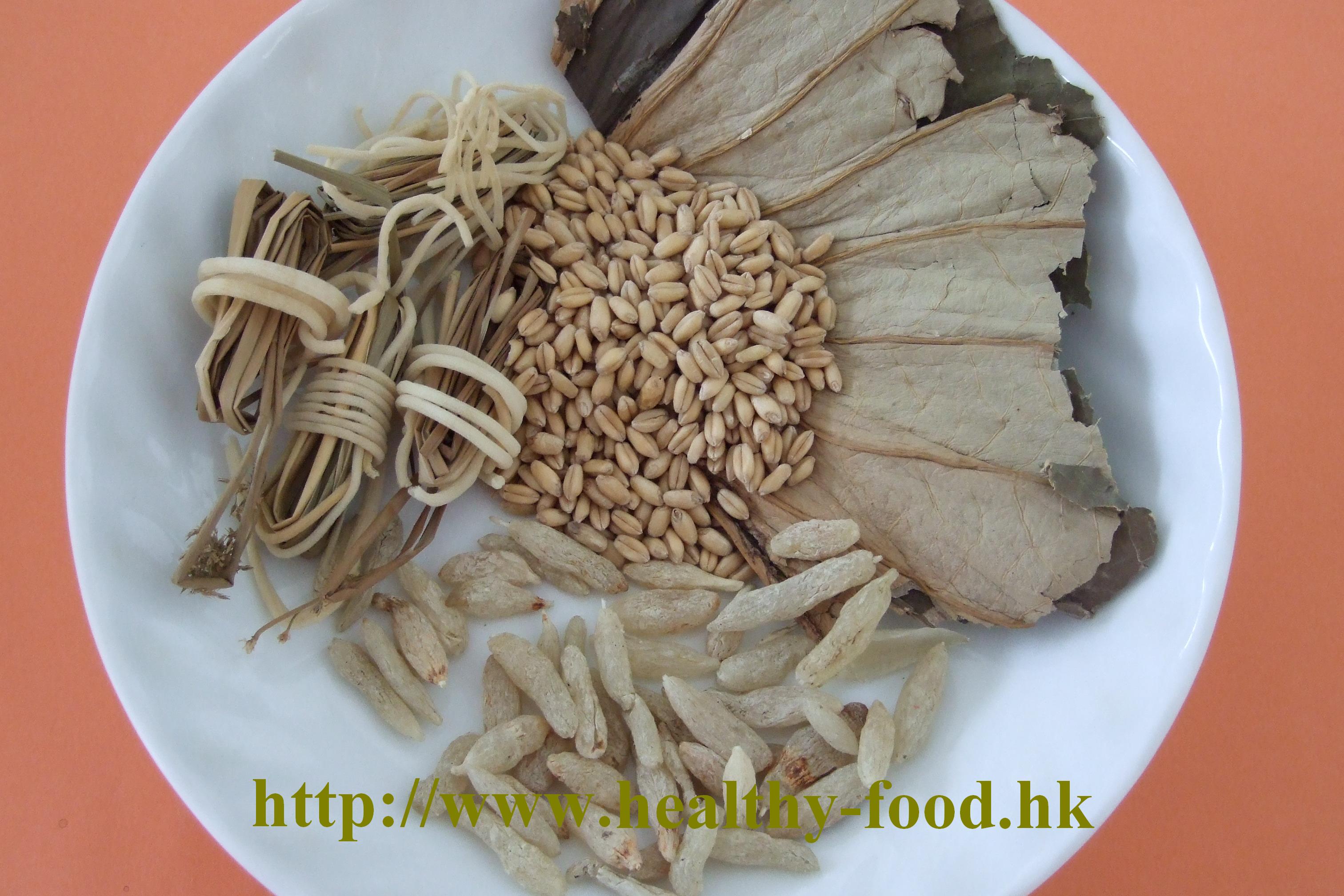
Fresh Lotus Leaf, Winter Melon and Green Bean Dampness-Clearing Soup
traditionally used to clear summer heat, resolve dampness, and support the body during and after hand, foot and mouth disease outbreaks
In short: Fresh Lotus Leaf, Winter Melon and Green Bean Dampness-Clearing Soup is a soup that traditionally used to clear summer heat, resolve dampness, and support the body during and after hand, foot and mouth disease outbreaks. It is most often made for cooling & summer heat, children's wellness, oral & throat comfort. Total time about 135 min. Key ingredients: lotus leaf, winter melon, coix seed / job's tears, honey dates.
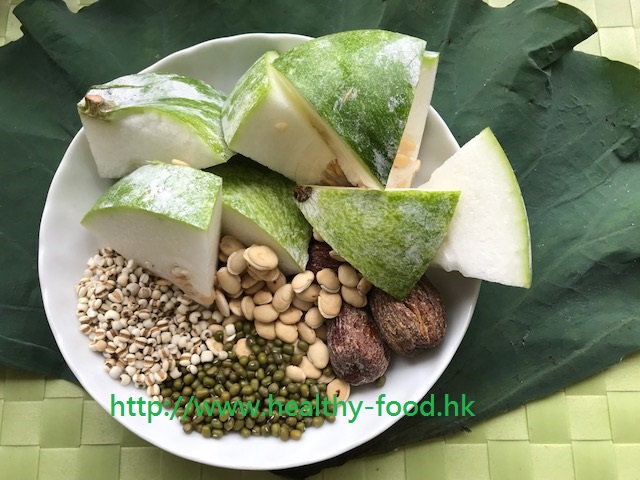
Why people make this soup
Hand, foot and mouth disease (HFMD) is a highly contagious viral illness that tends to circulate every summer in subtropical Asia, primarily affecting children under five. It presents with fever, oral blisters that cause pain on eating, and a rash of spots or blisters on the hands, feet, and buttocks. Because the mouth sores make swallowing painful, children often refuse food — and a cool, clear, gently sweet soup is one of the few things they will accept.
In Chinese food therapy, this combination of lotus leaf, winter melon, and cooling legumes addresses what is called “damp-heat” — the pattern most associated with summer infectious illnesses. Nourilo recommends this soup not only for children already unwell but for the whole family as a seasonal soup during outbreak season: a healthy spleen and digestive system is considered the foundation of resilience in traditional thinking.
Method
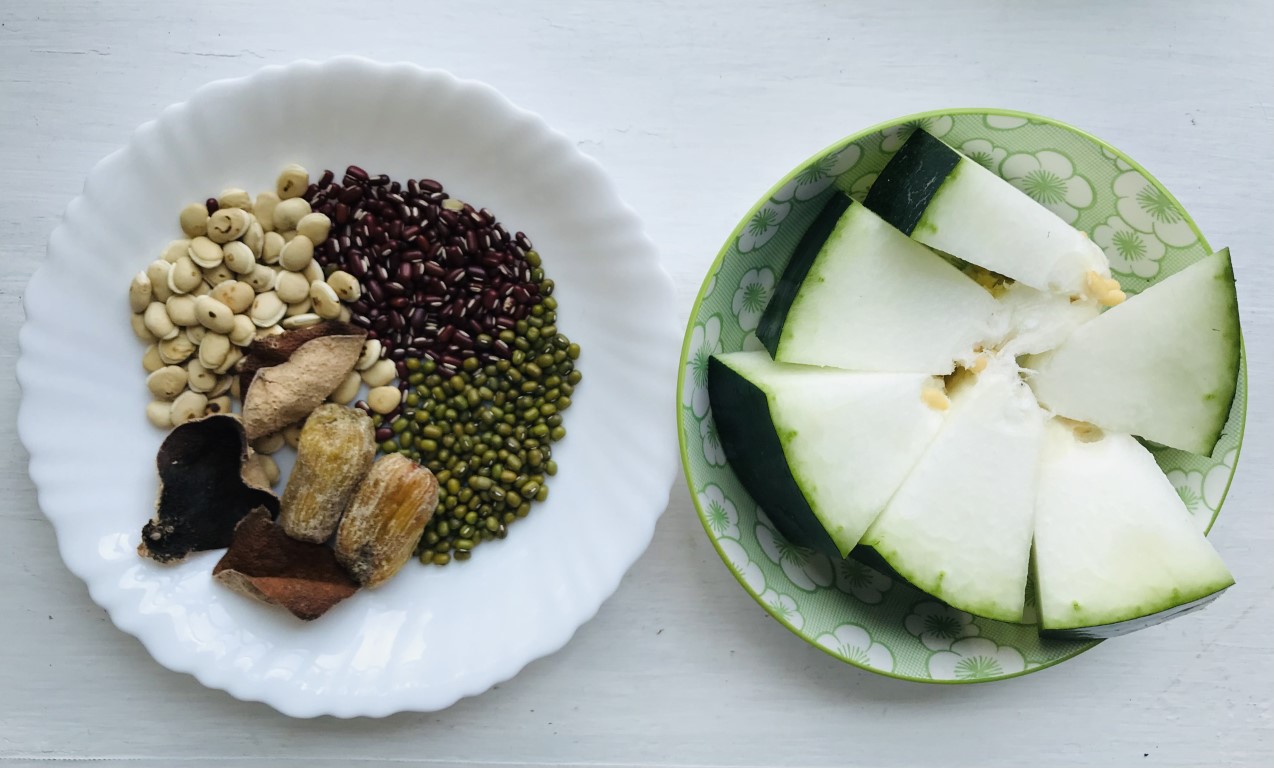
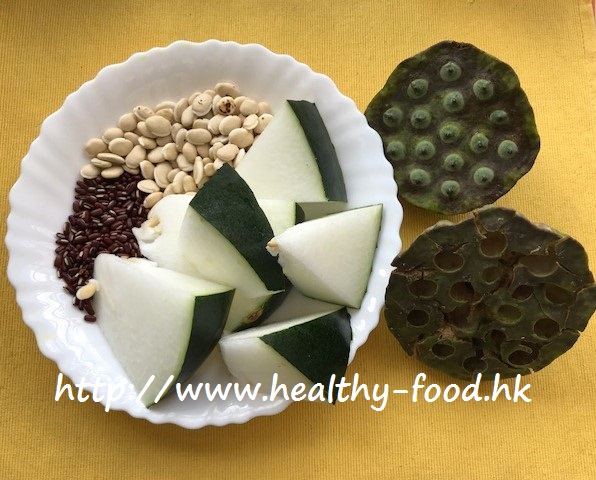
- Wash the winter melon and cut into chunky pieces — leave the skin and seeds on.
- Rinse the lotus leaf and cut or tear into pieces. (Use half a leaf if you prefer a milder flavour.)
- Soak and rinse the mung beans, flat white beans, and coix seed.
- Rinse the honey dates.
- Combine all ingredients in a pot with 2.4 L of water.
- Bring to a boil, then reduce heat and simmer for 2 hours.
- Important: for sick children, allow the soup to cool completely before serving — hot liquid over mouth sores is painful.
Nourilo’s Tips
This soup is nicely fragrant from the fresh lotus leaf. Fresh lotus leaves are available at Chinese or Asian grocers in summer, and at some farmers markets and specialty food stores. If you are making this for a child recovering from HFMD, wait until the soup is fully cooled before giving it to them. You can add pork ribs or lean pork if you want a more substantial family soup. If fresh lotus leaf is unavailable, a dried lotus leaf can be substituted.
What studies say about the key ingredients
Traditional use is not the same as clinical proof. Here is the strongest human research we found for each ingredient, limitations included.
- Mung beans
Breath hydrogen and methane were higher after wheat than after rice or mung bean noodles. Bloating scores after mung bean did not differ significantly from wheat, and mung bean produced gas levels similar to rice.Limitation: Small sample of 20 patients, with single meals tested rather than habitual intake, so longer-term effects of mung bean on symptoms are unknown.PubMed 31484315 · 1 more mung beans study - Job's tears (coix)
Myeloperoxidase activity rose significantly in the placebo group after 8 weeks but showed no significant change in the adlay tea group. Vascular endothelial function improved in the adlay group, especially in those over 40.Limitation: Participants were healthy adults and the outcomes were surrogate markers, so the results say little about clinical disease outcomes. Tea is a polyphenol-rich extract, not whole grain.PubMed 38945894 · 2 more job's tears (coix) studies
From the Nourilo Research Library. Findings come from specific doses, extracts and populations and may not apply to a home-cooked recipe.
Safety first — read before you cook
This is a traditional food, not a treatment. Please check with your doctor or pharmacist before making it a regular part of your diet if you:
- are pregnant or breastfeeding, or are cooking for a young child;
- take regular medicines — especially blood thinners, blood-pressure, diabetes or immune-suppressing drugs;
- have a kidney, liver or heart condition, or a known food allergy.
Stop eating it and seek advice if you notice an allergic reaction or feel unwell. Safety notes reviewed 8 October 2026 · How we write safety notes
Comments
Join the conversation — sign in or create a free account to comment.
Continue with GoogleBy continuing with Google or email you confirm you are 16 or older and agree to our Terms of Use and Privacy Policy.
Loading comments…