Herbal & Flower Teas
Monthly Rose and Rosebud Flower Tea
Traditionally used to support menstrual regularity and ease period discomfort
Why people make this tea
Both monthly rose and rosebud belong to the same botanical family (Rosaceae) and have been used in Chinese herbal food therapy for centuries to support women’s wellbeing. What makes monthly rose (yue ji hua) particularly interesting is how it got its name: unlike most roses that bloom once a season, this species flowers every single month — hence “monthly rose” or “month-after-month red” (yue yue hong). In traditional Chinese medicine thinking, menstrual irregularity and period pain are often attributed to liver qi stagnation — a pattern characterized by emotional tension, sighing, breast tenderness, bloating, and pain that responds to warmth. Monthly rose is traditionally used to move blood and regulate the menstrual cycle, while rosebud moves qi, dissolves tension, and gently warms the middle. Brown sugar adds warmth and enhances the blood-nourishing quality. Together, this tea is particularly favored as a preparation to begin drinking about a week before menstruation arrives.
Who it suits / who should be cautious
- Suited to women experiencing irregular periods, period pain, or PMS symptoms associated with emotional tension (irritability, breast tenderness, bloating)
- Also suited to women with symptoms of liver qi stagnation: frequent sighing, a sense of fullness in the chest, digestive discomfort linked to emotional states
- Traditionally also associated with supporting digestion and relieving stomach pain related to stress
- Absolutely contraindicated during pregnancy — this is a firm traditional caution, not to be disregarded
- Women who are menstruating: it is generally better to wait until the period is over before resuming; active menstruation combined with herbs that promote uterine circulation may sometimes increase flow
- For period pain: begin drinking one week before the expected period start date, continue for 5 days; this timing is key to the traditional approach
Why these ingredients (the food-therapy logic)
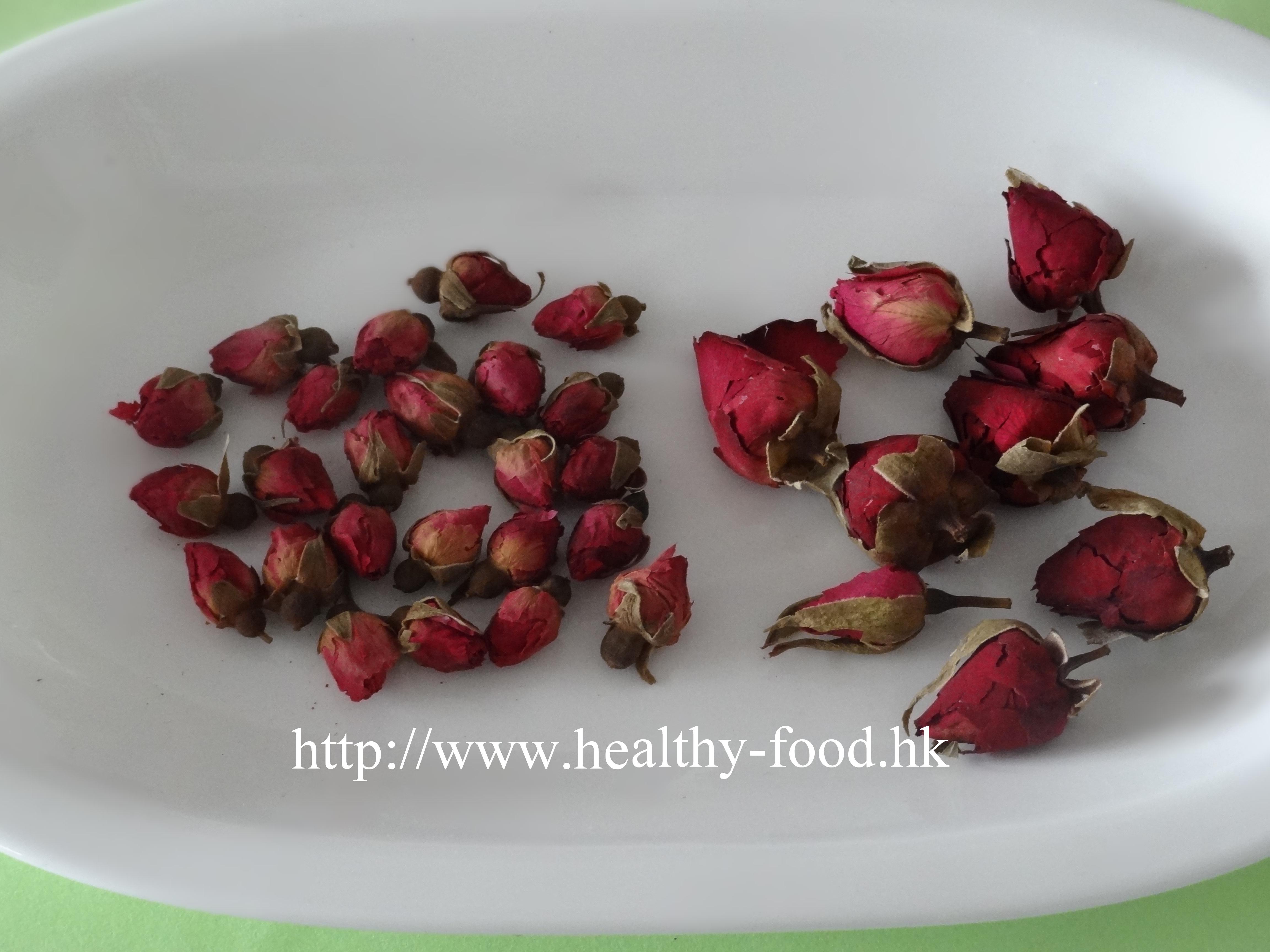
- Chinese monthly rose (yue ji hua, Rosa chinensis): The key differentiating herb in this blend — traditionally considered an invigorating herb specific to the female reproductive system, associated with activating blood circulation and regulating the menstrual cycle. Its monthly flowering pattern is considered in Chinese folk tradition to symbolize its affinity with the menstrual rhythm.
- Rosebud (mei gui hua, Rosa rugosa): The more familiar fragrant rose of Chinese herbal tea shops. Traditionally associated with moving qi, relieving liver stagnation, and gently warming the stomach. Particularly helpful for the emotional component of PMS — irritability, emotional tension, and the feeling of things being “stuck.”
- Brown sugar (hong tang): Warming in nature and traditionally considered to support blood circulation and warmth in the uterus. The warmth of brown sugar also makes the tea more comforting to drink during cold or painful periods.
Ingredients (1–2 cups)
| Ingredient | Amount | Notes |
|---|---|---|
| Chinese monthly rose flowers (yue ji hua) | ~19 g (5 qian) | Available at Chinese herb shops and some specialty tea stores; less common than standard rosebuds |
| Rosebuds / rose petals (mei gui hua) | ~11 g (3 qian) | Widely available at herb shops and flower-tea shops |
| Brown sugar (hong tang) | to taste | Add after steeping |
Method
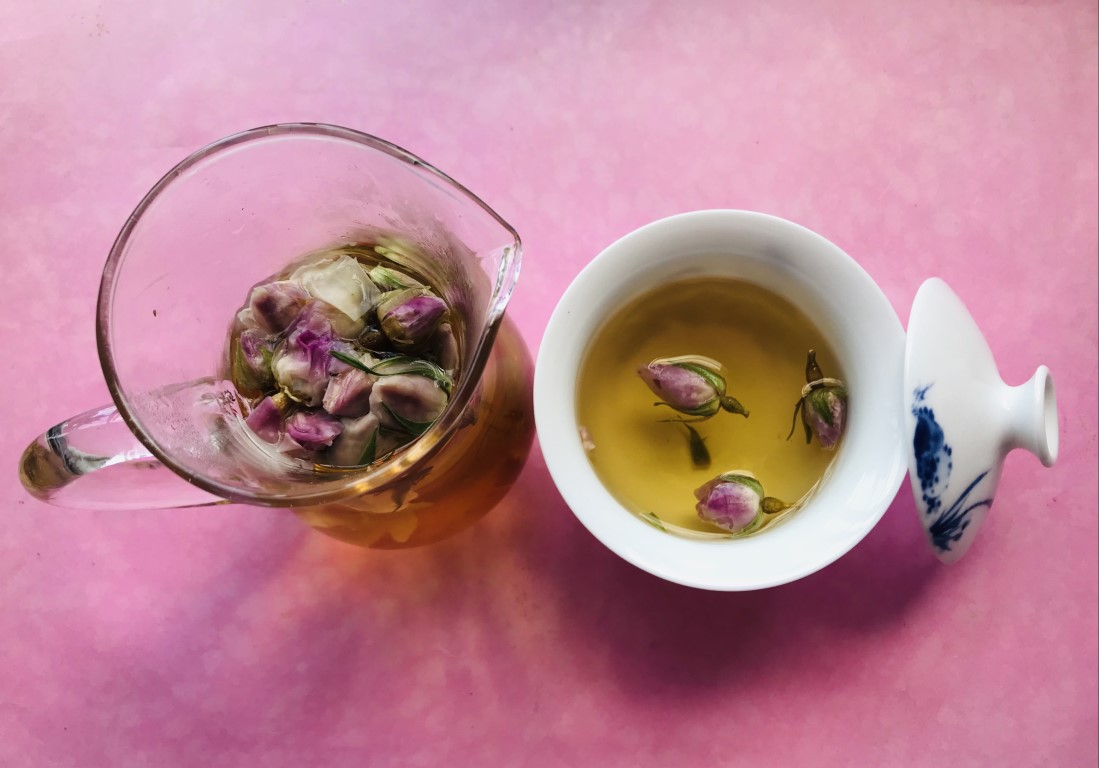
- Place the monthly rose and rosebud flowers into a teapot.
- Pour in a small amount of boiling water, swirl briefly, and discard — this rinse cleans and opens the flowers.
- Pour in freshly boiled water and add brown sugar to taste.
- Cover and steep for 5 minutes.
- Pour into a cup and drink warm. The flowers can be re-steeped 2–3 times by adding more boiling water.
Bro Niu’s tips
- For menstrual pain: start drinking this tea one week before your expected period, and continue for 5 days. Consistency matters — a single cup has limited effect; the traditional approach involves regular use over the lead-up to menstruation.
- This tea is also traditionally associated with relieving stomach and abdominal pain caused by emotional stress (liver-stomach disharmony) and supporting digestion in general — so it is not exclusively a menstrual tea.
- Women who have already gone through menopause can still enjoy rose and rosebud tea for its calming, qi-regulating properties. Combine with jasmine flowers and chrysanthemum for a gentle everyday blend.
- Monthly rose (yue ji hua) can be harder to find than standard rosebuds — look in traditional Chinese herb shops or Chinese medicine pharmacies. It is larger than a standard rosebud and has a more subdued fragrance.
Community questions answered (selected)
-
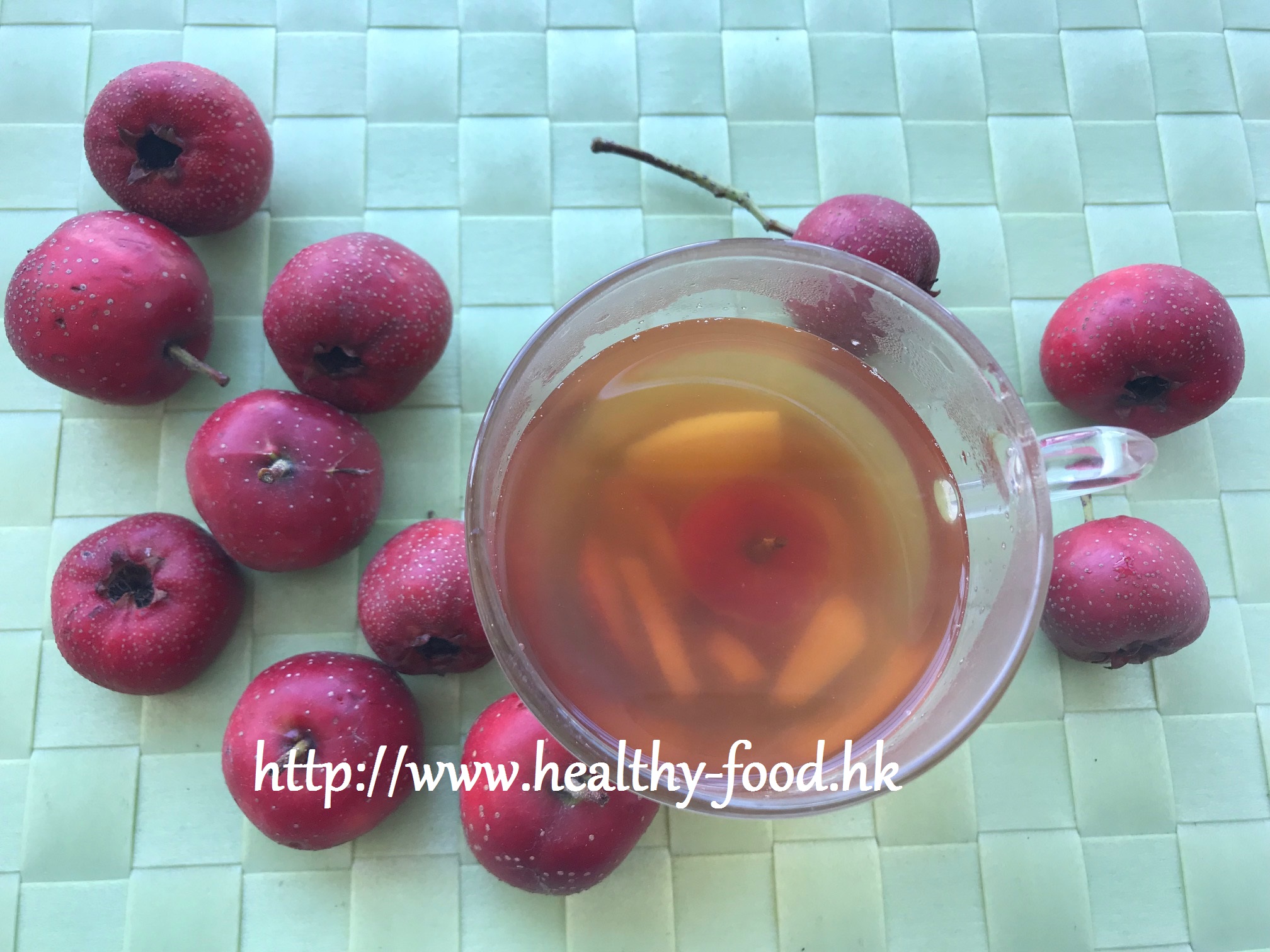
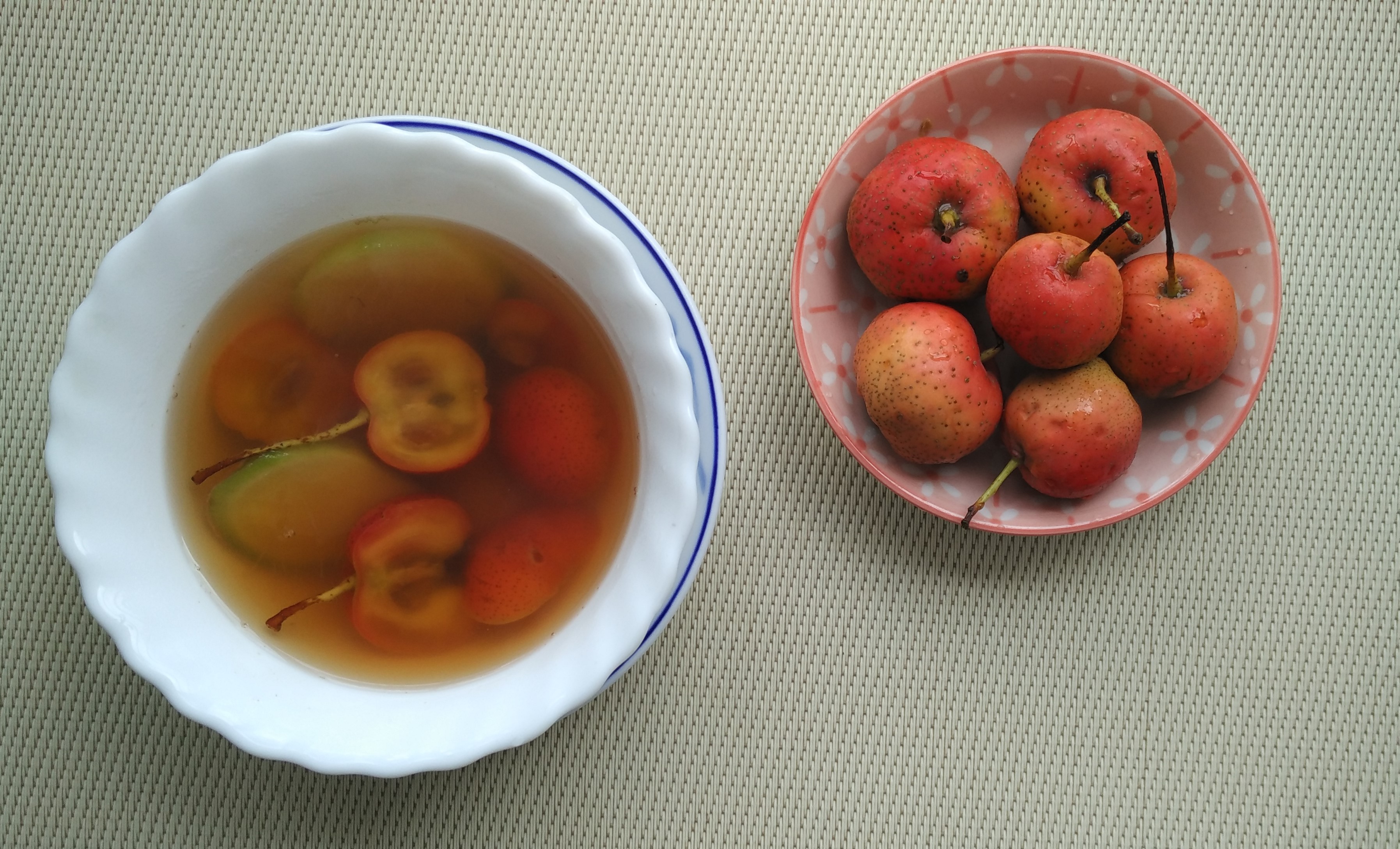
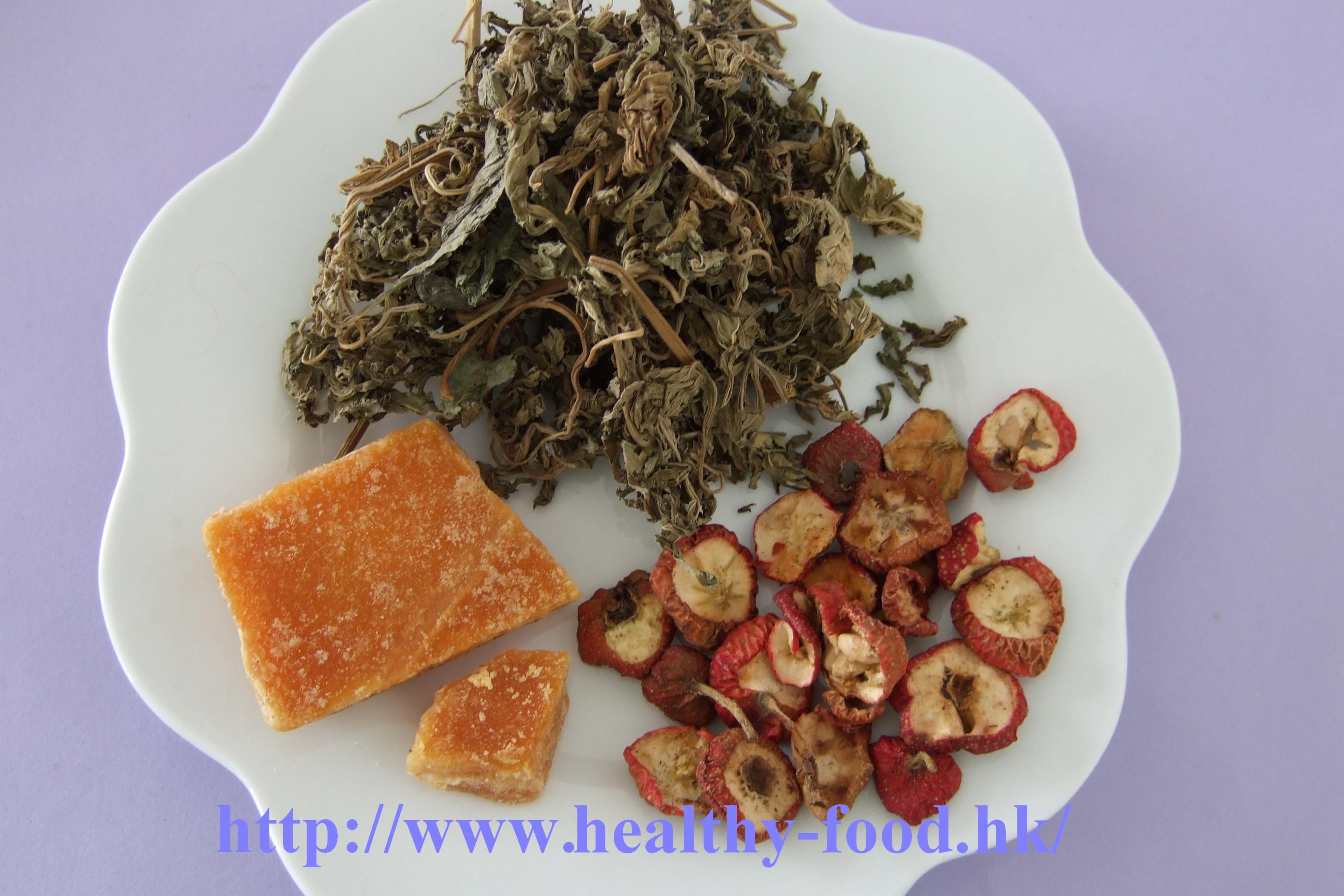
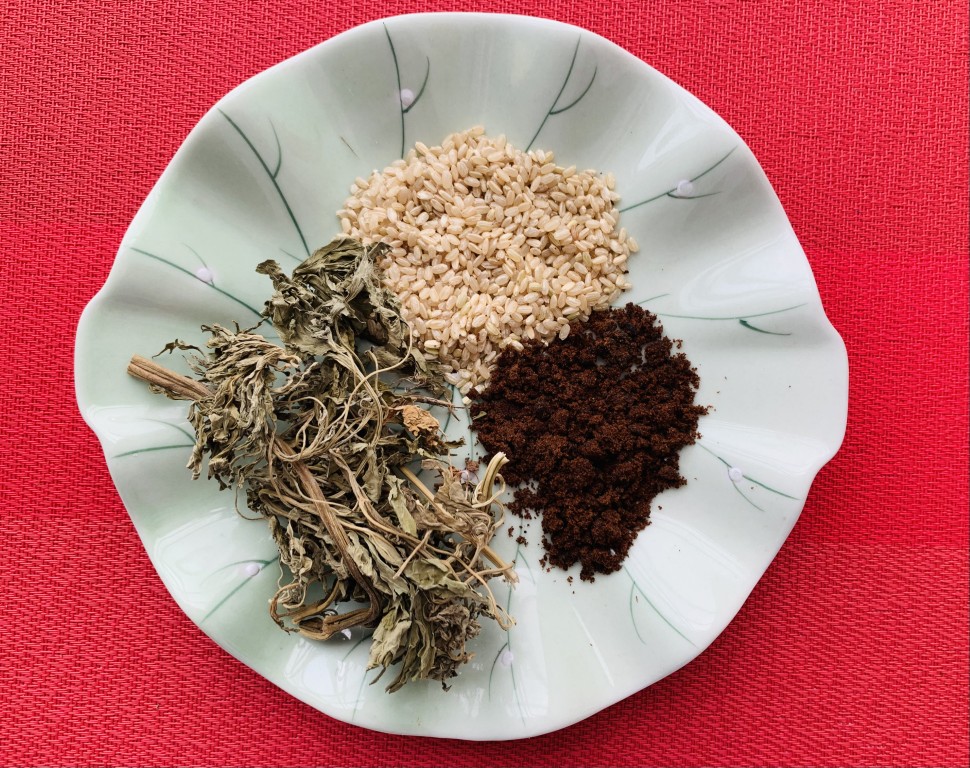
Q (Ng): I have been drinking hawthorn, motherwort, ginger, and brown sugar tea for three weeks, but my period this month was still short and light. Should I continue after the period ends? Bro Niu: Food therapy can only provide supportive assistance, not reliably fix all menstrual issues. If three weeks of consistent use has not helped, I would recommend seeing a doctor to understand the underlying cause of light periods. The hawthorn-motherwort-ginger-sugar tea has no harmful side effects, so drinking it is not harmful — it just may not be sufficient on its own. For abdominal coldness, try adding ai ye (mugwort leaf, 3 qian) to your ginger-sugar tea, which has additional uterine warming properties.
-
Q (Ng, March): My period is consistently 3–5 days late, stops on day 3, then returns briefly with brownish discharge. I also have cold hands and feet in winter, breast nodules, and a uterine cyst. What would help? Bro Niu: You can try hawthorn (3 qian), motherwort herb (yi mu cao, 4 qian), fresh ginger (3 slices), and brown sugar — simmer in 4 bowls of water to 2 bowls; drink 3 times per week, stop during menstruation, continue for 1–2 months. This warming blend suits those with a cold-deficient constitution. You can also brew this monthly rose and rosebud tea regularly, which may help with the liver qi stagnation pattern often associated with breast nodules and similar conditions.
-
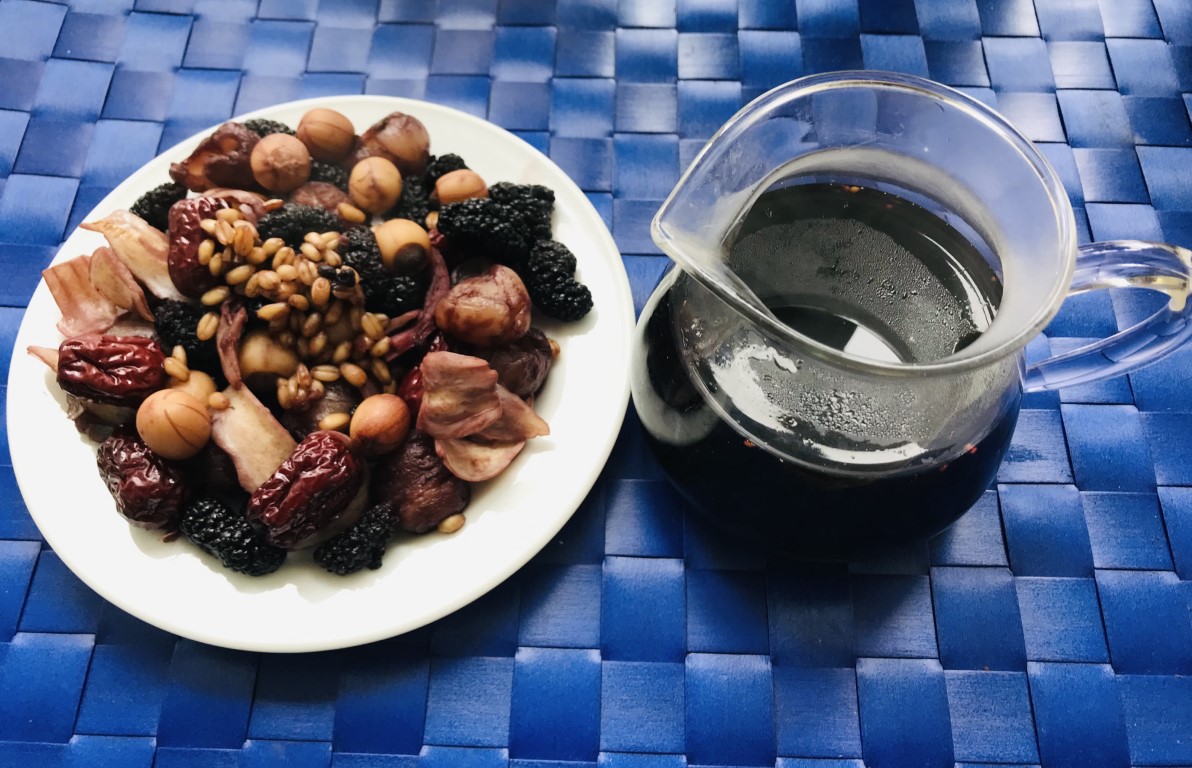
Q (贝贝): I get extremely irritable before my period — it feels uncontrollable. How can I calm down? Bro Niu: This kind of emotional volatility before menstruation often reflects liver fire and heart fire rising from inner tension. Learning to manage emotions is itself important — intense anger harms the body too. You can try lotus seeds, lily bulb (bai he, 1 liang each), rush pith (deng xin cao, 3 qian), and poria-spirit (fu shen, 5 qian), simmered in 5 bowls of water to 2 bowls. This blend is calming to the heart and mind, and can be drunk even during menstruation.
Published August 2, 2012 · Adapted and translated for Nourilo from a traditional home-kitchen recipe. Approx. 5 min read.