Home-Style Dishes
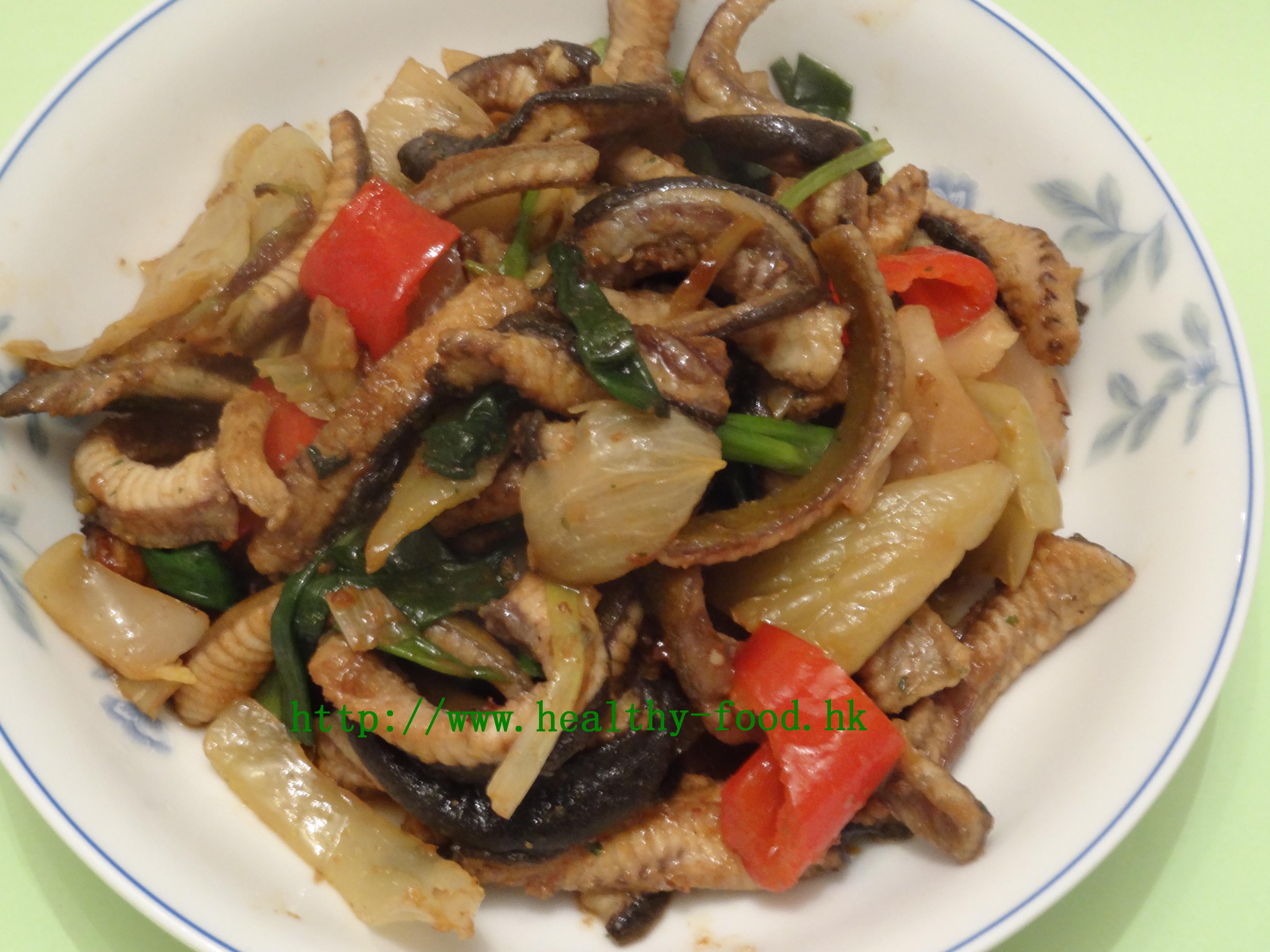
Sweet Pepper, Pickled Mustard and Eel Stir-fry
traditionally associated with strengthening the spleen, stimulating appetite, and nourishing blood
In short: Sweet Pepper, Pickled Mustard and Eel Stir-fry is a home-style dishe that traditionally associated with strengthening the spleen, stimulating appetite, and nourishing blood. It is most often made for digestive wellness, blood nourishment, everyday balance. Total time about 30 min. Key ingredients: ginger, garlic, spring onion.
Why people make this dish
Eel has a long history in Chinese food-therapy as a blood-nourishing food, but many home cooks avoid it because the fresh fish can be slippery and awkward to handle. The solution is straightforward: ask your fishmonger to fillet the eel for you when purchasing. Once you have the fillets, a quick blanch in boiling water firms up the flesh, removes the blood and sliminess, and then you are ready for a simple, fast stir-fry. This dish pairs the eel with sweet red pepper for colour and vitamin C, and pickled mustard greens (xian suan cai) for their appetite-stimulating tang and crunch. The result is a vivid, flavourful plate that works as a family meal any night of the week — and because eel is traditionally associated with nourishing blood and supporting the sinews, it is particularly valued for people who feel dizzy, fatigued, or depleted.
What studies say about the key ingredients
Traditional use is not the same as clinical proof. Here is the strongest human research we found for each ingredient, limitations included.
- Ginger
Overall, acute and delayed nausea and vomiting did not differ significantly between ginger and control groups. A subgroup taking 1 g/day or less for over four days had less acute vomiting (OR 0.30).Limitation: Clinical heterogeneity between trials required subgroup analyses, and the authors state that sufficiently large, high-quality RCTs are still needed.PubMed 36501010 · 3 more ginger studies - Garlic
Gamma-delta T and NK cells proliferated better and were more activated than with placebo. The number of illnesses did not differ significantly, but cold and flu severity and missed days were lower.Limitation: Cold and flu outcomes were self-reported in daily diaries, and the dose was a concentrated extract that is not comparable to dietary garlic.PubMed 26764332 · 2 more garlic studies
From the Nourilo Research Library. Findings come from specific doses, extracts and populations and may not apply to a home-cooked recipe.
Safety first — read before you cook
This is a traditional food, not a treatment. Please check with your doctor or pharmacist before making it a regular part of your diet if you:
- are pregnant or breastfeeding, or are cooking for a young child;
- take regular medicines — especially blood thinners, blood-pressure, diabetes or immune-suppressing drugs;
- have a kidney, liver or heart condition, or a known food allergy.
Ingredient notes for this recipe
- Rice wine / alcohol: This recipe contains alcohol. If you are pregnant or planning a pregnancy, the NHS recommends not drinking alcohol; leave it out or choose another recipe. Source: NHS — Alcohol in pregnancy
Stop eating it and seek advice if you notice an allergic reaction or feel unwell. Safety notes reviewed 8 October 2026 · How we write safety notes
Members only
Unlock the full method & Nourilo's tips
One payment, lifetime access to every one of our 2,344 recipes — step-by-step methods, preparation tips and serving notes.
- Full step-by-step method for this and all 2,344 recipes
- Nourilo's Tips — sourcing, substitutions and serving notes
- One-time payment · card, Apple Pay or Google Pay · no subscription, no renewals
Checking your access…
$59.99 one-time · all recipes
Sign in or create a free account, then pay once by card, Apple Pay or Google Pay.
Continue with GoogleBy continuing with Google or email you confirm you are 16 or older and agree to our Terms of Use and Privacy Policy.
$59.99 one-time · all recipes
Signed in as ·
Secure checkout by Stripe. One-time payment, no renewals. Access is linked to your Nourilo account and never expires. By paying you agree to our Terms of Use; you can get a full refund within 14 days (refund policy).
Comments
Join the conversation — sign in or create a free account to comment.
Continue with GoogleBy continuing with Google or email you confirm you are 16 or older and agree to our Terms of Use and Privacy Policy.
Loading comments…