Soups
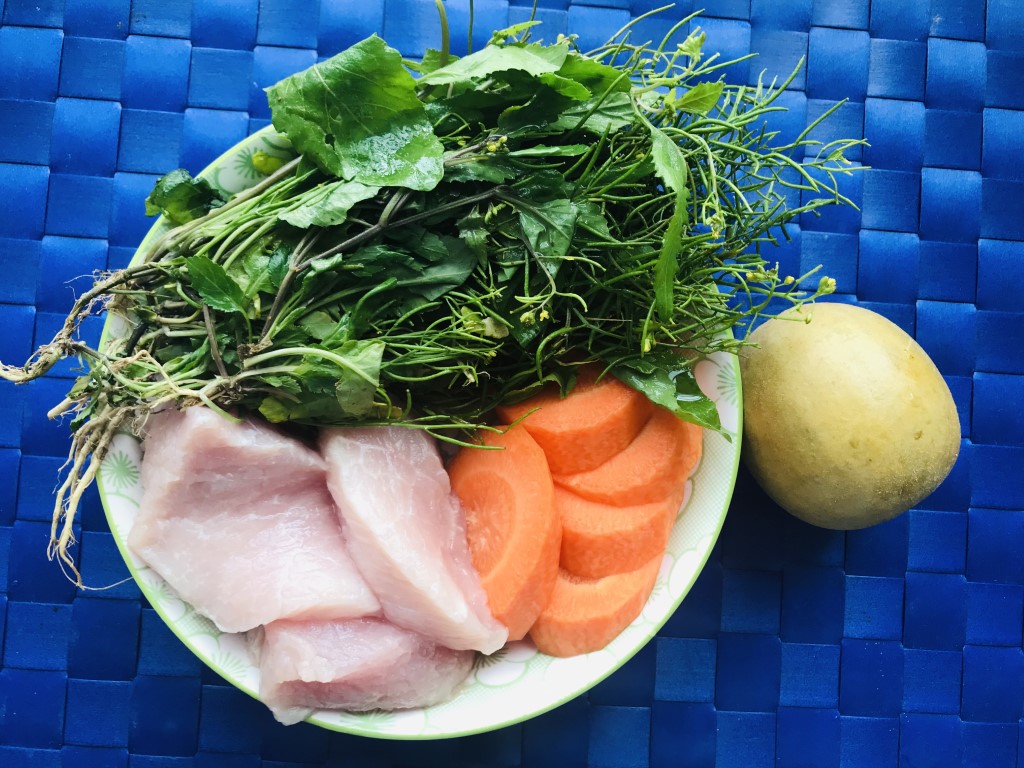
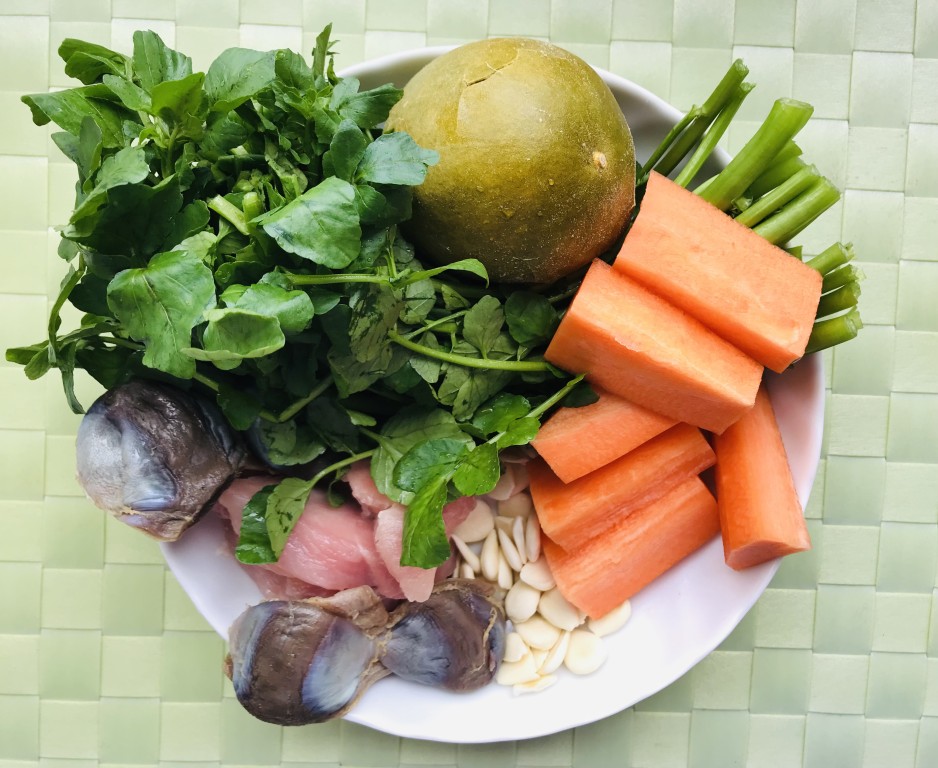
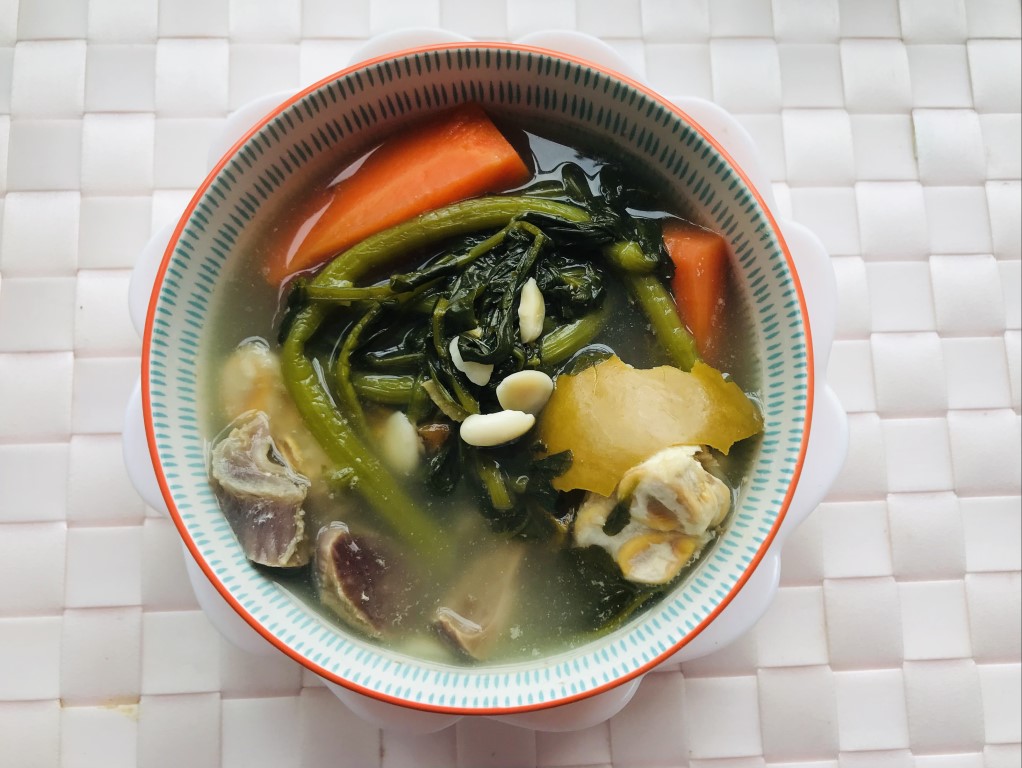
Watercress, Monk Fruit (Luo Han Guo) and Carrot Pork Soup
Traditionally used to clear phlegm, relieve persistent cough, and soothe the throat
In short: Watercress, Monk Fruit (Luo Han Guo) and Carrot Pork Soup is a soup that Traditionally used to clear phlegm, relieve persistent cough, and soothe the throat. It is most often made for respiratory & lung wellness, sleep & calm, energy & vitality. Total time about 105 min. Key ingredients: golden monk fruit, carrot, lean pork.
Why people make this soup
That stubborn cough that hangs around for weeks after a cold — with phlegm that won’t quite shift and a throat that stays scratchy — is one of the most common reasons Cantonese households reach for this particular soup. Tang ge cai (sometimes called wild watercress or pond cress) is a versatile wild herb with an interesting dual nature in Chinese herbal texts: some sources describe it as warming, others as cooling — which might seem contradictory. Nourilo’s view is that its properties depend on what it is paired with: cooked with fresh ginger and spring onion it addresses wind-cold colds; with white radish it suits wind-heat colds and hot lung phlegm; with fresh corn silk it addresses damp-heat conditions. In today’s recipe, paired with monk fruit and carrot for a pleasant, naturally sweet broth, it targets the post-cold phlegm and cough that can drag on after the main illness has passed. Monk fruit (luo han guo) is also increasingly well-known in the West as a natural sweetener — but in Chinese food therapy its primary role is as a cooling, throat-soothing, phlegm-clearing herb. The golden (jin) variety has been gently dried at low temperature to preserve more of its beneficial compounds.
What studies say about the key ingredients
Traditional use is not the same as clinical proof. Here is the strongest human research we found for each ingredient, limitations included.
- Golden monk fruit
Across five randomized trials, monk fruit extract was associated with 10-18% lower postprandial glucose and 12-22% lower insulin responses. No severe adverse effects were observed.Limitation: Only five trials were included, and the authors state that long-term clinical trials are needed to confirm safety and efficacy.PubMed 40362742 · 2 more golden monk fruit studies
From the Nourilo Research Library. Findings come from specific doses, extracts and populations and may not apply to a home-cooked recipe.
Safety first — read before you cook
This is a traditional food, not a treatment. Please check with your doctor or pharmacist before making it a regular part of your diet if you:
- are pregnant or breastfeeding, or are cooking for a young child;
- take regular medicines — especially blood thinners, blood-pressure, diabetes or immune-suppressing drugs;
- have a kidney, liver or heart condition, or a known food allergy.
Stop eating it and seek advice if you notice an allergic reaction or feel unwell. Safety notes reviewed 8 October 2026 · How we write safety notes
Members only
Unlock the full method & Nourilo's tips
One payment, lifetime access to every one of our 2,344 recipes — step-by-step methods, preparation tips and serving notes.
- Full step-by-step method for this and all 2,344 recipes
- Nourilo's Tips — sourcing, substitutions and serving notes
- One-time payment · card, Apple Pay or Google Pay · no subscription, no renewals
Checking your access…
$59.99 one-time · all recipes
Sign in or create a free account, then pay once by card, Apple Pay or Google Pay.
Continue with GoogleBy continuing with Google or email you confirm you are 16 or older and agree to our Terms of Use and Privacy Policy.
$59.99 one-time · all recipes
Signed in as ·
Secure checkout by Stripe. One-time payment, no renewals. Access is linked to your Nourilo account and never expires. By paying you agree to our Terms of Use; you can get a full refund within 14 days (refund policy).
Comments
Join the conversation — sign in or create a free account to comment.
Continue with GoogleBy continuing with Google or email you confirm you are 16 or older and agree to our Terms of Use and Privacy Policy.
Loading comments…