Herbal & Flower Teas
Toasted Floating Wheat Tea (Fu Xiao Mai Tea)
traditionally supports the body in reducing spontaneous sweating (day) and night sweats
In short: Toasted Floating Wheat Tea (Fu Xiao Mai Tea) is a herbal & flower tea that traditionally supports the body in reducing spontaneous sweating (day) and night sweats. It is most often made for everyday balance. Total time about 15 min.
Why people make this tea
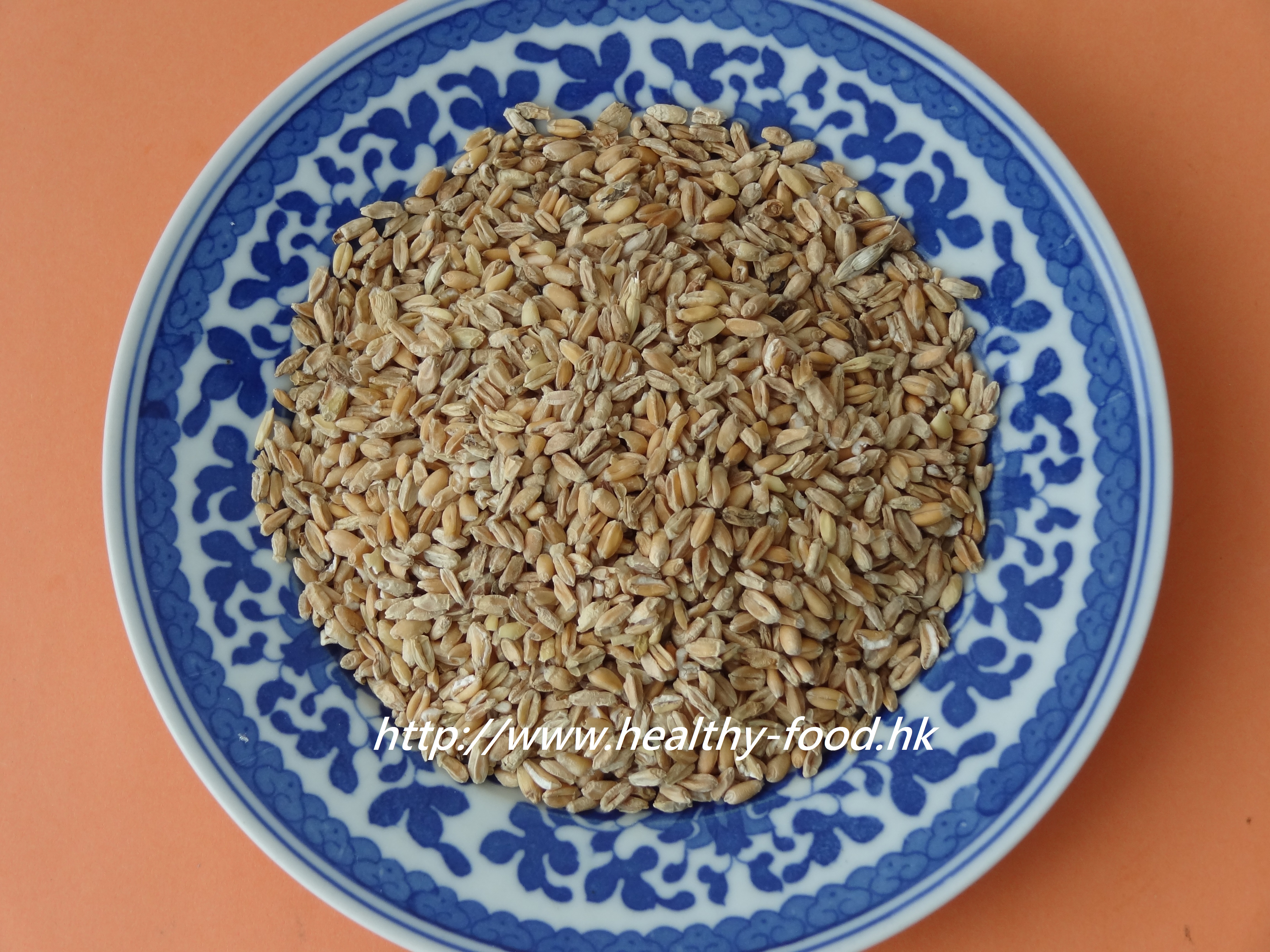
Sweating is entirely normal when you exercise or when it is hot. But some people notice they break out in a sweat for no obvious reason during the day, or wake up drenched at night despite a cool room. In Chinese medicine, this is categorised as “spontaneous sweating” (zi han) — sweating without exertion, often linked to qi deficiency — or “night sweats” (dao han) — sweating during sleep that stops on waking, often associated with yin deficiency. Nourilo offers a helpful note on where sweating tends to occur and what it might indicate in TCM terms: forehead sweating may relate to heart or liver fire; sweating around the nose to lung qi insufficiency; hand and foot sweating to spleen deficiency. Floating wheat (fu xiao mai) is the traditional remedy for both patterns. It is simply the light, unfilled wheat grains that float when dropped in water — inexpensive, easy to find at Chinese herb shops, and gentle enough for regular use.
Method
- Toast the floating wheat: place in a dry pan (no oil) over the lowest possible heat and stir continuously for about 5 minutes, until the grains are fragrant. Be careful — they will jump around and can scorch easily if the heat is too high. Keep the flame as low as possible.
- Allow the toasted wheat to cool, then store in a glass jar.
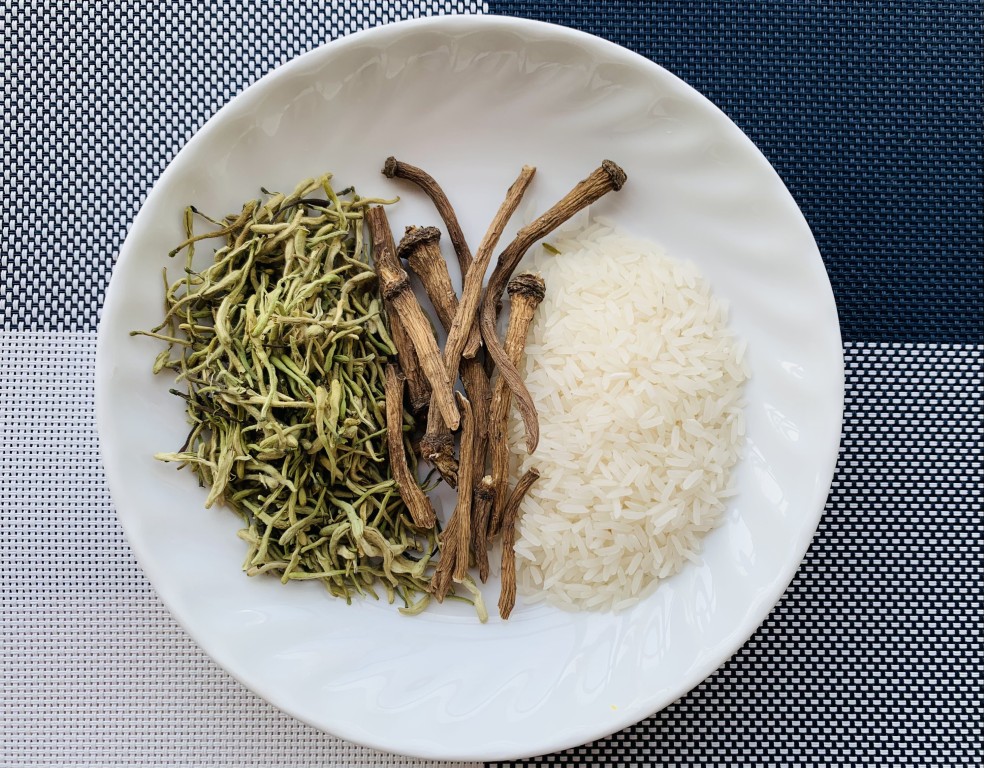
- When ready to brew: place 2 tablespoons of toasted floating wheat in a tea infuser or small cloth bag.
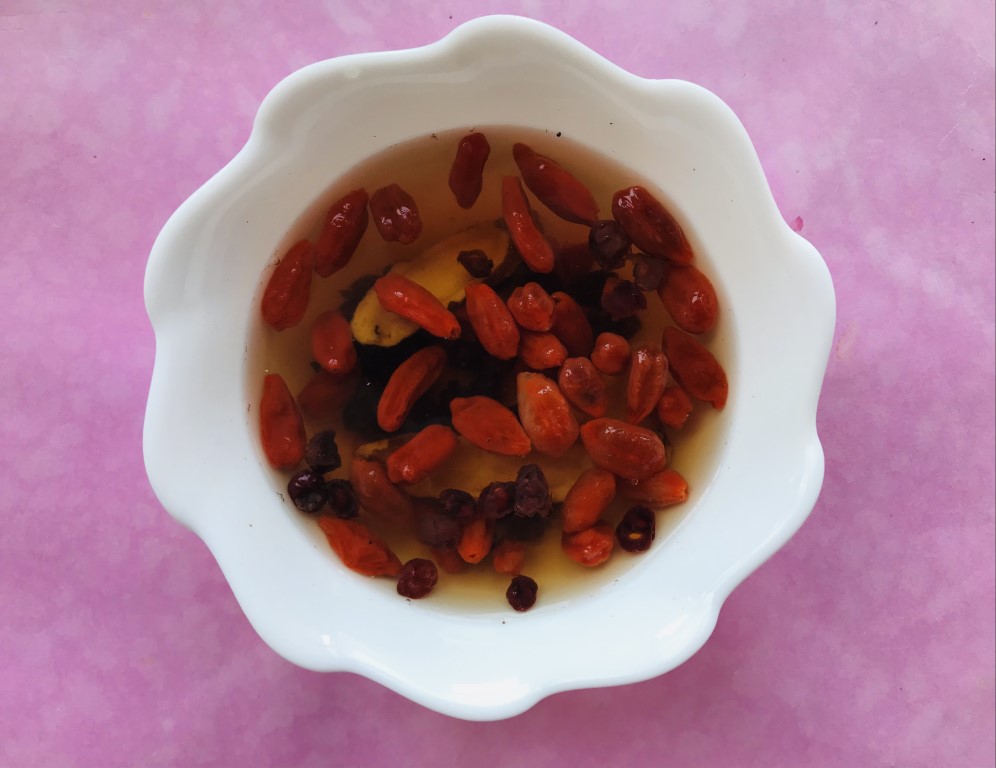
- If addressing night sweats, add 1 tablespoon each of wu wei zi and goji berries to the infuser.
- Pour boiling water over the infuser. Steep for 10 minutes.
- Drink throughout the day, re-steeping until the flavour fades. Drink 1 portion per day; continue for 1–2 weeks and observe whether symptoms improve.
Nourilo’s Tips
Toasting the floating wheat at the lowest possible flame is key — it is easy to burn. Use a lid on the pan to prevent the grains from jumping out, but keep the heat minimal. Toasted floating wheat stores well in a glass jar. For qi-deficient spontaneous sweating, just the floating wheat is sufficient. For night sweats (yin deficiency), add wu wei zi and goji berries. Floating wheat does not raise blood sugar — it contains very little starch — so it is safe for diabetics. Do not use it if you are breastfeeding, as it can reduce milk supply; use millet instead.
What studies say about the key ingredients
Traditional use is not the same as clinical proof. Here is the strongest human research we found for each ingredient, limitations included.
- Schisandra berries
Compared with placebo, the extract group had a higher increase in right knee extensor strength (10.2 Nm) and left knee extensor strength (6.7 Nm). No group differences were found in muscle mass, inflammatory or antioxidative markers.Limitation: Small sample over 12 weeks, with an extract dose not comparable to eating the whole berry; muscle mass and blood markers did not differ.PubMed 33710261 · 2 more schisandra berries studies
From the Nourilo Research Library. Findings come from specific doses, extracts and populations and may not apply to a home-cooked recipe.
Safety first — read before you cook
This is a traditional food, not a treatment. Please check with your doctor or pharmacist before making it a regular part of your diet if you:
- are pregnant or breastfeeding, or are cooking for a young child;
- take regular medicines — especially blood thinners, blood-pressure, diabetes or immune-suppressing drugs;
- have a kidney, liver or heart condition, or a known food allergy.
Stop eating it and seek advice if you notice an allergic reaction or feel unwell. Safety notes reviewed 8 October 2026 · How we write safety notes
Comments
Join the conversation — sign in or create a free account to comment.
Continue with GoogleBy continuing with Google or email you confirm you are 16 or older and agree to our Terms of Use and Privacy Policy.
Loading comments…