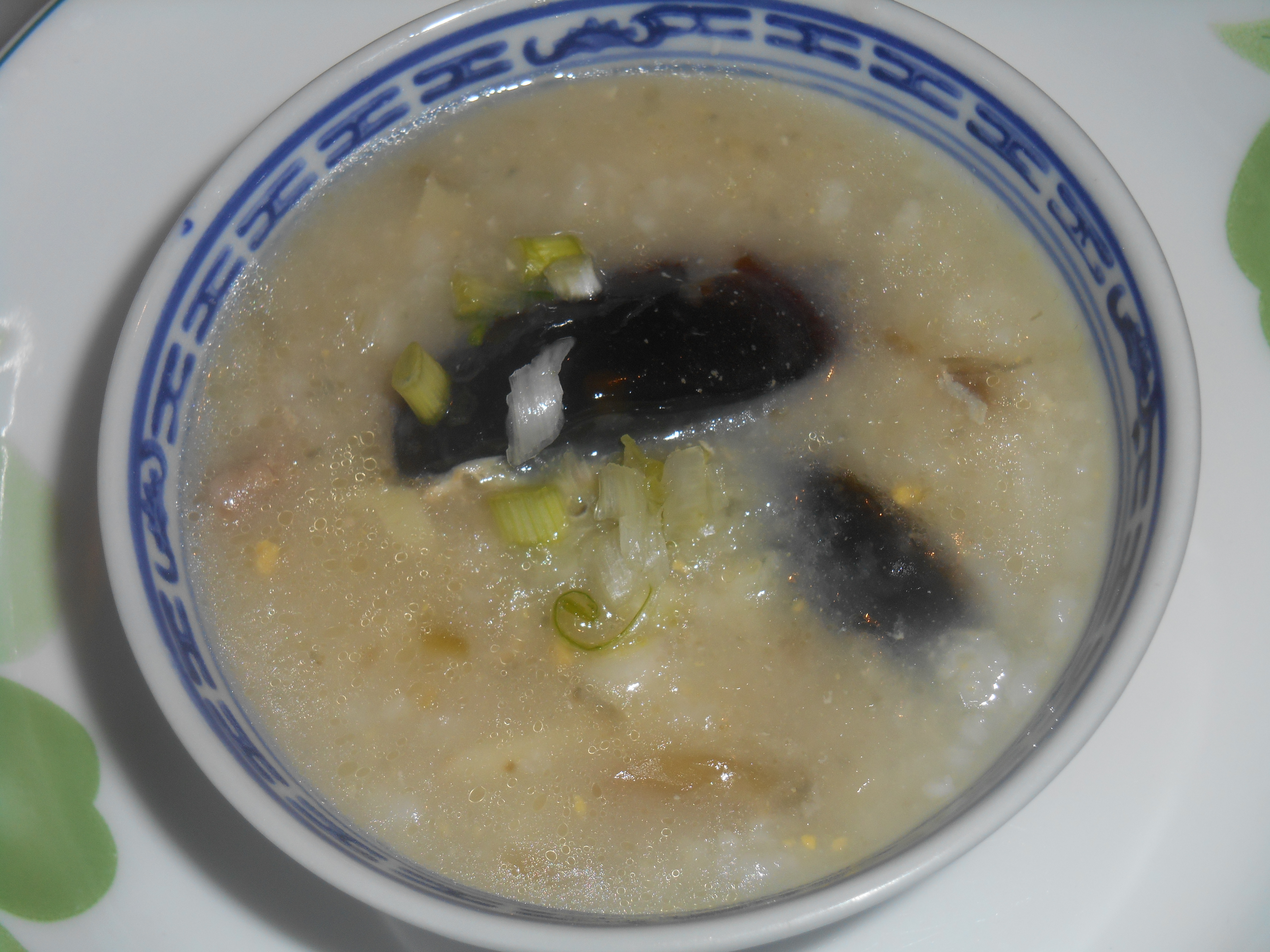
Congee & Porridge

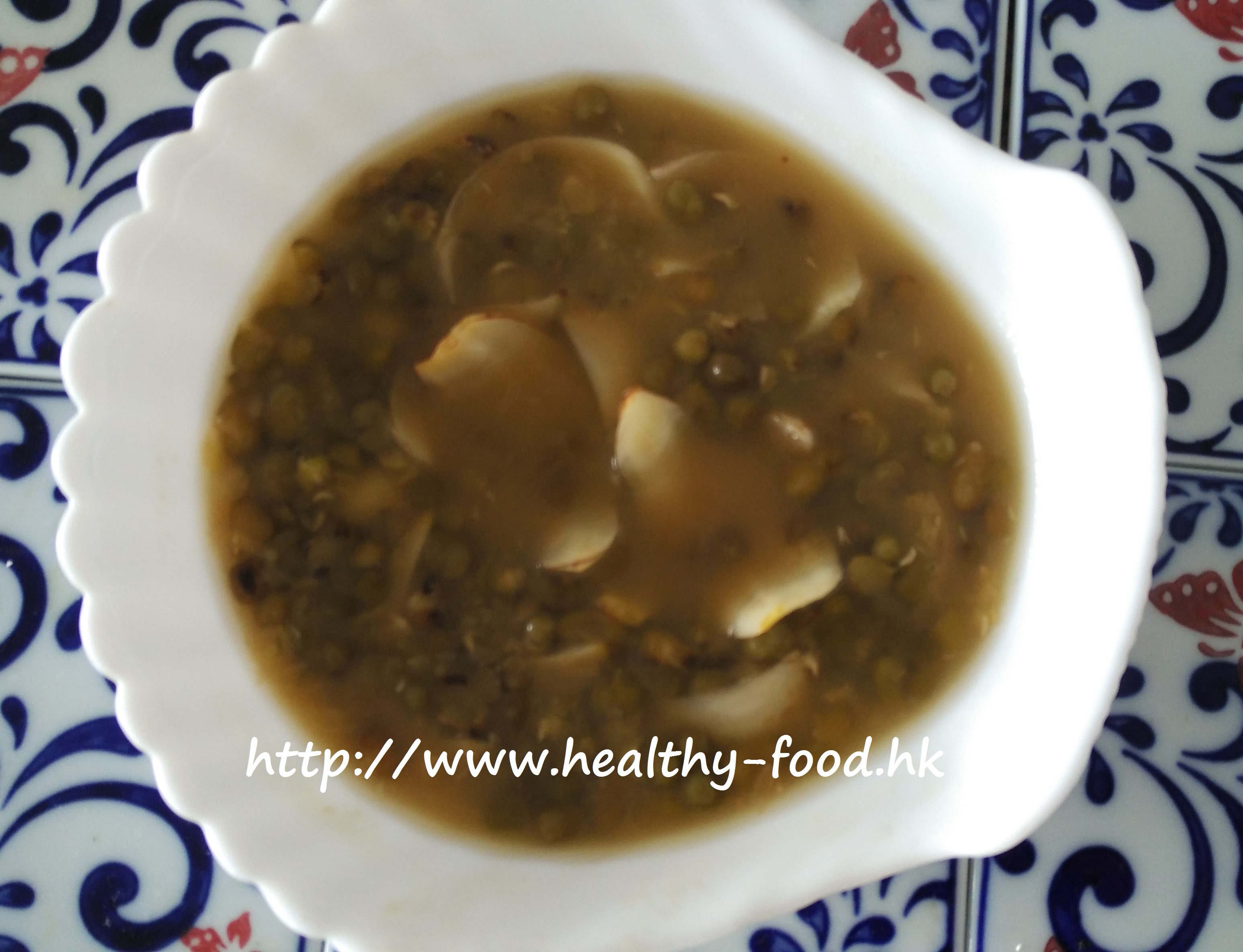
Chinese Yam, Hyacinth Bean, and Foxnut Congee

traditionally associated with strengthening the spleen and stomach, reducing loose stools, and supporting digestion

Prep
10 min
Cook
45 min
Total
55 min
Makes
2–3 bowls (1 pot of congee)
Chinese Yam, Hyacinth Bean, and Foxnut Congee

Why people make this congee

When the stomach is struggling — whether from an acute flare-up or the slow, grinding discomfort of chronic gastritis — the first instinct in traditional Cantonese food therapy is to give the digestive system something so gentle it barely has to work at all. That means plain congee, cooked long and soft. This particular version goes a step further by adding three time-honored digestive allies: Chinese yam, dry-fried hyacinth beans, and foxnut seeds. Together they form a classic combination that has been used in Cantonese kitchens for generations to address the pattern traditional Chinese medicine calls “spleen qi deficiency” — a term for chronic digestive weakness that shows up as poor appetite, fatigue, and loose or frequent stools. This congee is mild enough to be eaten regularly, even daily, as a supportive food. Bro Niu also notes that chronic stress and irregular sleep patterns can overstimulate stomach acid production and damage the stomach lining, so managing your lifestyle is just as important as what you eat.

Who it suits / who should be cautious

  • People with chronic gastritis or colitis characterized by spleen and stomach weakness: reduced appetite, a feeling of heaviness or fatigue after eating, loose or thin stools
  • Recovering patients who need something easy to digest as a first solid food
  • Those who suffer from five-in-the-morning diarrhea (wu geng xie) or recurrent loose bowels without obvious acute cause
  • Not suitable for acute bacterial gastroenteritis or damp-heat-type diarrhea (characterized by fever, strong urgency, burning sensation, or distinctly foul-smelling stools) — please see a doctor for bacterial infections
  • Generally safe for long-term regular use; the ingredients are neutral in temperature and mild in action

Why these ingredients (the food-therapy logic)

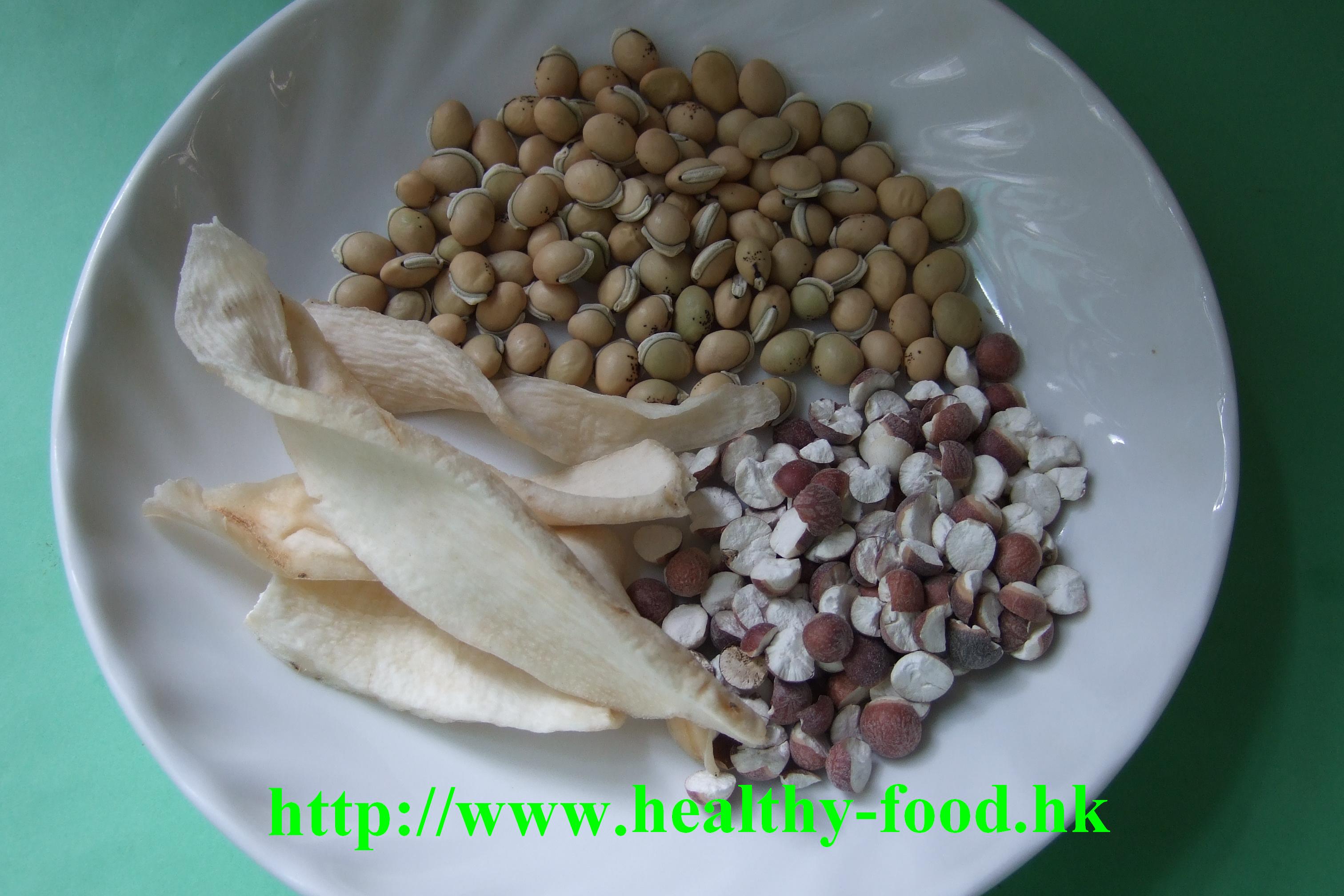
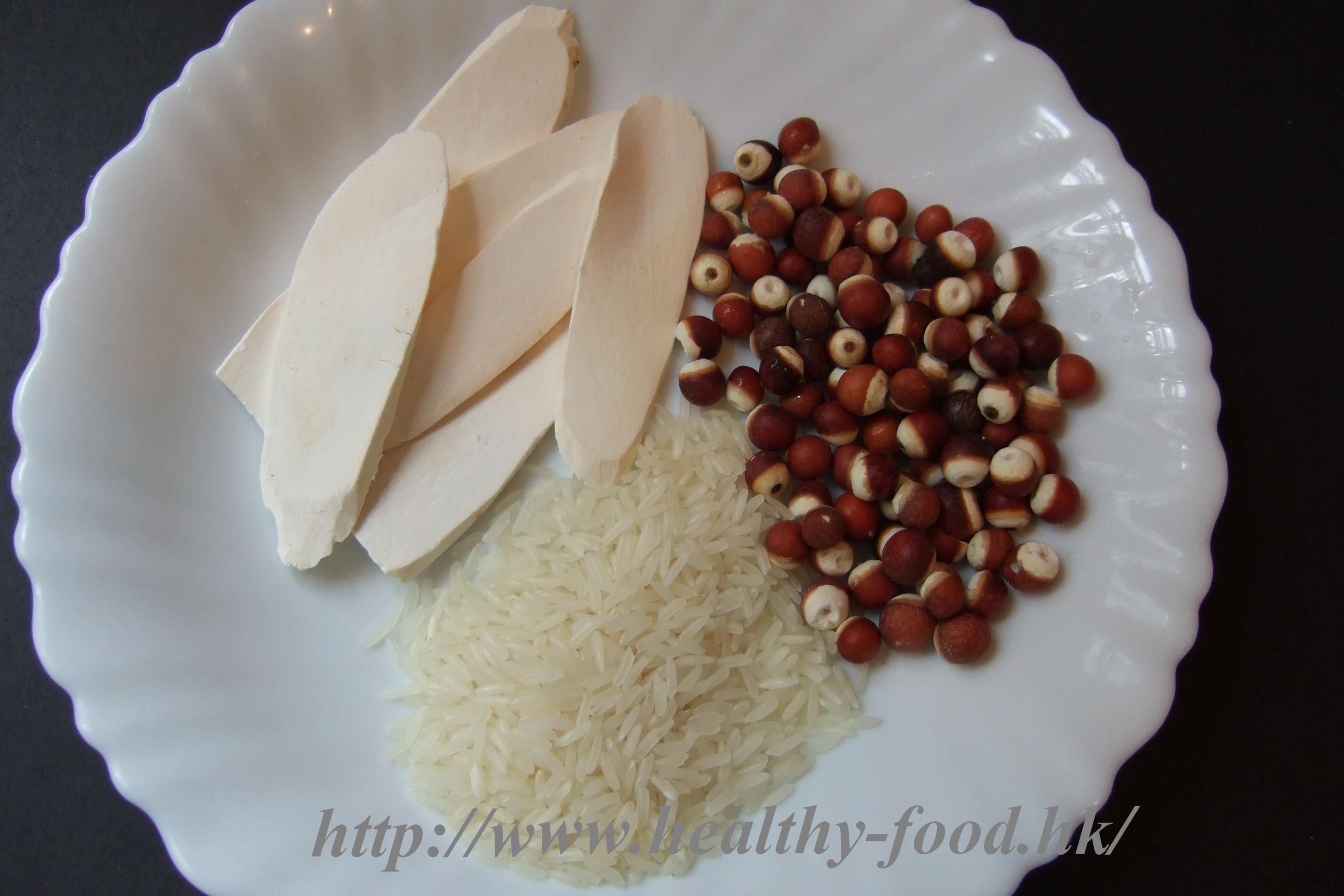
  • Chinese yam (huai shan): A core ingredient in Cantonese food therapy for digestive weakness. Traditionally said to nourish the spleen, stomach, and lungs simultaneously. It is starchy and mildly sweet, making it physically easy to digest while providing a gentle supportive effect on the gut lining.
  • Dry-fried hyacinth beans (chao bian dou): This is an important detail — the beans must be the dry-fried (chao) version from a Chinese herb shop, not raw hyacinth beans. Dry-frying transforms the beans’ properties, strengthening their ability to resolve dampness and firm up loose stools without being cold or harsh. Available at Chinese medicine shops.
  • Foxnut / Gordon euryale seeds (qian shi): A classic spleen-strengthening seed that is particularly associated with reducing dampness, firming stools, and supporting the kidneys. It blends seamlessly into congee and gives the porridge a slightly thick, nourishing texture.
  • White rice (bai mi): The base of the congee — itself a gentle stomach-soother in Chinese food therapy. Cooking it long and soft makes it ideal for an irritated digestive system.

Ingredients (2–3 bowls)

IngredientAmountNotes
Chinese yam (huai shan)37 g (1 liang)Dried slices from a Chinese herb shop
Dry-fried hyacinth beans (chao bian dou)37 g (1 liang)Must be the pre-fried version from a Chinese medicine shop — not raw
Foxnut seeds (qian shi)37 g (1 liang)Available at Chinese herb and grocery shops
White rice75 g (2 liang)Any short- or medium-grain white rice

Method

  1. Rinse the Chinese yam slices, dry-fried hyacinth beans, and foxnut seeds. Soak for 20–30 minutes in cool water to soften slightly.
  2. Drain and place all ingredients together with the rinsed white rice in a pot.
  3. Add enough water to cook into a thin, soft congee (generally 6–8 parts water to 1 part rice for a loose consistency).
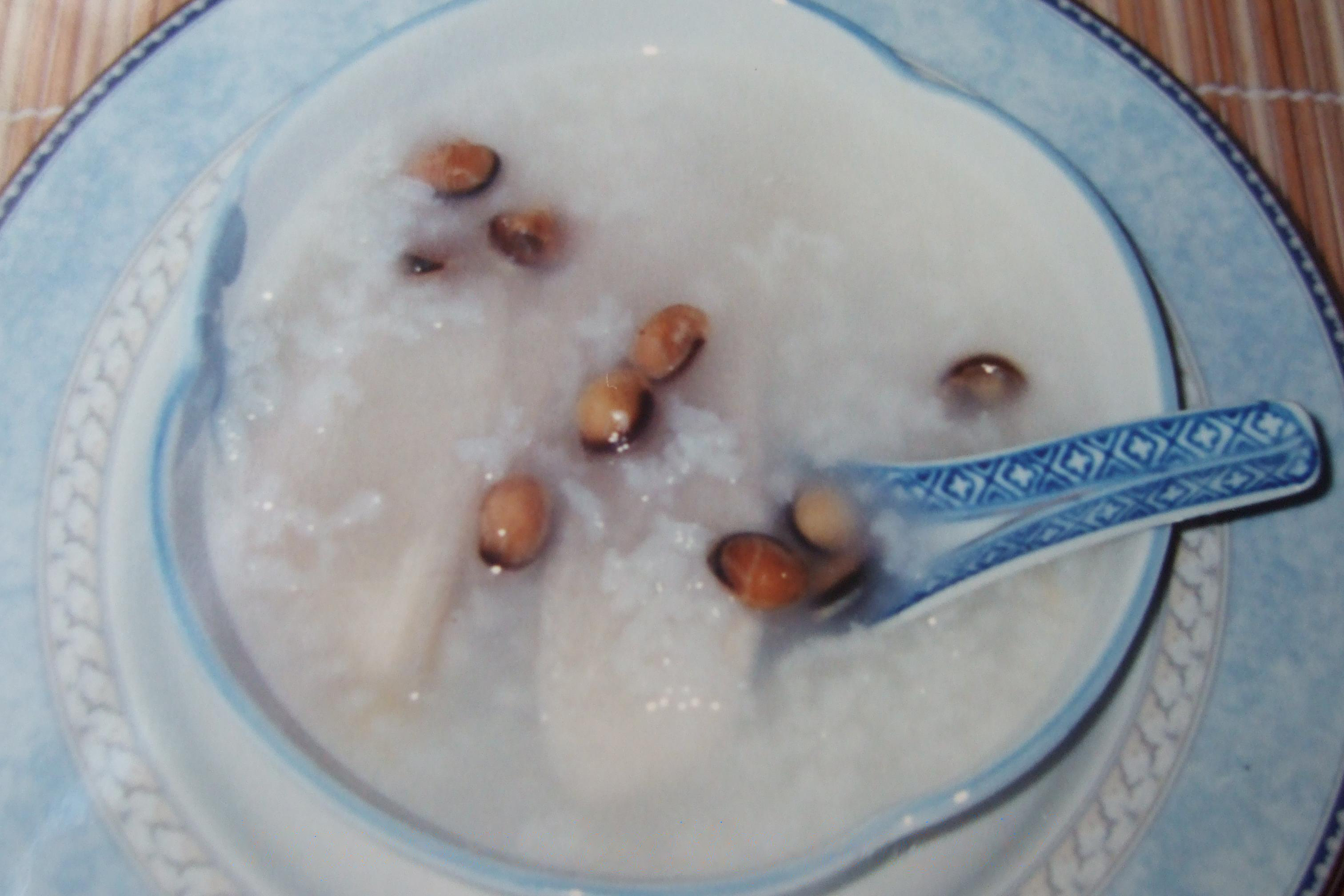
  4. Bring to a boil, then reduce to a low simmer. Cook for 40–50 minutes, stirring occasionally, until the congee is very soft and the grains have broken down.
  5. Serve warm. Eat freely according to appetite — there is no strict serving size for this therapeutic congee.

Bro Niu’s tips

This congee is gentle enough for long-term daily consumption. Its mild, balanced nature means it will not cause harm even if taken over many weeks or months as a dietary staple for people with a weak digestive system. However, it is specifically designed for cold-constitution or spleen-deficiency-type digestive problems. If your gastroenteritis is caused by a bacterial infection — with fever, strong urgency, or burning discomfort — this is not the right remedy. For that situation, Bro Niu recommends simmering garlic cloves with amaranth greens (qing xian / purslane if you can find it) and lean pork, which can help address bacterial infection naturally. But do see a doctor first.

Community questions answered (selected)

  • Q (yan): I have a cold constitution and dampness in the intestines — what soup would you recommend? Bro Niu: For intestinal dampness with a cold constitution, try simmering poria mushroom (yun ling), white atractylodes (bai zhu), and hyacinth bean coat (bian dou yi) — 3 qian each — with 2 qian of dried tangerine peel (chen pi) and 3 slices of fresh ginger. Drink the liquid. This warms the middle and clears dampness without being cold or harsh.

  • Q (May0219): I have had bacterial gastroenteritis three times in the past two months, including one hospitalization. Is there a soup to help? Bro Niu: For recurrent bacterial gastroenteritis, try 7–8 garlic cloves simmered with 4 liang of green amaranth (qing xian) and lean pork for 20 minutes. Drink the broth and eat some of the greens. If you can find fresh purslane (ma chi xian) from a Chinese herb vendor, use 2 liang — it works even better. Have three consecutive daily servings.

  • Q (Sally): My three-and-a-half-year-old has acute gastroenteritis — possibly Salmonella according to the doctor. He is vomiting and has diarrhea. We have already seen the doctor. What congee or food can I give him in the meantime? Bro Niu: While he recovers under medical care, try 6–8 garlic cloves simmered with half a jin of green amaranth and lean pork in 5 bowls of water for 20 minutes. Give your son about 2 bowls throughout the day. Eating a little of the amaranth is fine too. If you can source fresh purslane (4 liang) from a Chinese herbal market, it works even better. Three consecutive days of this should help support recovery alongside the medical treatment.


Published November 7, 2011 · Adapted and translated for Nourilo from a traditional home-kitchen recipe. Approx. 5 min read.