Herbal & Flower Teas
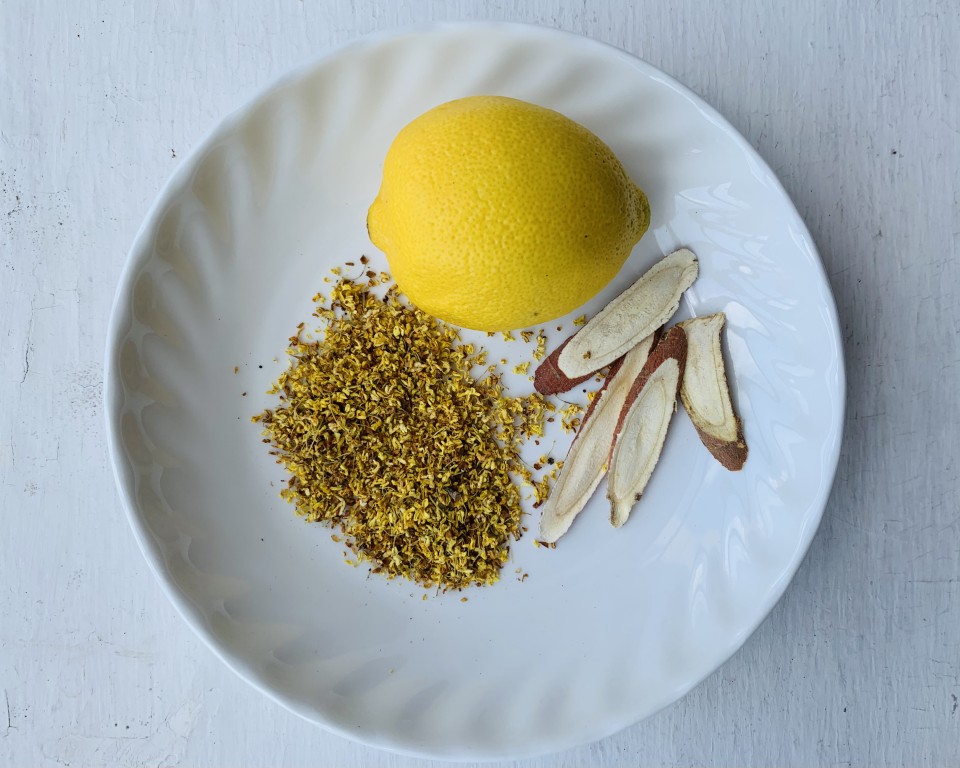
Lemon, Osmanthus and Licorice Tea
Traditionally used to freshen the mouth and soothe the throat
In short: Lemon, Osmanthus and Licorice Tea is a herbal & flower tea that Traditionally used to freshen the mouth and soothe the throat. It is most often made for respiratory & lung wellness, digestive wellness, sleep & calm. Total time about 8 min. Key ingredients: osmanthus flowers, lemon slices.
Why people make this tea
Bad breath is often just a matter of oral hygiene, but it can also point to something else — gum disease, tonsil stones, rhinitis, or a digestive issue. Nourilo’s honest advice: if a cleaning and brushing only freshens things for a short while before the odour comes back strong, look further into the cause. For people who tend toward strong breath — late nights, lots of spicy and pungent food — this fragrant lemon, osmanthus and licorice tea is a pleasant daily helper. Osmanthus brews into a lovely, sweet-scented cup and is traditionally enjoyed to help freshen the mouth.
What studies say about the key ingredients
Traditional use is not the same as clinical proof. Here is the strongest human research we found for each ingredient, limitations included.
- Licorice root
Compared with placebo plus the same low-calorie diet, licorice extract was associated with greater improvements in body weight, BMI, body fat, lipid profile, fasting glucose, insulin and HOMA-IR at 8 weeks.Limitation: Small sample, short 8-week duration, and an extract dose that is not comparable to licorice eaten as food; the authors call for confirmatory research.PubMed 39080737 · 3 more licorice root studies
From the Nourilo Research Library. Findings come from specific doses, extracts and populations and may not apply to a home-cooked recipe.
Safety first — read before you cook
This is a traditional food, not a treatment. Please check with your doctor or pharmacist before making it a regular part of your diet if you:
- are pregnant or breastfeeding, or are cooking for a young child;
- take regular medicines — especially blood thinners, blood-pressure, diabetes or immune-suppressing drugs;
- have a kidney, liver or heart condition, or a known food allergy.
Ingredient notes for this recipe
- Licorice root: Contains glycyrrhizin. Large amounts or long-term use have been linked to raised blood pressure and irregular heartbeat, and even smaller amounts have caused problems in people with high blood pressure, heart or kidney conditions, or a high-salt diet. Large amounts are unsafe in pregnancy, and it can interact with corticosteroids. Source: NIH NCCIH — Licorice Root
Stop eating it and seek advice if you notice an allergic reaction or feel unwell. Safety notes reviewed 8 October 2026 · How we write safety notes
Members only
Unlock the full method & Nourilo's tips
One payment, lifetime access to every one of our 2,344 recipes — step-by-step methods, preparation tips and serving notes.
- Full step-by-step method for this and all 2,344 recipes
- Nourilo's Tips — sourcing, substitutions and serving notes
- One-time payment · card, Apple Pay or Google Pay · no subscription, no renewals
Checking your access…
$59.99 one-time · all recipes
Sign in or create a free account, then pay once by card, Apple Pay or Google Pay.
Continue with GoogleBy continuing with Google or email you confirm you are 16 or older and agree to our Terms of Use and Privacy Policy.
$59.99 one-time · all recipes
Signed in as ·
Secure checkout by Stripe. One-time payment, no renewals. Access is linked to your Nourilo account and never expires. By paying you agree to our Terms of Use; you can get a full refund within 14 days (refund policy).
Comments
Join the conversation — sign in or create a free account to comment.
Continue with GoogleBy continuing with Google or email you confirm you are 16 or older and agree to our Terms of Use and Privacy Policy.
Loading comments…