Salads & Cold Dishes
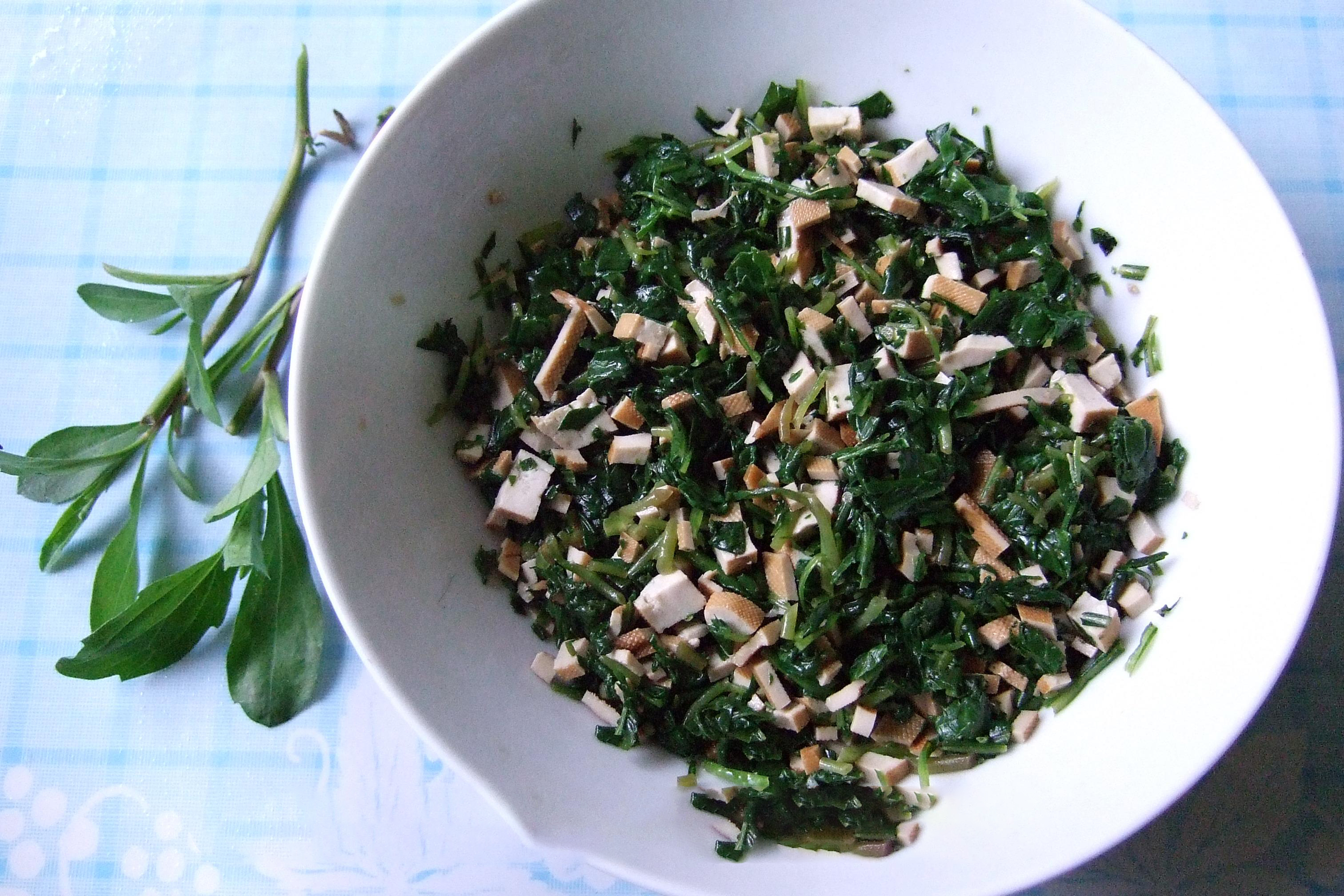
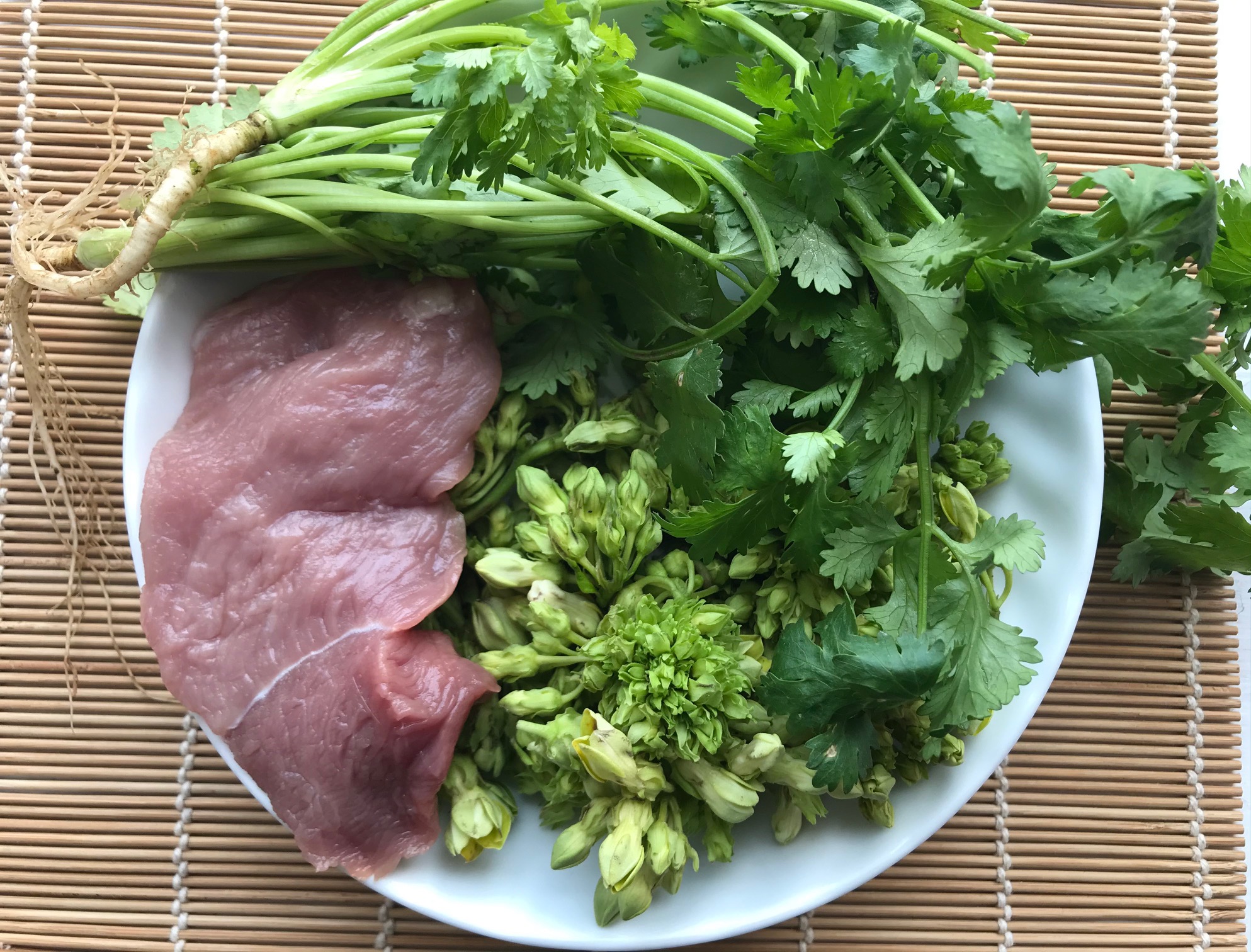
Indian Aster with Dried Tofu (Fragrant Cold Salad)
traditionally used to clear heat, cool the blood, and support eye and throat health
In short: Indian Aster with Dried Tofu (Fragrant Cold Salad) is a salads & cold dishe that traditionally used to clear heat, cool the blood, and support eye and throat health. It is most often made for respiratory & lung wellness, cooling & summer heat, eye wellness. Total time about 20 min.
Why people make this dish
During a stay in Shanghai, Nourilo noticed this dish appearing at almost every dinner table as a cold starter. It is a beloved spring staple in the Yangtze River Delta region — fresh Indian aster herb (ma lan tou) blanched and tossed with dried tofu, dressed simply with sesame oil. The herb is in season in spring, and that is when it tastes best: the wild-grown variety has a deeper, more concentrated fragrance and smaller, darker leaves, while farm-grown ma lan tou is lighter green and milder in flavour. Either works well here.
Beyond its pleasant taste, Indian aster has a long history in Chinese herbal medicine: it is traditionally described as bitter and cool, associated with clearing heat, cooling the blood, supporting eye health, and helping to ease urinary discomfort. In practice, this makes it a useful everyday vegetable for people experiencing eye redness, a scratchy throat, dry mouth, or gum bleeding — conditions often linked in Chinese wellness thinking to accumulated heat or fire.
Safety first — read before you cook
This is a traditional food, not a treatment. Please check with your doctor or pharmacist before making it a regular part of your diet if you:
- are pregnant or breastfeeding, or are cooking for a young child;
- take regular medicines — especially blood thinners, blood-pressure, diabetes or immune-suppressing drugs;
- have a kidney, liver or heart condition, or a known food allergy.
Stop eating it and seek advice if you notice an allergic reaction or feel unwell. Safety notes reviewed 8 October 2026 · How we write safety notes
Members only
Unlock the full method & Nourilo's tips
One payment, lifetime access to every one of our 2,344 recipes — step-by-step methods, preparation tips and serving notes.
- Full step-by-step method for this and all 2,344 recipes
- Nourilo's Tips — sourcing, substitutions and serving notes
- One-time payment · card, Apple Pay or Google Pay · no subscription, no renewals
Checking your access…
$59.99 one-time · all recipes
Sign in or create a free account, then pay once by card, Apple Pay or Google Pay.
Continue with GoogleBy continuing with Google or email you confirm you are 16 or older and agree to our Terms of Use and Privacy Policy.
$59.99 one-time · all recipes
Signed in as ·
Secure checkout by Stripe. One-time payment, no renewals. Access is linked to your Nourilo account and never expires. By paying you agree to our Terms of Use; you can get a full refund within 14 days (refund policy).
Comments
Join the conversation — sign in or create a free account to comment.
Continue with GoogleBy continuing with Google or email you confirm you are 16 or older and agree to our Terms of Use and Privacy Policy.
Loading comments…