Soups
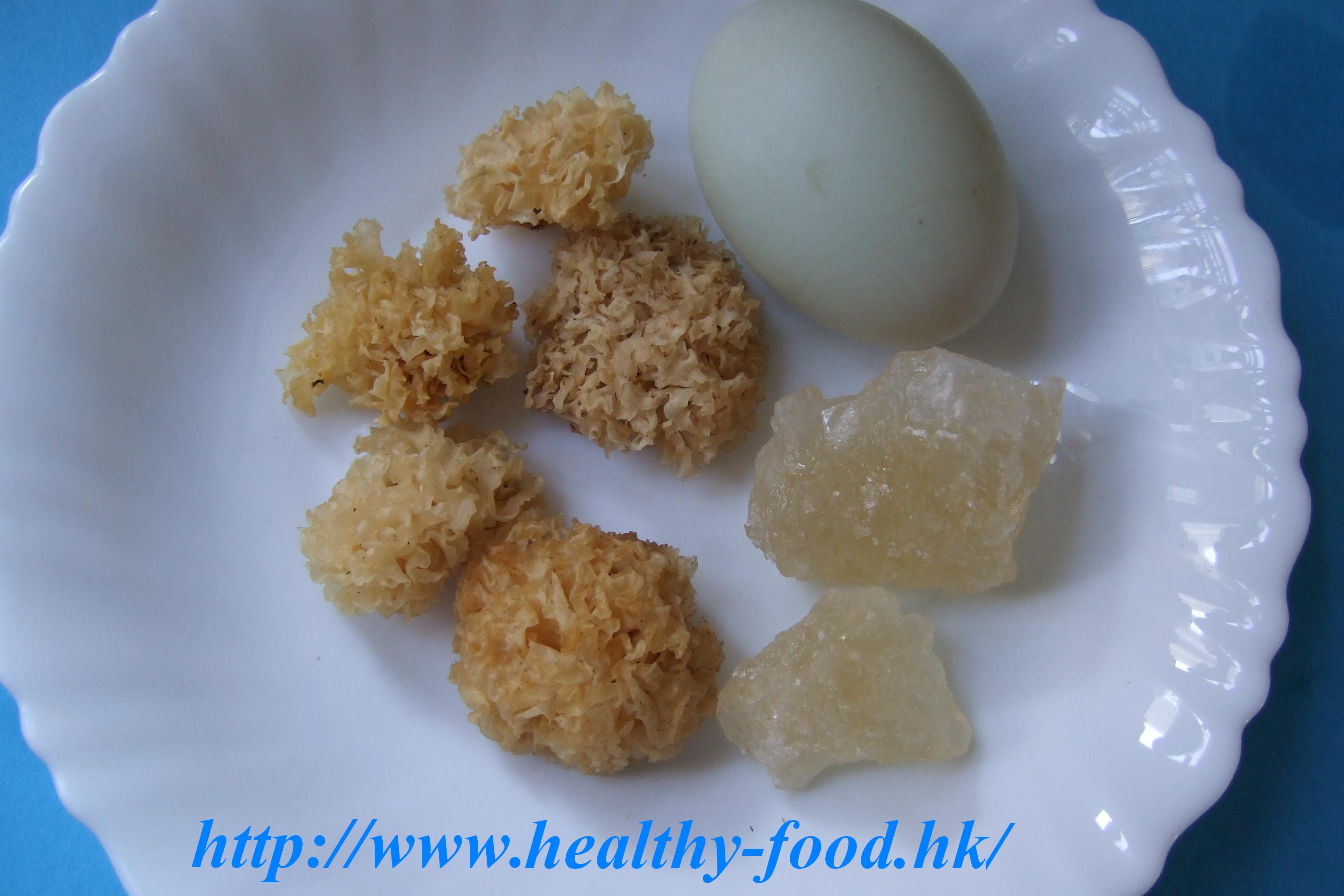
Snow Fungus & Duck Egg White Sweet Soup
traditionally used to nourish yin, moisten the lungs, and support uric acid balance for gout sufferers
In short: Snow Fungus & Duck Egg White Sweet Soup is a soup that traditionally used to nourish yin, moisten the lungs, and support uric acid balance for gout sufferers. It is most often made for respiratory & lung wellness, bone & joint wellness, everyday balance. Total time about 35 min. Key ingredients: rock sugar.
Why people make this sweet soup
Managing gout is largely a dietary exercise in avoidance: organ meats, shellfish, anchovies, sardines, alcohol (especially beer), and many other beloved foods are off the table. What is left can feel like a very limited palette. This gentle sweet soup is one of Nourilo’s favourite reassurances for gout patients — it is not just safe to eat, it actively nourishes. Duck egg whites have been studied for their low purine content, making them one of the few animal proteins that gout sufferers can enjoy with confidence. Snow fungus (silver ear mushroom) is equally low in purines while providing a gelatinous, collagen-like quality that supports the lungs and stomach. Together they make a light, pleasant dessert soup that nourishes without triggering. Nourilo also recommends this for those with gastritis — the soothing, neutral nature of both ingredients is easy on an irritated stomach.
A guide to purines for gout sufferers
Gout flare-ups are triggered by uric acid, which the body produces when it breaks down purines. Here is a simplified guide to purine levels in common foods:
- Low-purine foods (generally safe): Rice and rice products, crackers, potatoes, carrots, corn, water chestnuts, dairy, eggs, most fruits and vegetables; drinks including soda water, mineral water, fruit juice, coffee, and tea; nuts such as walnuts, almonds, hazelnuts, and Job’s tears.
- Medium-purine foods (limit intake): Wholegrains; most beans and bean products; full-fat dairy; mung beans, adzuki beans, black beans, broad beans, bean sprouts; fatty meats and fatty fish; seaweed, daylily, and many mushrooms; peanuts, cashews, sesame, chestnuts, lotus seeds.
- High-purine foods (avoid): Soybeans, lentils, dried seaweed (zi cai), shiitake mushrooms (dong gu), asparagus, cauliflower, spinach; organ meats; shrimp, shellfish, sea cucumber, sardines, anchovies, ribbon fish, sea eel; yeast powder; all alcoholic beverages, especially beer.
What studies say about the key ingredients
Traditional use is not the same as clinical proof. Here is the strongest human research we found for each ingredient, limitations included.
- Snow fungus
The Tremella fuciformis groups showed greater improvements than placebo in subjective memory complaint scores, short-term memory and executive function tests. Adverse event frequency was similar across high-dose, low-dose and placebo groups.Limitation: Small sample with only 15 people in the placebo group and a short 8-week duration; the brain imaging findings were exploratory.PubMed 29319408
From the Nourilo Research Library. Findings come from specific doses, extracts and populations and may not apply to a home-cooked recipe.
Safety first — read before you cook
This is a traditional food, not a treatment. Please check with your doctor or pharmacist before making it a regular part of your diet if you:
- are pregnant or breastfeeding, or are cooking for a young child;
- take regular medicines — especially blood thinners, blood-pressure, diabetes or immune-suppressing drugs;
- have a kidney, liver or heart condition, or a known food allergy.
Stop eating it and seek advice if you notice an allergic reaction or feel unwell. Safety notes reviewed 8 October 2026 · How we write safety notes
Members only
Unlock the full method & Nourilo's tips
One payment, lifetime access to every one of our 2,344 recipes — step-by-step methods, preparation tips and serving notes.
- Full step-by-step method for this and all 2,344 recipes
- Nourilo's Tips — sourcing, substitutions and serving notes
- One-time payment · card, Apple Pay or Google Pay · no subscription, no renewals
Checking your access…
$59.99 one-time · all recipes
Sign in or create a free account, then pay once by card, Apple Pay or Google Pay.
Continue with GoogleBy continuing with Google or email you confirm you are 16 or older and agree to our Terms of Use and Privacy Policy.
$59.99 one-time · all recipes
Signed in as ·
Secure checkout by Stripe. One-time payment, no renewals. Access is linked to your Nourilo account and never expires. By paying you agree to our Terms of Use; you can get a full refund within 14 days (refund policy).
Comments
Join the conversation — sign in or create a free account to comment.
Continue with GoogleBy continuing with Google or email you confirm you are 16 or older and agree to our Terms of Use and Privacy Policy.
Loading comments…